

“The consumer who walks into Home Depot or Lowe’s in May 2026 has a lawn that needs attention and less disposable income than a year ago. That tension — weather-driven need versus macro-constrained budget — is the defining dynamic of spring 2026.”
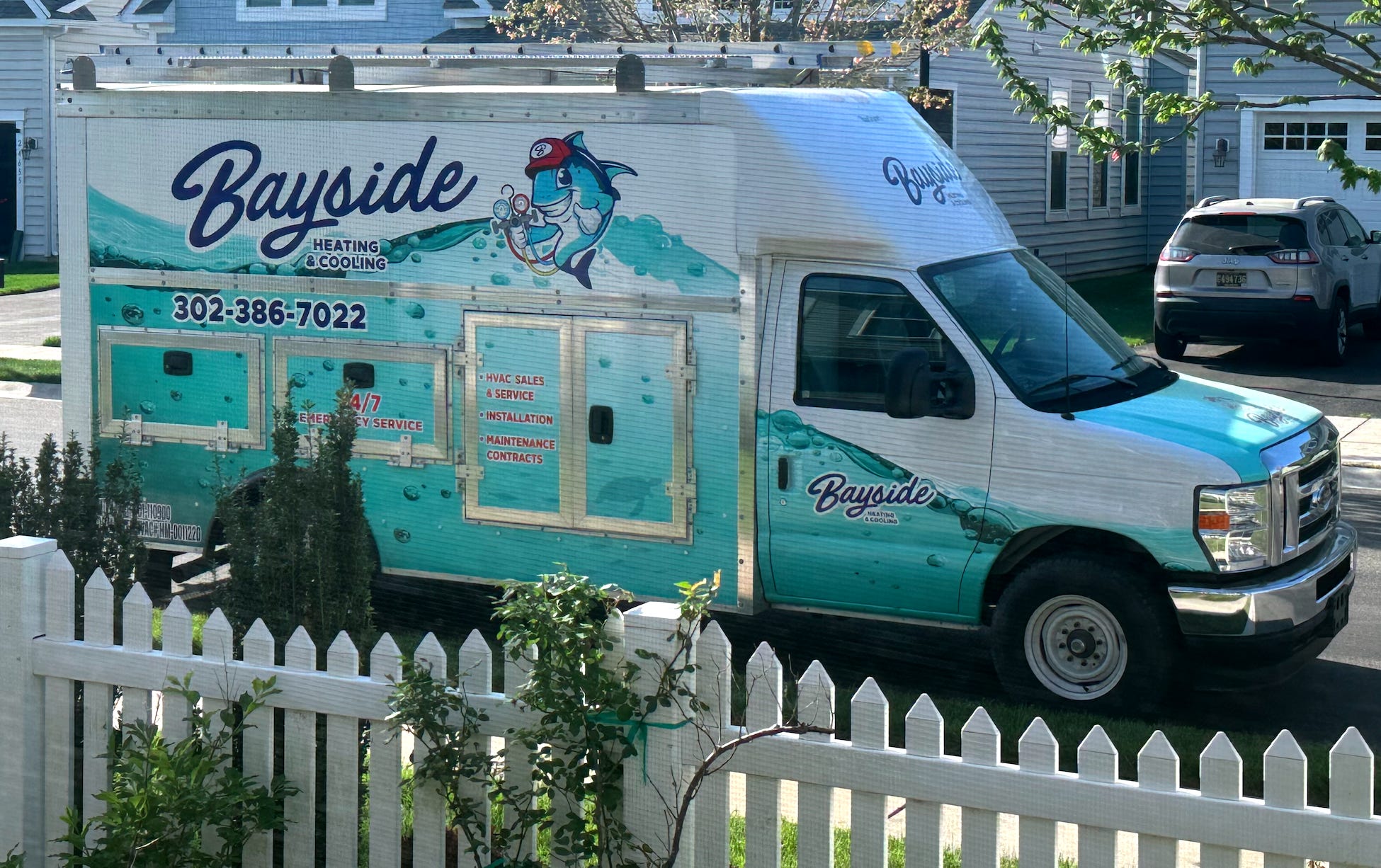
I’m writing this from the G2 Intelligence southern HQ at the Delaware shore. It’s April 16th. The forecast high today is 90 degrees. And I’m getting a new HVAC system installed — replacing a unit that picked the wrong spring to give up. Murphy never fails to bite me in the ass.
But this is not just a weather anecdote. It’s a demand signal. A hot and sweaty one.
April 16th. Ninety degrees. A contractor in my driveway, a technician in the crawl space, and a purchase order somewhere in the supply chain. This is what pull-forward demand looks like in practice. The record warmth that began in March hasn’t let up. Spring demand didn’t arrive in May this year. It arrived in March, six weeks early, and it hasn’t left.
NOAA released the official May 2026 monthly outlook this morning. The question is no longer whether spring came early. It did — historically early. The question is how much runway is left, and what the May weather signal means for the categories that didn’t get pulled forward.
What NOAA Confirmed This Morning
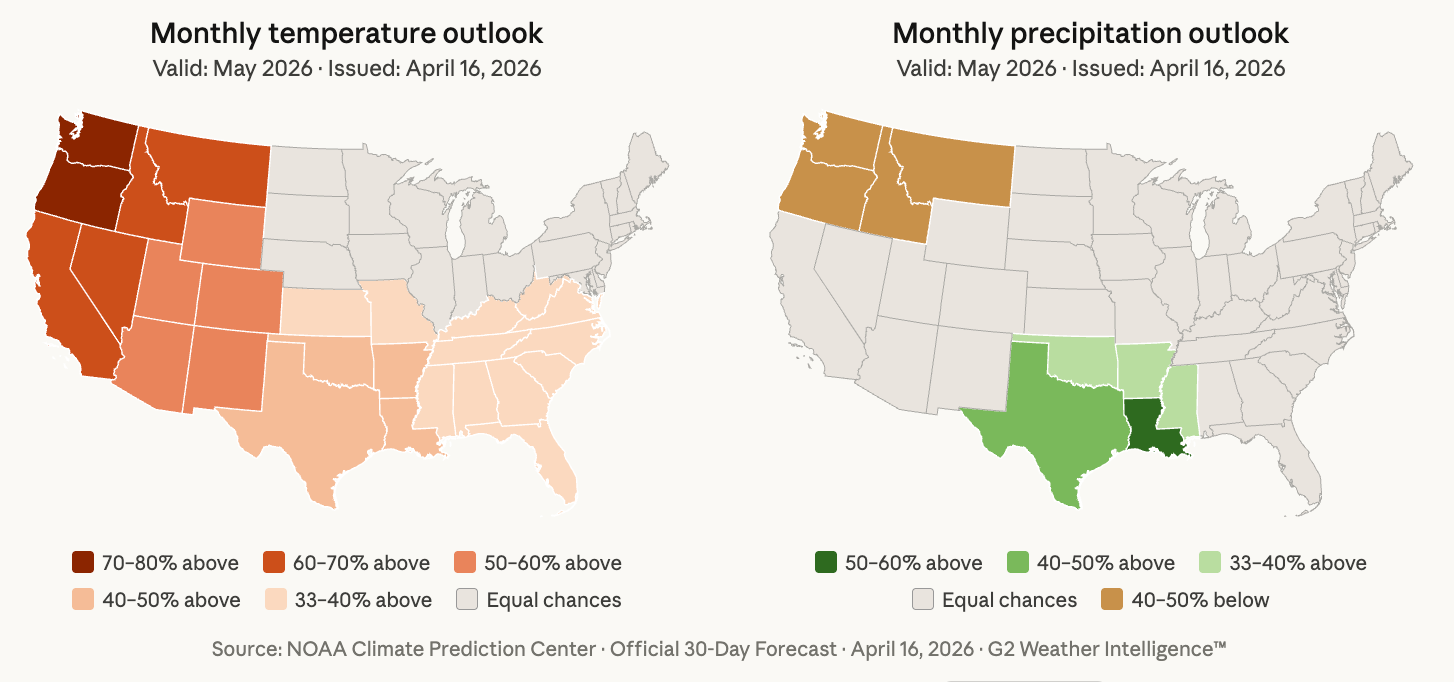
The May 2026 temperature signal is broadly bullish. The West and Northwest are the standouts — California, Oregon, and Washington all showing 65-75% probability of above-normal temperatures, translating to a 98% chance of a normal or warmer May compared to the long-term average. Only a 2% chance of a cold month.
The Southwest — Arizona, Colorado, New Mexico, Utah — has an 88% chance of being normal or warmer relative to the 30-year baseline. The South and Southeast are leaning warm at 70-78% probability.
These are not year-over-year (YoY) comparisons. They measure the likelihood that May 2026 will be at or above the 1991–2020 climatological normal. The YoY context — how May 2026 compares to May 2025 specifically — is a separate and equally important signal, addressed below.
There is no meaningful cool signal anywhere in the contiguous U.S. this May.
The precipitation signal is where it gets interesting — and where the conventional read gets it wrong.
The meaningful wet signal is concentrated in Texas and Louisiana, with a lighter fringe extending into Oklahoma and Arkansas. The Southeast — Georgia, North Carolina, South Carolina, Florida — shows equal chances. No wet signal there.
That geographic distinction matters enormously when you map it against the drought.
As of April 14, 2026, the US Drought Monitor shows severe to exceptional drought conditions across large portions of Texas, Oklahoma, Georgia, Alabama, the Carolinas, and Florida. The entire Southeast is abnormally dry to severely drought-stressed.
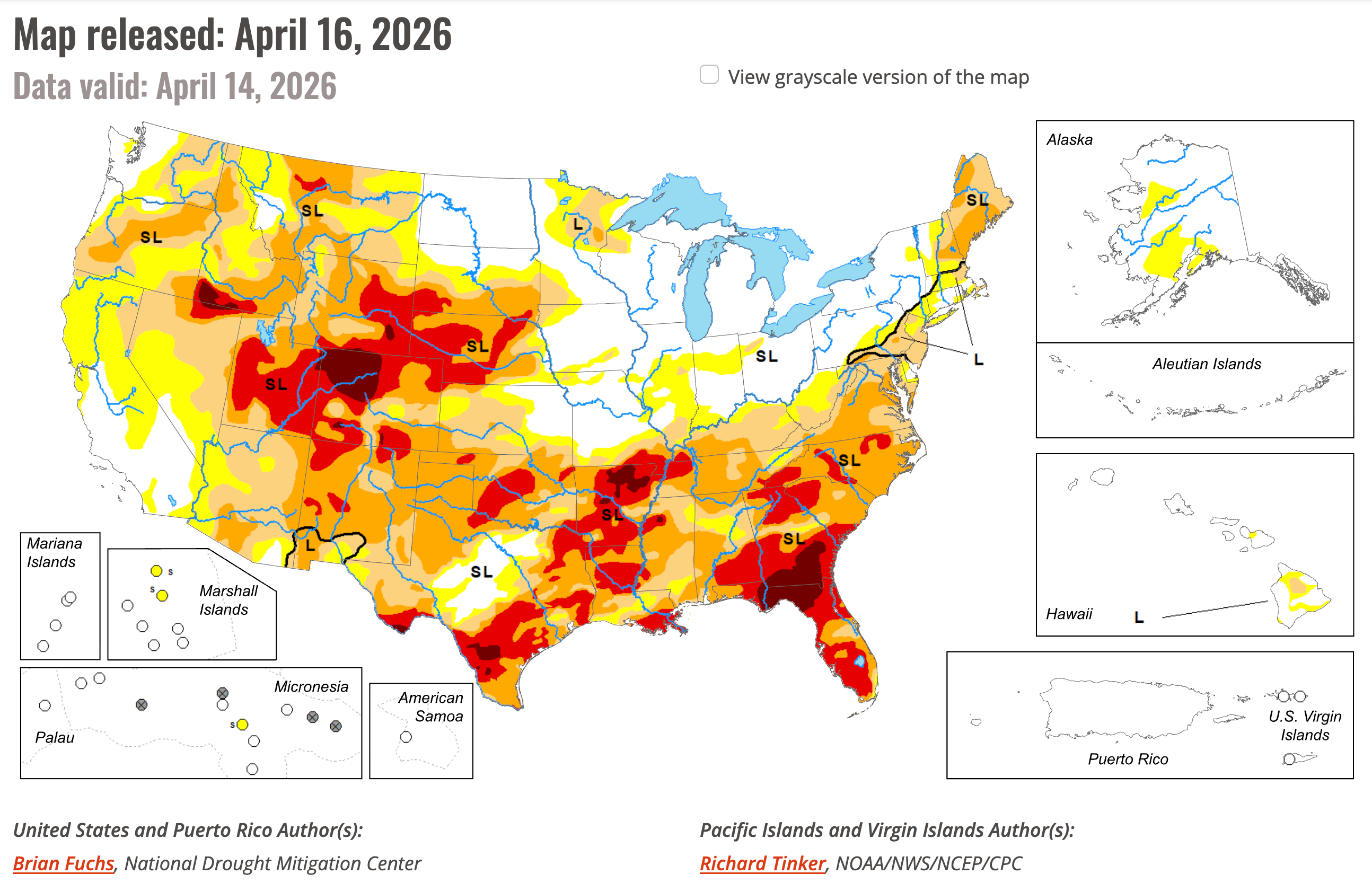
The split sets up two very different demand stories:
Texas and Louisiana — drought-stressed and getting rain. Above-normal precipitation landing on parched ground is drought relief. Lawns recover. Weeds emerge. The L&G consumable cycle activates hard. This is a strong demand signal.
Georgia, Florida, North Carolina, South Carolina — drought-stressed and staying dry. Equal chances of precipitation mean no meaningful relief in sight. Drought-stressed lawns that don’t get water don’t green up. Customers who look out at a brown lawn in May don’t buy fertilizer — they wait. This is the L&G headwind that some analysts won’t see because they aren’t looking at the drought monitor alongside the precipitation outlook. The warm temperature signal is real in these markets. The L&G activation signal is not.
The May Baseline You’re Lapping
May 2025 was the worst month of the best quarter either Home Depot or Lowe’s had seen in two years.
Home Depot posted a +0.3% U.S. comp in May 2025. Lowe’s went negative, down 1.0%. Both management teams said the same thing on their earnings calls: cold, wet weather around Memorial Day suppressed seasonal categories. Bill Boltz at Lowe’s specifically called out that the team “navigated weather challenges early in the quarter,” even as it delivered positive comps in lawn and garden.
Then July came. The weather turned favorable in the North. Home Depot posted +3.3% U.S. comp. Lowe’s hit +4.7%. The same customers who stayed home in May came out in July.
That’s the baseline. May 2026 is lapping a month that both companies would rather forget.
There is one important caveat. March 2026 was historically warm and dry — the strongest spring setup for the home sector in 132 years — and April has continued that pattern across much of the country.
That means some of the seasonal demand that would normally be activated in May has already shifted. A lawn and garden product that typically sells in the first warm weeks of May may have sold in late March or early April in markets where spring arrived early.
The pull-forward effect cuts both ways. It creates a tougher comparison within 2026 — May laps not just weak May 2025, but also a front-loaded 2026 spring. But it also signals that the customer is engaged and spending. Deferred demand is not lost demand. Categories that pull forward also tend to replenish earlier.
Warm and Wet on Drought-Stressed Ground
The Gulf Coast precipitation signal requires a two-part read, and the drought map is the key that unlocks it.
In Texas and Louisiana, warm temperatures combined with above-normal rainfall landing on drought-stressed ground is the activation event of the season. In Georgia, Florida, and the Carolinas — where the drought is equally severe but the rain isn’t coming — the warm temperature signal is real, but the L&G thesis has limits.
Lawns don’t ask permission. When temperatures are warm and rainfall is consistent, grass grows aggressively, weeds proliferate, and pest pressure builds. Customers don’t choose to buy fertilizer, weed control, mulch, and pest products — their lawn makes the decision for them. These are must-buy categories, not occasion-dependent purchases.
Last May, the Gulf Coast and Southeast were already wet — Georgia was +3.74 inches above normal, Alabama +5.65 inches, Mississippi +4.14 inches. Lawn and garden still posted positive comps at both Home Depot and Lowe’s despite those conditions, because need-based categories move regardless.
This May, the Southeast stays dry. The year-over-year story for L&G in Georgia, Florida, and the Carolinas is warmer temperatures against continued drought, not moisture relief. That limits the consumable repurchase cycle in Home Depot and Lowe’s’s most important markets. The warmth is a tailwind for projects and outdoor occasion categories. The L&G activation signal requires rain that isn’t in the forecast.
The categories that benefit from warm and wet in May:
Lawn and Garden consumables — fertilizer, weed control, pest products, mulch, live goods. These are need-based purchases, not want-based. Warm temperatures accelerate plant growth and weed germination. Consistent moisture amplifies both. The customer doesn’t decide to buy weed killer based on consumer confidence — they buy it because the dandelions are winning.
On drought-stressed ground that receives rainfall — Texas and Louisiana — the dynamic is pronounced. Lawns that have been brown and dormant respond visibly and quickly. Bare patches emerge. Weeds that survived the drought explode when moisture returns. Customers who held off fertilizing a struggling lawn suddenly have a recovering one worth investing in. The reactivation cycle — overseeding, fertilizer, weed control, pest products — runs harder after drought relief than after a normal spring.
The caveat is the Southeast. Georgia, Florida, North Carolina, and South Carolina are equally drought-stressed — but equal chances on precipitation means no meaningful relief in May. A warm, dry, drought-stressed market does not activate the L&G consumable cycle the same way. Customers look at a brown lawn and wait. The warm temperature signal in these markets — which are among Home Depot and Lowe’s’s highest store-concentration states — is a tailwind for project and occasion categories, but not for the need-based L&G repurchase cycle that depends on active plant growth. That requires moisture.
Pest control — warm, wet conditions are the single strongest driver of insect pressure. Ants, mosquitoes, and roaches proliferate after warm, wet periods. Pest control is not a discretionary purchase when the problem is visible.
Live goods — trees, shrubs, annuals, perennials. Warm temperatures drive customer confidence to plant. Moisture after drought reduces transplant stress dramatically — plants that would struggle in dry soil establish quickly when rainfall returns. Growers and retailers both benefit.
Lawn equipment and tools — mowers, trimmers, edgers activate with first aggressive grass growth. Warm and wet May is the strongest mowing-season signal in the calendar.
The Project Categories: A Different Story
Where warm and wet does create a genuine headwind is the project and occasion categories.
Exterior paint and stain cannot be applied in rain or high humidity. This is the single most weather-sensitive application category in the home sector.
Decking, fencing, and hardscape installation requires dry ground and dry conditions for proper setting and curing.
Outdoor entertaining — grills, patio furniture, outdoor dining — is occasion-gated. Warm rainy weekends delay the purchase decision. Memorial Day is the highest-stakes weekend for this category, and the Gulf Coast and Southeast are showing elevated precipitation risk right through that window.
Sun care — warm but wet suppresses outdoor activity and therefore sun exposure and sunscreen demand.
The split is clear: consumable, must-buy categories benefit from warm and wet. Project, occasion, and discretionary categories need dry conditions to activate fully.
The Mountain West and Pacific Northwest: The Clean Signal
The strongest unambiguous demand signal in the May 2026 outlook is west of the Rockies.
California shows a 98% chance of normal or warmer temperatures — the strongest single-state warm signal on the map — with equal chances on precipitation. Oregon and Washington are showing the same. Colorado and Montana add a drier-than-normal signal on top of strong warmth: Montana at 98% warm and 78% odds of normal or drier. Colorado at 88% warm and 73% odds of normal or drier.
These are the clean warm-and-dry markets — where every spring category activates simultaneously without the wet offset.
For retailers with West Coast and Mountain concentration, May 2026 is the setup they needed. Outdoor living, exterior projects, spring apparel, outdoor power, and L&G all point the same direction.
Applying the Climate Prediction Center’s May 2026 outlook against estimated store footprints:
Home Depot:
76% probability of a normal or warmer May across its store footprint
~17% of estimated store base in warm-and-wet markets (TX, LA) — drought relief, L&G activation
~43% in warm-but-dry drought markets (FL, GA, NC, Southeast) — warm temp tailwind, L&G limited by drought and no rain relief
California — Home Depot’s largest state at approximately 230 stores — at 98% warm, equal chances on precip
Lowe’s:
73% probability of normal or warmer across its footprint
~13% of estimated store base in warm-and-wet markets (TX, LA) — drought relief signal
North Carolina — Lowe’s third-largest state — warm but drought-stressed with no rain relief in sight. Strong temperature tailwind, muted L&G consumable signal
~53% of footprint in warm markets with equal chances or below-normal precip — temperature activates projects and occasion categories, drought limits L&G repurchase cycle
North Carolina — Lowe’s third-largest state — at 70% warm with equal chances on precip
Neither company has a clean warm-and-dry signal across its core footprint. But both are lapping a May that Lowe’s CFO described as starting slower due to “wet, colder weather.” Warm conditions — even with moisture in the Gulf markets — represent a meaningful improvement over the baseline.
The Macro Overlay: Warm Weather, Cold Reality
The weather signal for May is constructive. The macro is not.
My HVAC replacement is a high-ticket, need-based purchase — the kind that happens regardless of consumer sentiment because the alternative is 90-degree heat with no air conditioning. That’s the resilient end of the home improvement market. The consumer who has to spend spends. Me included. (Damn it!)
But the Iran conflict has added a sustained energy price shock to an already pressured consumer. Gasoline prices are running well above year-ago levels — a direct tax on household budgets that falls hardest on the middle and lower-income consumers who drive home improvement and lawn and garden foot traffic. Tariff-driven inflation has raised the effective price of a wide range of home improvement products, from power tools to outdoor furniture to seasonal hardlines. The consumer who wants to spend is thinking twice.
The consumer who walks into Home Depot or Lowe’s in May 2026 has a lawn that needs attention and less disposable income than a year ago. That tension — weather-driven need versus macro-constrained budget — is the defining dynamic of spring 2026.
The resolution is category-specific. Lawn and garden need-based products — fertilizer, weed control, pest control, mulch — are largely non-discretionary. The lawn grows whether or not the consumer feels confident. These categories will move. Big-ticket discretionary — riding mowers, patio sets, outdoor kitchens — are more exposed to the macro headwind. Customers who need to buy will. Customers who want to buy may wait.
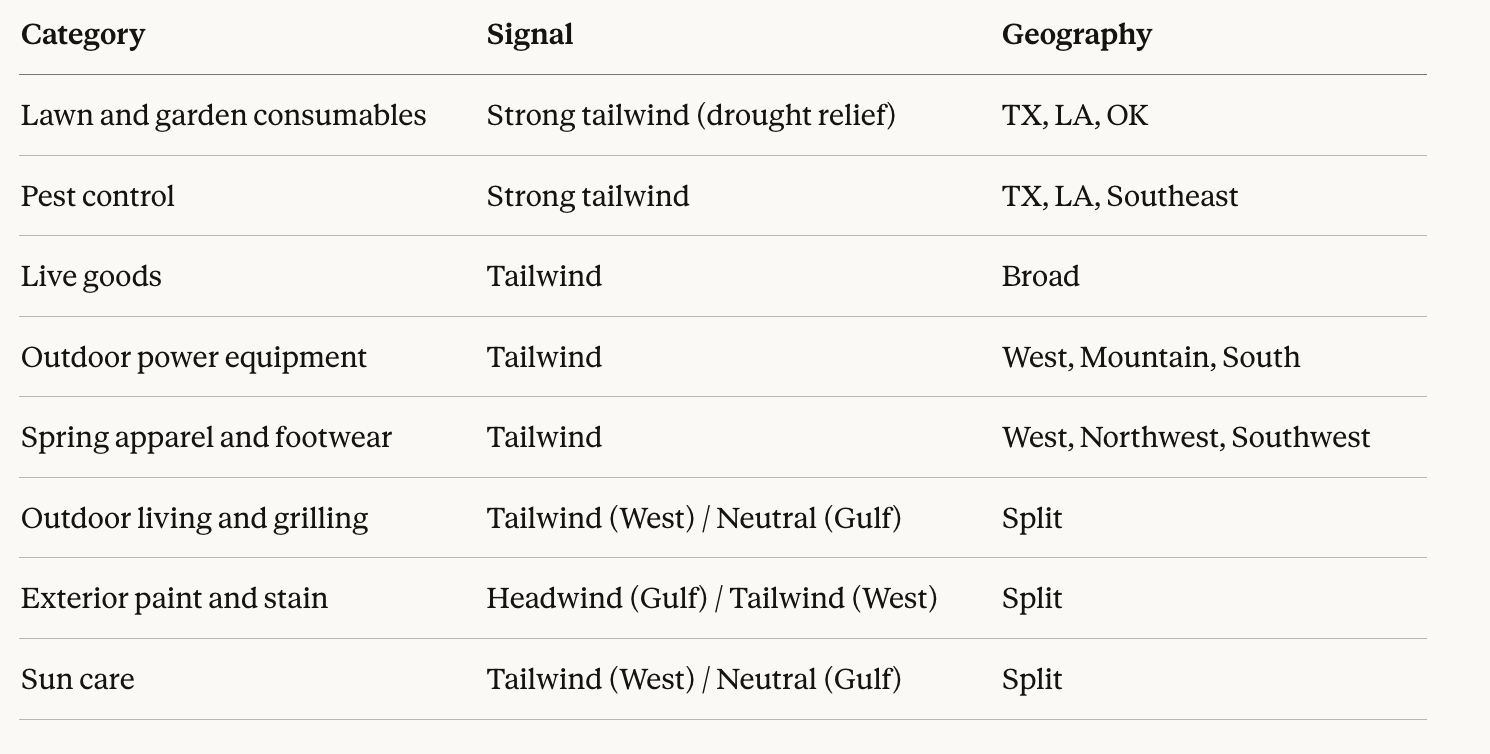
The Category Signal Summary
The Technician Is Still in the Crawl Space
By the time the installation is done, my new HVAC unit will be running on one of the warmest April days on record at the Delaware shore. A purchase that should have happened in June, pulled forward by a spring that arrived in March and never left.
That’s the story of May 2026. The weather signal is as close to Goldilocks as spring gets — broadly warm, wet where drought needs relief, dry where projects need to run.
The macro is anything but. Gas prices, tariff inflation, and the Iran conflict are doing real damage to consumers who want to spend. The consumer who has to spend — the one with a brown lawn, a pest problem, or an HVAC unit that quit in an April heat wave — will.
The weather sets up a better May than last year. Whether the macroeconomic headwinds let it matter is the question no forecast can answer.
Musical Coda
Source: NOAA CPC Official 30-Day Forecast issued April 16, 2026. NOAA nClimDiv state-level data 1895–2026. Store concentration based on estimated store counts by state. 30-year normal: 1991–2020 climatological baseline. Home Depot Q1 FY2025 and Lowe’s Q2 FY2025 earnings call transcripts.
© 2026 G2 Weather Intelligence™ / g2weather.com | All rights reserved.