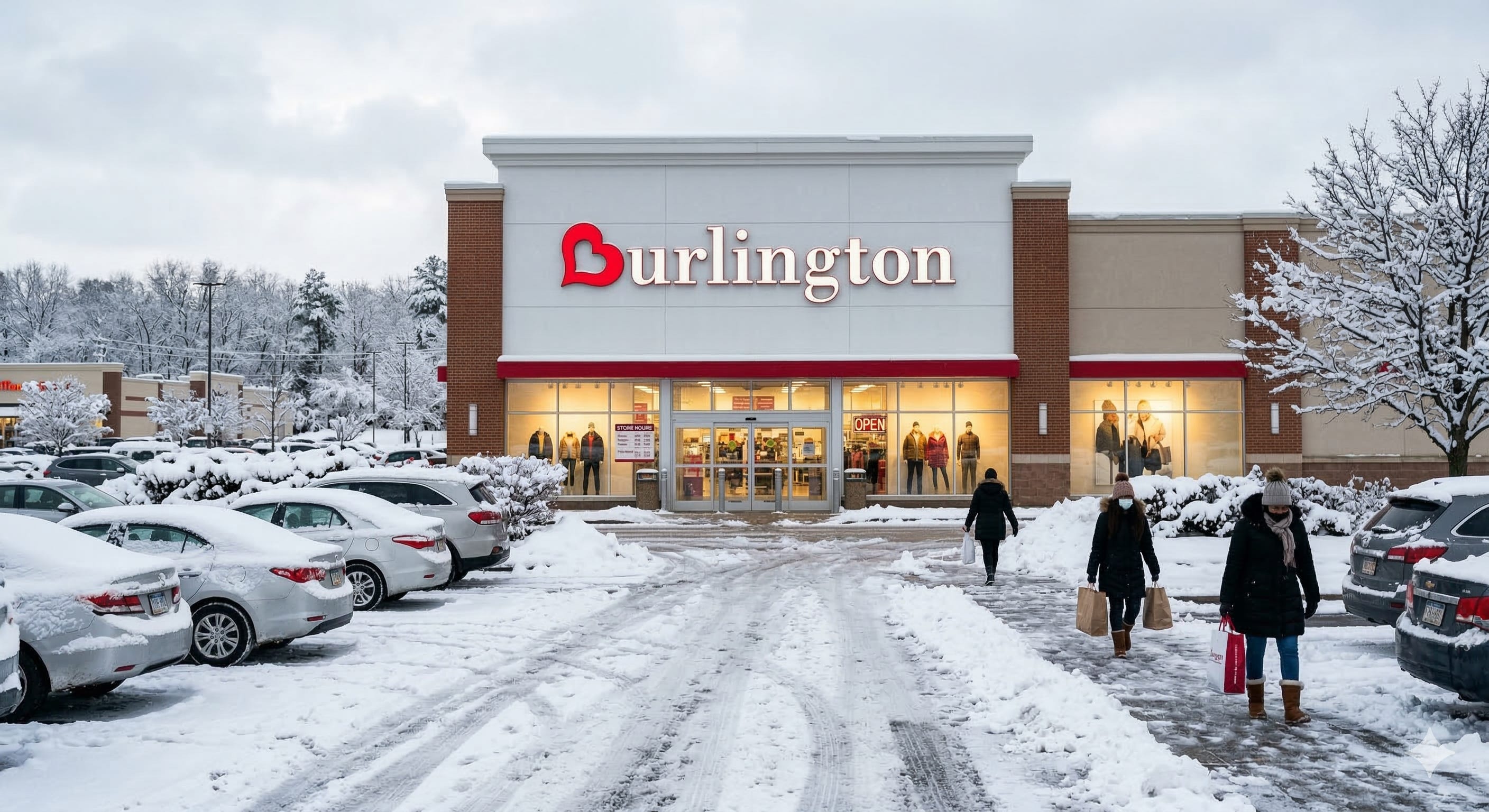
Burlington Stores, $1 Billion in a Day, and the Weather Secret Every Retailer Keeps
The cold Northeast winter supported Burlington's holiday sales results but didn't make the earnings narrative. It rarely does when the weather helps.
"The eye sees only what the mind is prepared to comprehend." — Robertson Davies
There’s a pattern I’ve noticed over years of watching retail earnings calls.
When the weather hurts a company’s results, executives talk about it — they quantify it, explain exactly what it cost them, and use it as honest context for a disappointing quarter.
When the weather helps, the same executives take credit for the results and attribute the performance to strategy, execution, and operational discipline. The weather sensitivity doesn’t change. The communication strategy does.
Burlington Stores is actually one of the best weather operators in retail — they understand their exposure, they position their inventory accordingly, and they execute against it better than most. That’s exactly what makes them the right company to illustrate the pattern.
When October 2024 came in as the second warmest on record, Burlington’s cold-weather categories — coats, boots, fleece — declined sharply. CEO Michael O’Sullivan was direct about it: warm weather cost them 3 points of comparable sales, and he gave investors the real underlying number with weather stripped out.
That kind of transparency isn’t unusual when results disappoint. Weather is the most defensible external explanation available, and management teams use it.
See: Burlington Coat Factory: A Masterclass in Weather-Resilient Retailing
Then came Winter 2025. The Northeast ran cold through November and December — Burlington’s core market, core season, core category. The exact sensitivity O’Sullivan had described in such precise terms was now working in their favor. Sales rose 11%, earnings beat expectations by roughly 6%, and the call focused almost entirely on strategy and execution.
Holiday season weather mentions? Zero.
One Q4 weather event did surface on that call — January storms that cost Burlington about 100 basis points of sales for the quarter. The weather that hurt them got mentioned. The cold that drove their best months did not. The asymmetry doesn’t get much cleaner than that.
What makes Burlington worth studying beyond the communication pattern is that they’re genuinely excellent at what they do.
Burlington has developed one of the better weather-reactive merchandising strategies in off-price retail — the right inventory depth, the right category positioning when cold weather arrives. The Q4 2025 cold was a real tailwind, but Burlington also overdelivered relative to what the weather signal alone would have predicted, because their execution converted that tailwind better than most peers did.
This is the distinction G2 Weather Signal is built to make. Weather creates the opportunity … or the risk. Operator quality determines how much of it becomes revenue. In Q4 2025, Burlington had both working together. The Street saw a beat and credited the management team. Both reactions were right — they just missed half the explanation.
The market's verdict was swift.
Burlington Stores (BURL:NYSE) shares rose nearly 7% — adding roughly $1 billion in market cap in a single session — with analysts pointing to holiday execution, merchandising improvements, and the Burlington 2.0 strategy as the drivers.
All of that is real and deserved — Burlington is among the best in the business at positioning for weather and converting it into results. But the cold Northeast winter that set up in November and December — the weather that O'Sullivan would have quantified precisely if it had gone the other way — didn't make the narrative.
It rarely does when the weather helps.
This week: Kohl’s and Casey’s reported results. Dick’s Sporting Goods and Dollar General report on Thursday. Full breakdown for subscribers on Friday.
— Paul


