

"The weather opens the door. The macro environment decides how far consumers walk through it."
The February retail sales number dropped this morning — up 0.6%, ahead of the 0.5% consensus. Reuters cited warming temperatures as a contributing factor. They’re right. But the weather signal was visible weeks before the data.
WASHINGTON, April 1 (Reuters) - U.S. retail sales increased solidly in February as motor vehicle purchases rebounded and temperatures warmed up, but surging gasoline prices because of war in the Middle East could crimp spending in the months ahead.
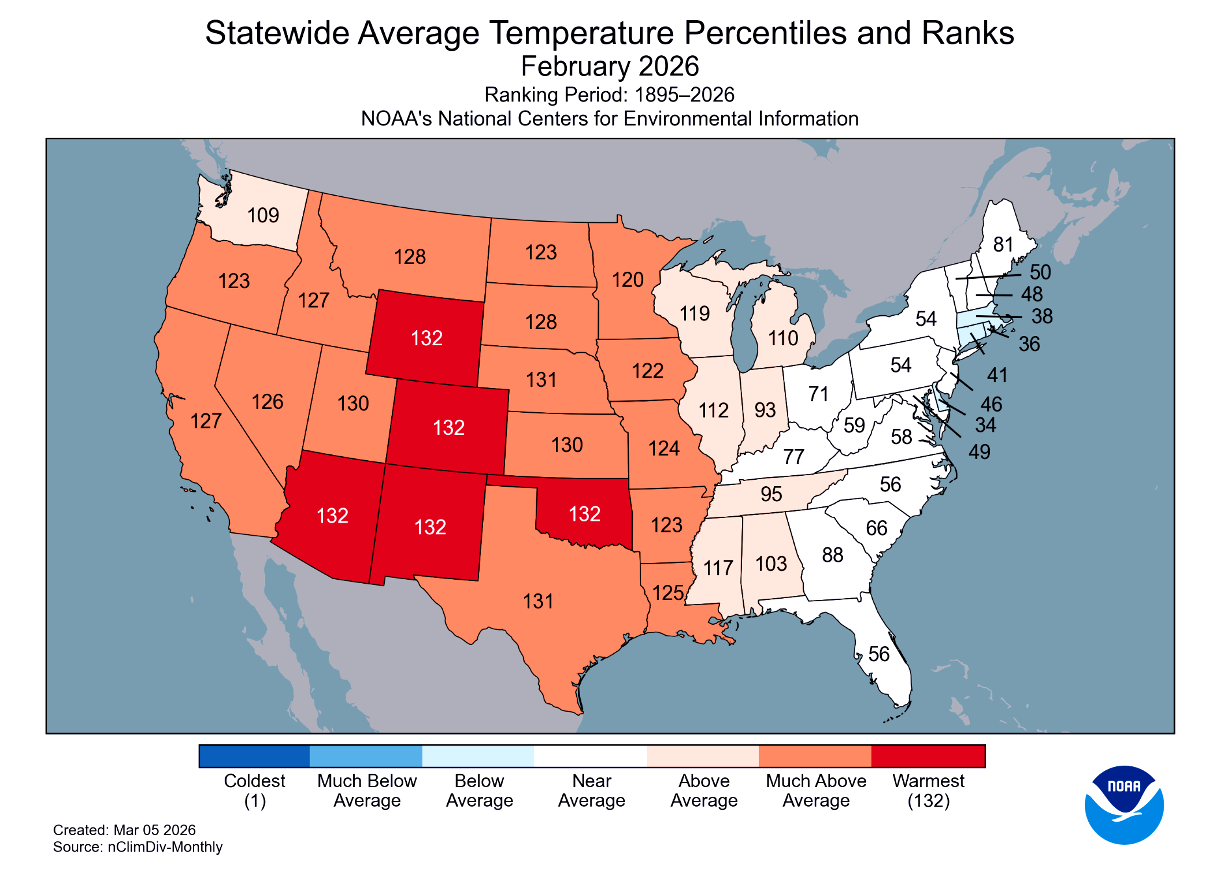
NOAA’s February statewide temperature rankings tell the story.
Arizona, New Mexico, Utah, Nevada, Texas, Oklahoma, and Colorado all ranked 132nd warmest out of 132 years on record. Not just warm. Historically warm. The entire western half of the country ran much above average. Precipitation was suppressed across the same geography — dry conditions that keep consumers moving rather than stuck at home.
That combination — early warmth, low precipitation, across high-population Sun Belt markets — is a textbook retail tailwind. It pulls forward demand for spring apparel and footwear. It opens the lawn-and-garden season ahead of schedule. It puts consumers on restaurant patios in February instead of March. Motor vehicles, which drove the headline beat, benefit from the same dynamic: people shop at dealerships when the weather cooperates.
The Northeast was the counter-signal.
February temperatures across the region ran near to slightly below seasonal norms — cold enough in some markets to keep consumers in winter mode rather than shifting to spring behavior. No early-season pull-forward, no patio traffic, no lawn-and-garden activation.
Retailers (and those of us who live here!) with heavy Northeast concentration saw a different February than peers with Sun Belt exposure.
This is the asymmetry that almost never gets named on earnings calls. Executives at Southwest-heavy retailers will credit strategy, execution, and product. The weather was doing significant work that will go unacknowledged.
The forward picture is more complicated.
Gasoline prices have crossed $4 in major markets as the Iran conflict ripples through energy costs, and inflation anxiety is already tempering the consumer confidence that warm February weather helped build. The early spring exuberance has a ceiling.
The weather is not the problem. Late March and Easter week signals are largely positive, and the April outlook is favorable across most of the country. The conditions that drove February’s beat are not going away.
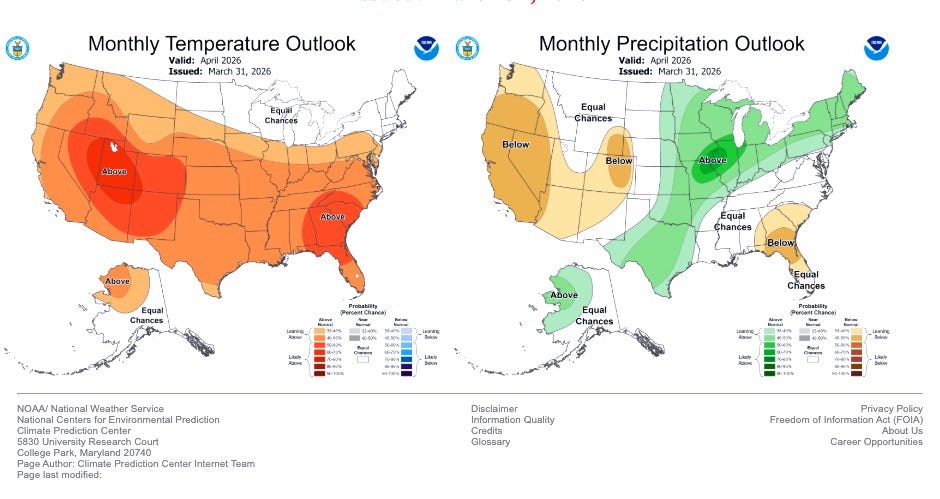
The real question for the consumer economy is whether a sustained weather tailwind can offset a macro headwind unrelated to temperature and precipitation.
Weather absolutely shapes consumer behavior — it always does. But disposable income is the overlay. When gas prices eat into household budgets, the behavioral pull of warm weather still moves consumers outside. It does not necessarily move them to the register. Discretionary categories and big-ticket lawn-and-garden spend are the first to feel the squeeze.
The clearest beneficiaries in this environment are discount retailers. Consumers who are being squeezed at the gas pump do not stop spending — they trade down. Warm spring weather accelerates that rotation, pulling foot traffic into value channels earlier in the season.
Home centers are in a more complicated position. Warmer and drier spring weather is a genuine tailwind for project activation and seasonal category demand. But inflation-constrained wallets put a ceiling on big-ticket purchases — appliances, outdoor power equipment, and major renovation materials.
The weather opens the door. The macro environment determines how far consumers walk.
Musical Coda
© 2026 G2 Weather Intelligence · www.g2weather.com · Weather shapes demand. We translate the signal.