

I don’t usually post on weekends, but a recent viral article by Matt Shumer—General Partner at Shumer Capital and a serial software entrepreneur—reminded me of a dispatch I published a few months ago and compelled me to make an exception.
I’ve removed the paywall and am resharing the full dispatch below the (rocking! ) R.E.M. musical coda.
Matt’s article, along with my own hands-on experience with AI—including building software with Claude—prompted me to weigh in.
Here’s the tl;dr of Matt’s piece: Something Big is Happening.
AI isn’t coming—it’s already here. The people closest to it are no longer talking about potential; they’re describing displacement. In the past year, it’s moved from assistive to autonomous, handling hours of complex work with minimal input. Most people still aren’t appreciating how fast this is moving.
The current paradigm in the commercial weather enterprise is straightforward: deliver higher-fidelity, more accurate forecasts than competitors, wrap them in dashboards, and position the output as “intelligence” that justifies recurring revenue.
In practice, though, it’s still up to the customer to translate that data into decisions. The burden of turning weather into ROI—tactically and strategically—sits with the user, not the provider.
Weather data on its own isn’t intelligence. Unless it’s integrated with a company’s internal data and embedded in operational workflows, it’s just data. And if it doesn’t drive outcomes, it isn’t intelligence—it’s noise.
As I noted in my November dispatch, that model won’t survive this shift unchanged—and I feel fine about it.
Musical Coda
The Coming Shakeout in the Commercial Weather Industry
AI is collapsing data costs and shifting value to decision-making. The old model won’t survive this unchanged.
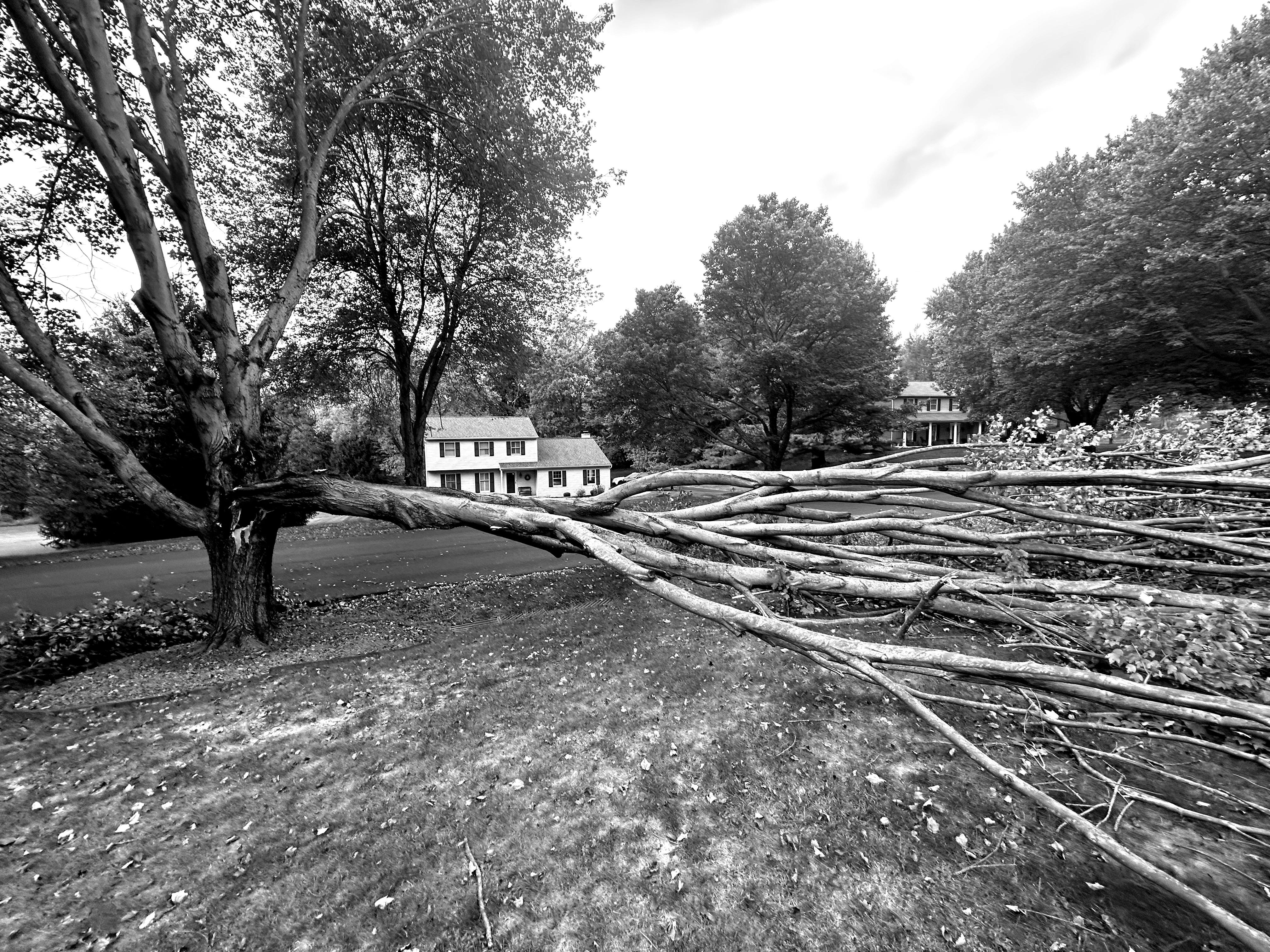
“Coming down is the hardest thing” -Tom Petty
Recently, The Wall Street Journal ran a Deloitte-sponsored interview with Dr. Gabriela Adler at Google and Vishal Kapur at Deloitte, both of whom work at the intersection of climate data, forecasting systems, and enterprise AI adoption.
Gabriela (who is truly brilliant!) and I were colleagues at BreezoMeter before and during our acquisition by Google.
Reading the piece didn’t surprise me — it felt like familiar territory. Because the core message in the WSJ article is the same one I’ve been developing here for nearly a year on G2 Weather Intelligence:
Weather signals the demand.
Agentic AI turns it into action.
Speed is the competitive advantage.
And now the hyperscalers are saying it, too.
The Change Is Already Underway
The article lays out three shifts that matter:
AI is dramatically accelerating weather forecasting — from hours to seconds, often with better accuracy.
Agentic AI is beginning to interpret those forecasts — turning raw atmospheric signal into decisions, workflows, and operational priorities.
The commercial impact is material — organizations with faster weather response loops are already outperforming slower ones.
This is exactly the play we’ve been calling:
Weather isn’t something to watch
Weather is something to act on
The winner is not the one with the best forecast
The winner is the one who acts the fastest on the forecast
This shift is no longer conceptual. The world’s largest clouds (Google, Microsoft, AWS) are now moving into the decision layer — not just the data layer.
This is the point where the commercial weather industry needs to pay attention.
The Risk to the Commercial Weather Industry
The commercial weather market was once built on a simple hierarchy. Whoever had the best data could deliver the best forecast, and whoever had the best forecast could claim the most value. It was a clean, logical model — and for a long time, it worked.
Then AI showed up and rewrote the rules. Forecast accuracy got cheaper, faster, and more automated. And now, with agentic systems emerging, the next shift is already underway — from predicting the future to deciding what to do about it in real time.
The premium no longer lives in the forecast itself. It lives in the system that translates that forecast into smarter, faster action. That’s where the next frontier of weather intelligence will be built.
If you’re still running the old playbook — sell the data, dress it up in charts, fire off alerts, add a service — just know the ground beneath that model is eroding.
As Tom Petty wrote:
“I’m learning to fly, but I ain’t got wings.
Coming down is the hardest thing.”
The commercial weather industry is in the coming down phase — unless it evolves.
The Next Value Layer: Decision Operating Systems
The value going forward will live in the layer that:
Detects the weather signal
Translates it into demand, supply, risk, and operational effects
And triggers the appropriate action faster than your competitor
This is what we call at G2 Weather:
The Weather → Demand → Action loop.
That’s where agentic AI is already beginning to be deployed by Google, Deloitte, and the consulting ecosystem that follows them.
The commercial weather vendors that survive the next decade will not be the ones with the “best model,” or the “highest granularity,” or the “most data points.”
They will be the ones who:
Understand how weather impacts demand, operations, logistics, margin, and behavior
And automate the response layer, not the monitoring layer
Weather data is rapidly becoming a commodity. Weather action is becoming premium.
The World Is Catching Up to What We’ve Been Saying
For those who’ve been here since the early days: yes — the bandwagon is getting crowded. And that’s a good thing. The shift we’ve been discussing is now visible to everyone, and the market is beginning to wake up to it.
The stakes are rising. Weather volatility is increasing, supply chains are tightening, and organizations can’t afford to be reactive anymore.
What’s different now is that there is momentum behind the business case. Leaders are starting to see that this isn’t about forecasting better — it’s about operating differently.
Because if we get this right, we don’t simply predict the weather more accurately. We manage its impact more effectively. We build systems that respond faster than the weather changes. We turn volatility into preparedness, and preparedness into performance.
That means more resilient supply chains. More stable margins. More reliable access to medications, food, and consumer essentials. And yes — more lives protected when a crisis comes.
This is the work.
If you’re new here: Welcome.
G2 Weather Intelligence has been exploring this inflection point since before it hit the headlines — and was recently featured among Substack’s Top 100 Rising Business Publications.
We’ll continue to track:
Where value is migrating in the weather ecosystem
How agentic AI is reshaping decision architecture
And what it means for the future of commercial performance & resilience