

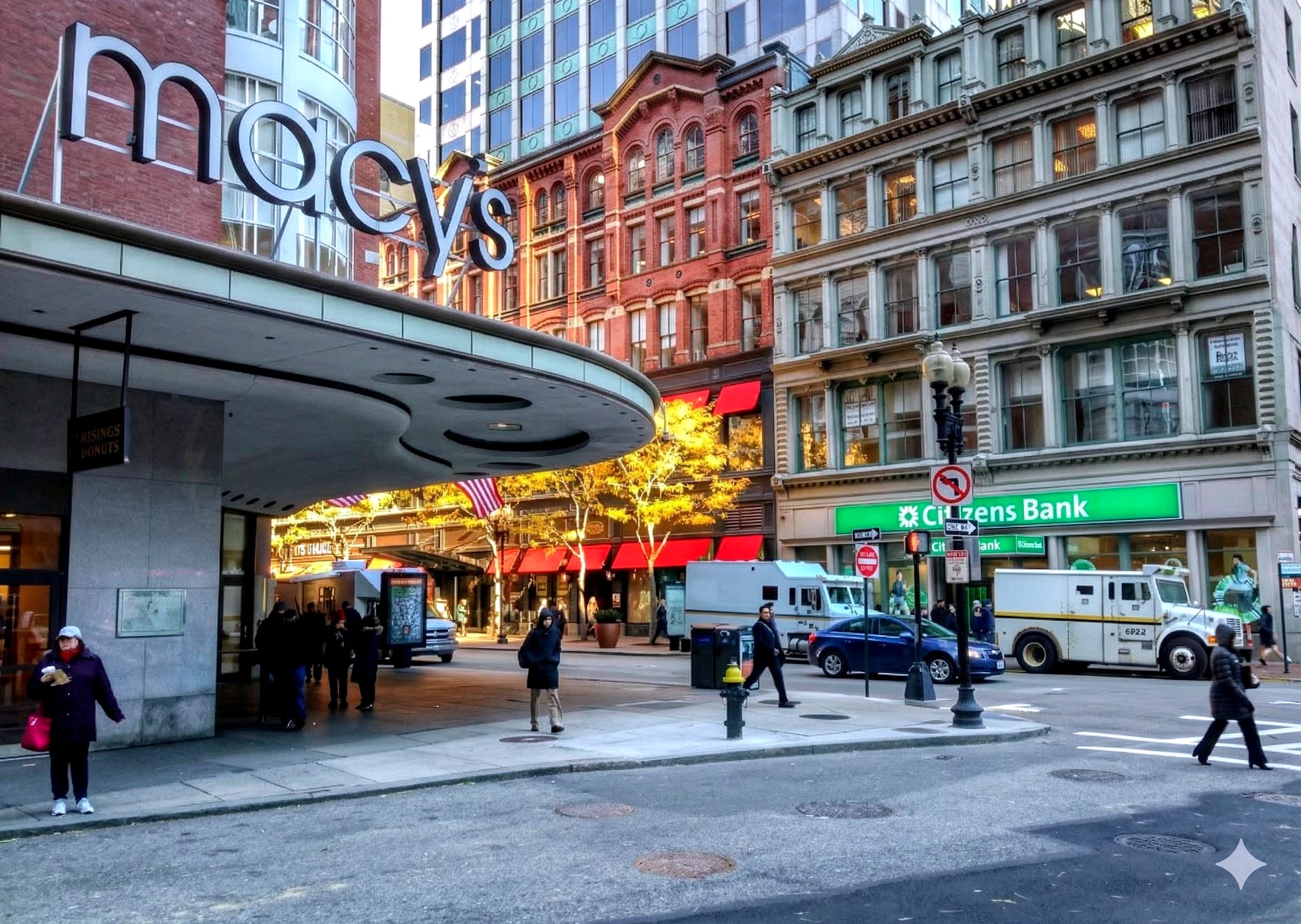
“The consumer who braved the winter storms came with intent. She left with a coat.” —G2 Weather Intelligence
AT A GLANCE
Macy’s reported +1.8% comparable sales against negative guidance, with Bloomingdale’s posting its best holiday quarter on record at +9.9%
Three distinct weather environments shaped the quarter: a Goldilocks Northeast December, an adverse but muted West Coast, and a January storm absorbed in silence
The same storms that Kohl’s quantified at roughly $45 million in lost sales went unquantified at Macy’s — mentioned only when an analyst asked
When you beat, you don’t mention the weather. When you miss, it becomes the narrative. That asymmetry is the signal.
There’s a (well-known) pattern in retail earnings calls that I’ve been tracking for years.
When the weather hurts a company’s results, executives talk about it — they quantify it, explain what it costs them, and use it as honest context for a difficult quarter. When the weather helps, those same executives take credit and attribute the performance to strategy, execution, and operational discipline.
The weather sensitivity doesn’t change. The communication strategy does.
In an earlier G2 Weather Intelligence post on Burlington Stores (BURL) — analyzing their Q3 2024 results, in which October came in as the second-warmest on record — I introduced this asymmetry and watched it play out in real time.
Macy’s Q4 2025 is yet another confirmation of that fact. And it’s a richer version of the same story.
THE QUARTER
Macy’s reported a +1.8% comparable sales quarter — materially above guidance set for down 2.5% to flat. Bloomingdale’s posted its best holiday result on record at +9.9%. Women’s contemporary apparel led at both Macy’s and Bloomingdale’s. Average unit retail was positive. The overall basket was up.
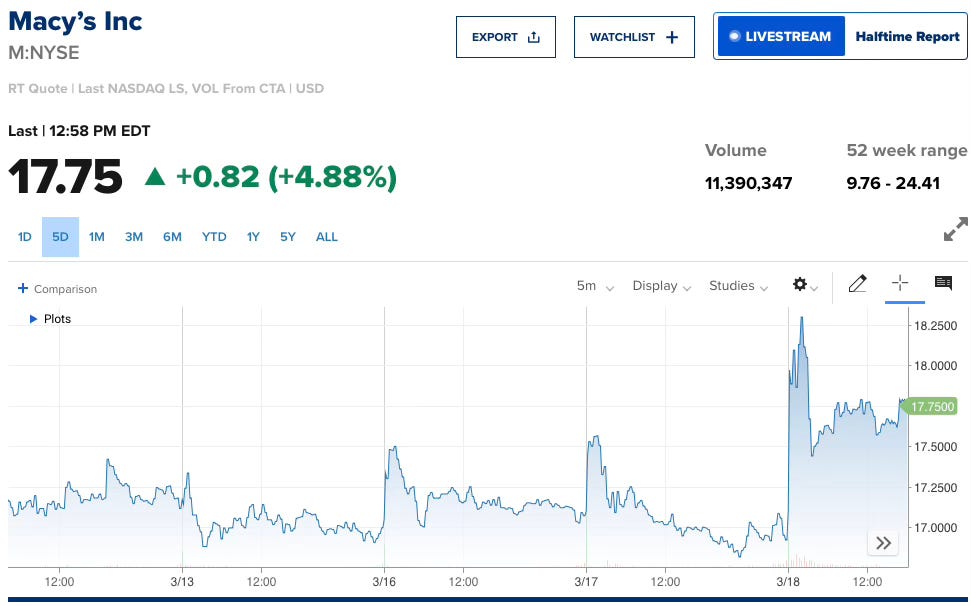
CEO Tony Spring described four consecutive quarters of better-than-expected performance and broad-based improvement across the business. Macy’s shares jumped more than 7% at the open.
Weather mentions in the prepared remarks?
Zero.
TWO SENTENCES
The January storms that brought ice, snow, and record cold to New York, New Jersey, Pennsylvania, and Massachusetts — the same system that Kohl's said cost them 70 basis points of comparable sales (roughly $45 million in lost revenue) with half their stores closed, the same system Dollar Tree quantified at roughly 40 basis points of comp headwind (approximately $22 million) — surfaced at Macy's only when an analyst asked about traffic.
CFO Tom Edwards offered one sentence: “In the quarter, we did have some weather events and traffic was a little softer.”
CEO Tony Spring added one more: “The traffic outside of the weather event was essentially flat in stores and up online in both — all three of our brands.”
And then they moved on.
No basis points. No dollar impact. No “but for the weather.” Two sentences in a call that ran well over an hour. The business was strong enough that it didn’t need the excuse.
That silence is the signal.
THREE WEATHER ENVIRONMENTS
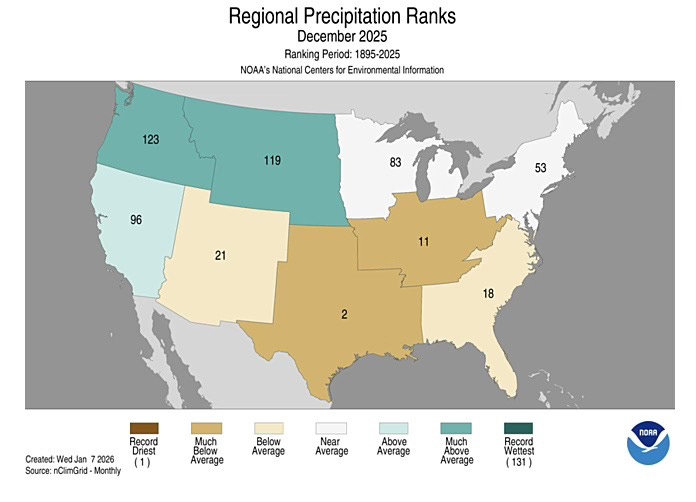
What makes Macy’s Q4 genuinely interesting is that management was navigating three distinct weather environments … simultaneously.
THE NORTHEAST? GOLDILOCKS
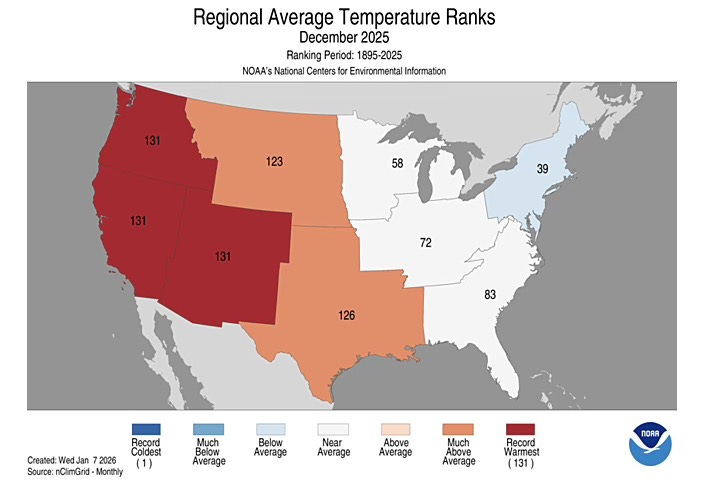
December 2025 ranked in the coldest third of all Decembers in 131 years of record across the Northeast’s core Macy’s and Bloomingdale’s markets. New York ranked 44th coldest. New Jersey 43rd. Massachusetts 42nd.
But the absolute rank is only half the story. December 2024 in those same markets was warm — New York ranked 93rd, New Jersey 104th, and Massachusetts 82nd. A consumer conditioned by two decades of progressively milder winters hadn’t needed a real winter coat in years.
When December 2025 delivered genuine cold — not record-breaking, but meaningfully sustained — the behavioral response was outsized.
This is what experienced retail weather observers understand, but markets rarely price: it isn’t just the temperature that matters. It’s the temperature relative to what consumers expected. Twenty years of warming Decembers create pent-up demand. When real winter returns, shoppers reach for the coat they’ve been deferring.
December was when the Macy’s Q4 quarter was made. Cold, colder than last year, in the peak sales month, where Bloomingdale’s flagships concentrate.
THE WEST COAST? ADVERSE BUT MUTED
California ran near-record to record warm all quarter. December was the single warmest on record in 131 years. But a California Macy’s doesn’t merchandise for winter the way a New York Macy’s does — buyers calibrate assortments to local climate norms. When California runs warm in December, there’s limited cold-weather inventory to be displaced. The adverse weather signal was partially self-hedged by the assortment itself.
THE JANUARY STORMS? ABSORBED IN SILENCE
Late January brought ice cover, heavy snowfall, and extreme cold to the Northeast’s urban flagship markets. Snow and ice are not the same as rain — they create physical barriers to store access that suppress traffic acutely and for days. Management confirmed the impact in two sentences and did not quantify it. The quarter absorbed it and still beat negative guidance by nearly two full comp points.
That absorption is itself the data point.
THE MANAGEMENT QUALITY TEST
Kohl’s: “Severe weather was responsible for about 70 basis points to our comparable sales decline.”
Dollar Tree: “Approximately 40 basis points of comp headwind from two winter storm events in January.”
Macy’s: Two sentences. When asked. No quantification.
The difference is not that Macy’s was unaffected. The difference is that they were affected and still beat. When you beat, you don’t need the weather. When you miss, the weather becomes part of the narrative.
This is the asymmetry. It runs through retail earnings calls year after year.
THE BLOOMINGDALE’S PROOF POINT
Bloomingdale’s operates predominantly in the Northeast and Mid-Atlantic markets. Its customer skews upper-income — the discretionary spender who buys a $600 cashmere coat when the temperature gives her a reason to. December 2025 gave her that reason. In the markets she shops. In the month that carries an outsized portion of the quarter’s revenue weight.
The result: best holiday quarter on record.
Women’s contemporary apparel led. Average Unit Retail price positive. Traffic ex-weather flat. Online up.
The consumer who braved the winter storms came with intent. They left with a coat.
One postscript: Bloomingdale’s spring 2026 campaign, launched immediately after this record quarter, is called California Love — celebrating sixteen new California brands and West Coast culture. California’s record warm winter was the quarter’s biggest weather headwind. It is now the inspiration for the spring collection.
The upcoming weather in California for California Love? Warm, sunny, and … perfect.
LOOKING AHEAD
Management guided Q1 comparable sales of +0.5% to +1.5%. They described quarter-to-date trends as pleasing. The weather was not mentioned for Q1.
They should be watching it.
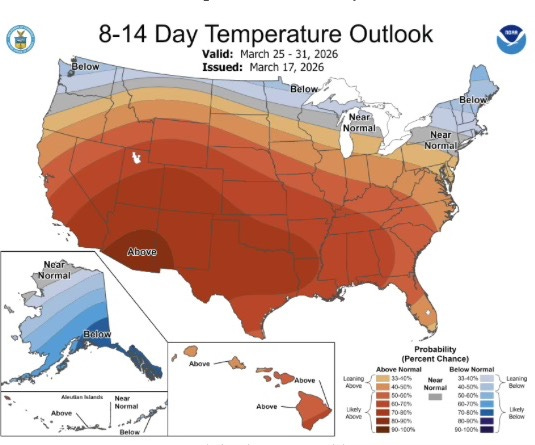
February brought a significant blizzard to the Northeast — traffic suppression without the cold-weather demand benefit.
But Easter is building. The spring transition is in progress (bigly!) — when the softlines signal flips from cold-favorable to warm-favorable. A warm March and April, following a cold prior year, is creating a bullish environment for spring apparel in Macy’s most important markets.
Note that G2 Weather Intelligence premium subscribers receive the live signal as it evolves — updated as the Q1 weather picture develops across Macy’s key markets.
SUMMARY
When the weather hurts, executives quantify it. When it helps, they credit execution. In Q4 2025, Macy’s management had every reason to reach for the excuse. They chose instead to describe a business firing on all cylinders.
They were right. The execution was real. The transformation is working.
They were also benefiting from December weather that ranked in the coldest third of 131 years in their most important markets — against a warm prior year — in the month that matters most.
Both things are true. Understanding which companies are good enough to capture the tailwind and resilient enough to absorb the headwind is exactly what G2 Weather Intelligence is built to do.
Macy’s, in Q4 2025, was both.
---
G2 Weather Intelligence tracks retail weather signals at the total chain and core category level for select publicly traded companies in the US.
MUSICAL CODA