

"God created economists to make weather forecasters look good."
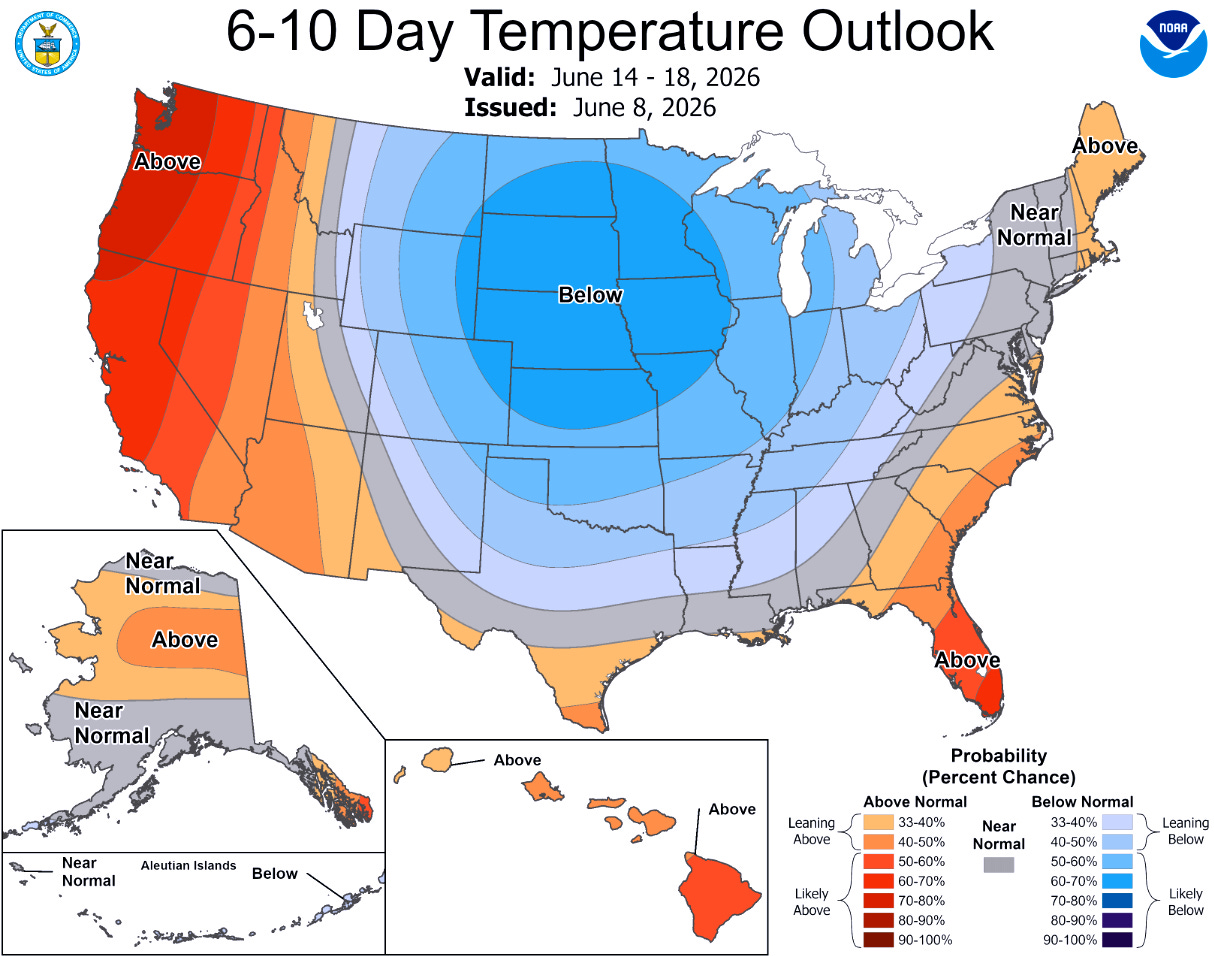
The most accurate forward-looking signal available to any retailer with seasonal categories isn't on Wall Street. It's at NOAA. And the latest outlook is unambiguous.
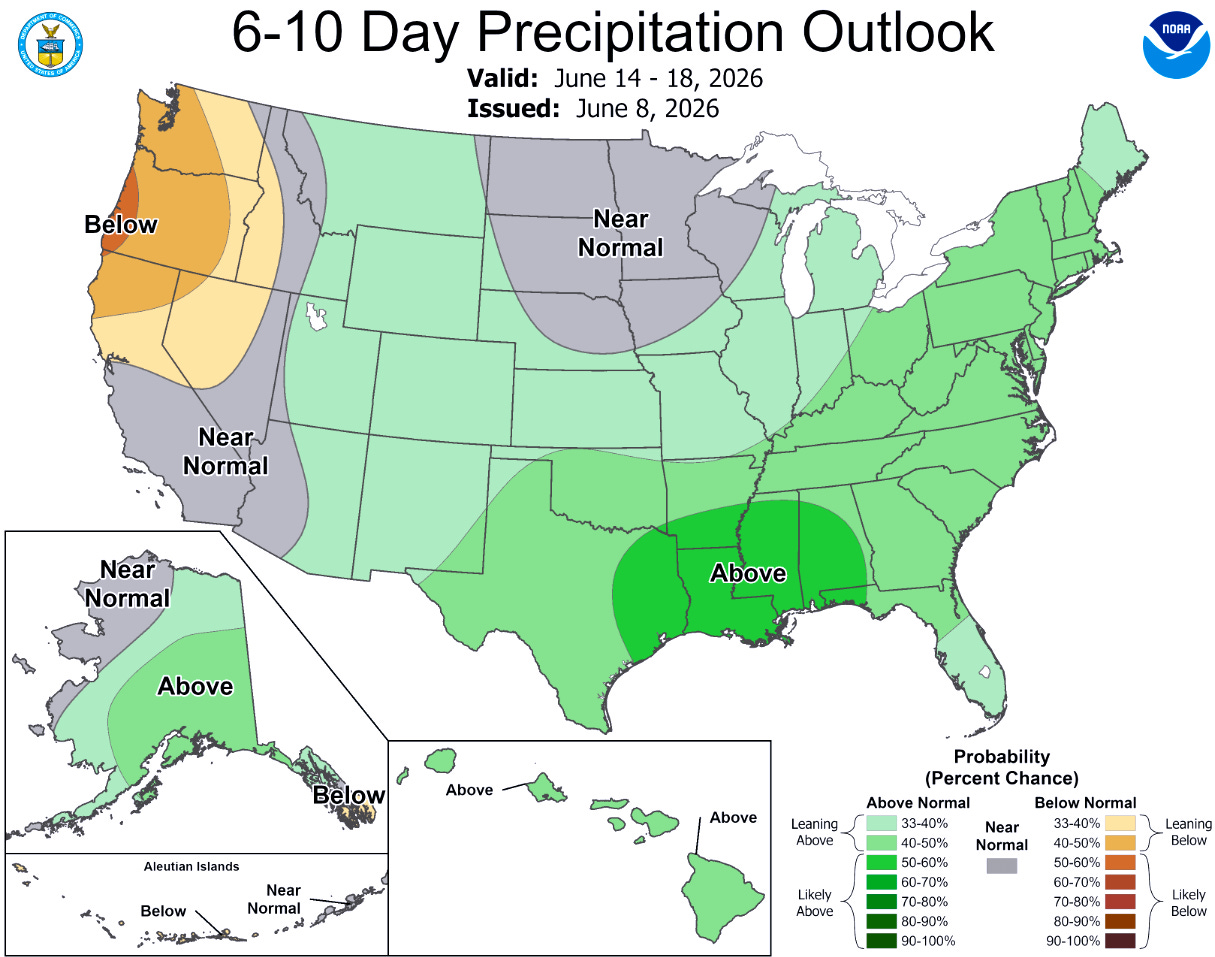
The updated 6-10 day outlook issued June 8 shows a deep below-normal temperature pool dominating the Central and Eastern US through June 14-18 — blue from the Rockies to the Mid-Atlantic. Above-normal precipitation across the South and Southeast.
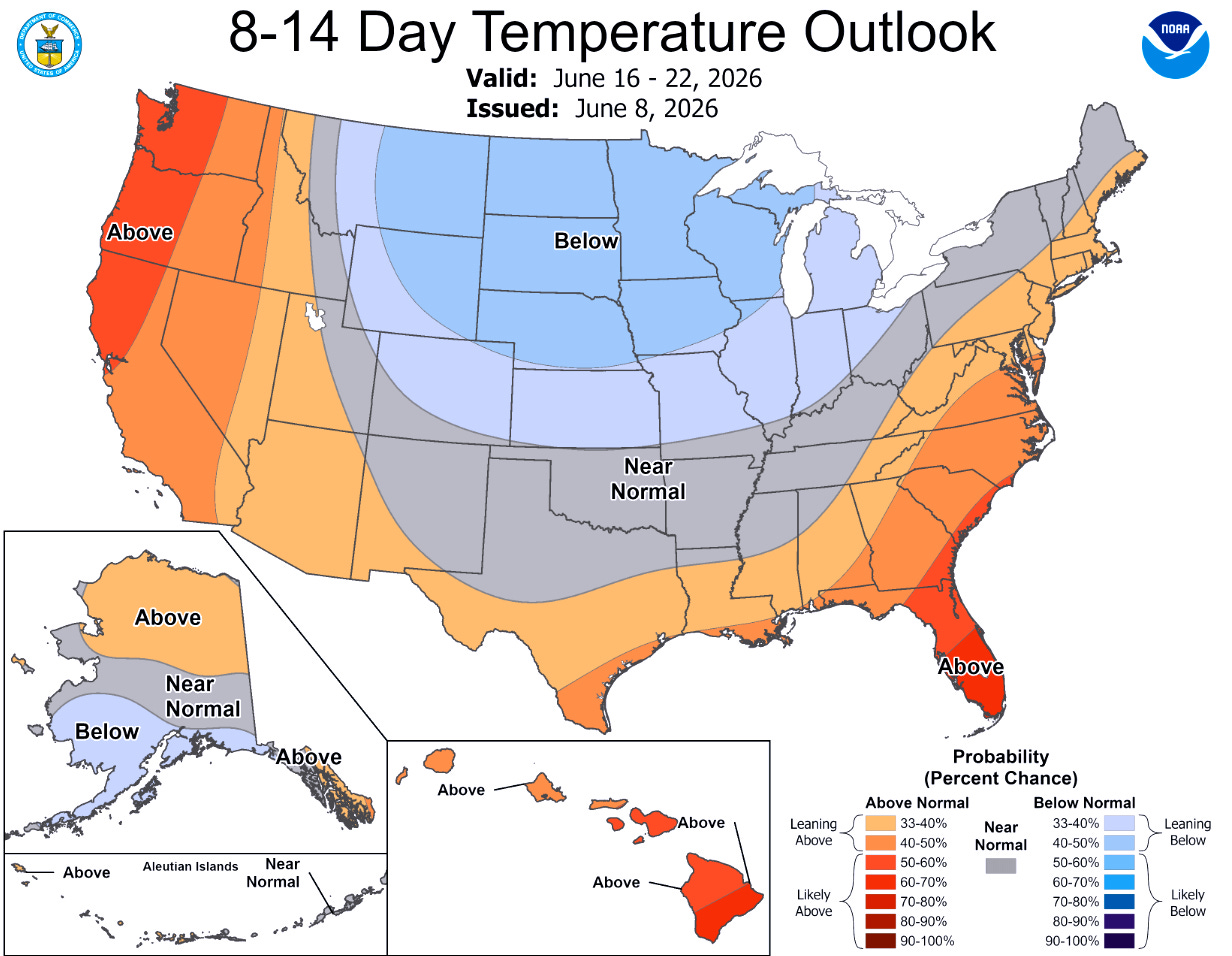
The 8-14 day outlook shows the cold pool retreating but persisting across the Central US through June 16-22, with above-normal precipitation expanding across the East.
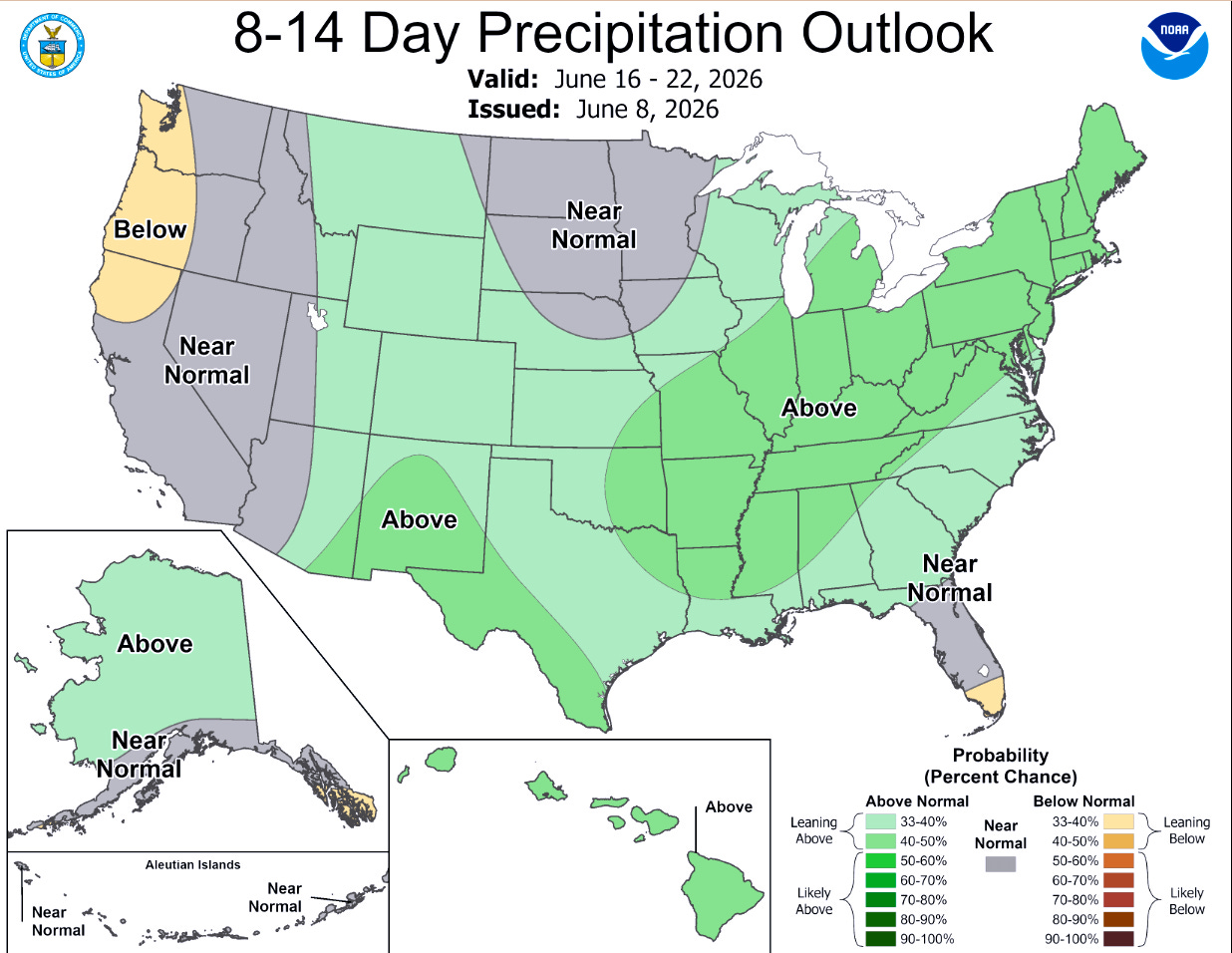
The pattern is clear. Cooler and wetter across the most densely populated and weather-sensitive retail markets in the country. The exact opposite of last June.
The Anniversary Problem
Last June ranked 123rd warmest out of 131 years in the Northeast. The heat dome pushed Boston to 102 degrees and put 160 million Americans under heat alerts simultaneously. Lowe’s July comps surged 4.7%. Management referenced weather 15 times on the earnings call.
This June is shaping up as the polar opposite — literally.
Cool and wet in the Central and Eastern US through the first three weeks of the month, measuring against one of the strongest heat signals in a generation.
The comparison is not a forecast problem. It’s a math problem.
Cool and Wet Is Not a Summer Demand Environment
In summer, driving incremental demand above the seasonal baseline requires a sustained anomaly — roughly two standard deviations from normal held over weeks, not days. A degree or two above normal is invisible to a consumer already in summer mode. It takes an outlier to change behavior.
Cool and wet is a different problem entirely. It doesn’t just fail to drive incremental demand — it actively suppresses the seasonal demand that would otherwise be there.
Low 70s in Chicago next week is not neutral for a retailer with summer seasonal product on the floor. Air conditioning units don’t move. Lawn mowers stay in the aisle. Patio furniture sits. Swimwear doesn’t convert. The consumer hasn’t changed their mind — the weather changed it for them.
The South and Southeast stay warm but face above-normal precipitation. Warm and wet suppresses the outdoor categories that warm and dry accelerates — patio, lawn and garden, outdoor living, seasonal recreation. The heat is there. The conditions to use it aren’t.
Two different problems. One consistent outcome. June is not delivering the demand environment that seasonal categories need.
The Forecasting Advantage Nobody Is Using
The weather forecast is the most accurate forward-looking signal available to any retailer with seasonal product categories. The (free!) 6-10-day, 8-14-day, and 30-day outlooks from NOAA are reliable enough to inform inventory positioning, promotional timing, and category allocation decisions weeks in advance.
Economic forecasting cannot make the same claim. There is a reason someone once said that God created economists to make weather forecasters look good.
As I’ve documented across this earnings season — AutoZone, Gap, Kohl’s, Macy’s — the weather was the silent backstop in Q1 that nobody named. The warmest spring in 130 years offset a consumer carrying a 70-year sentiment low, elevated fuel costs, and exhausted tax refunds. The weather provided the floor. The macro dug the hole. The weather won.
Q2 is a different problem. A cool and wet June doesn’t just fail to provide that floor — it compounds the macro headwinds. For the first time this year, both variables are pointing in the same direction. And neither is pointing up.
The forecast said so weeks ago. The question is whether anyone was using it.
Musical Coda
© 2026 G2 Weather Intelligence. All rights reserved.