The K-Shaped Heat Trap: Why the Bottom 50% are Now Weather-Leveraged
Low savings have turned shoppers from proactive to reactive—leaving regional weather as the final trigger for retail volume.
Merry Christmas and Happy Holidays from the G2 Weather home office.
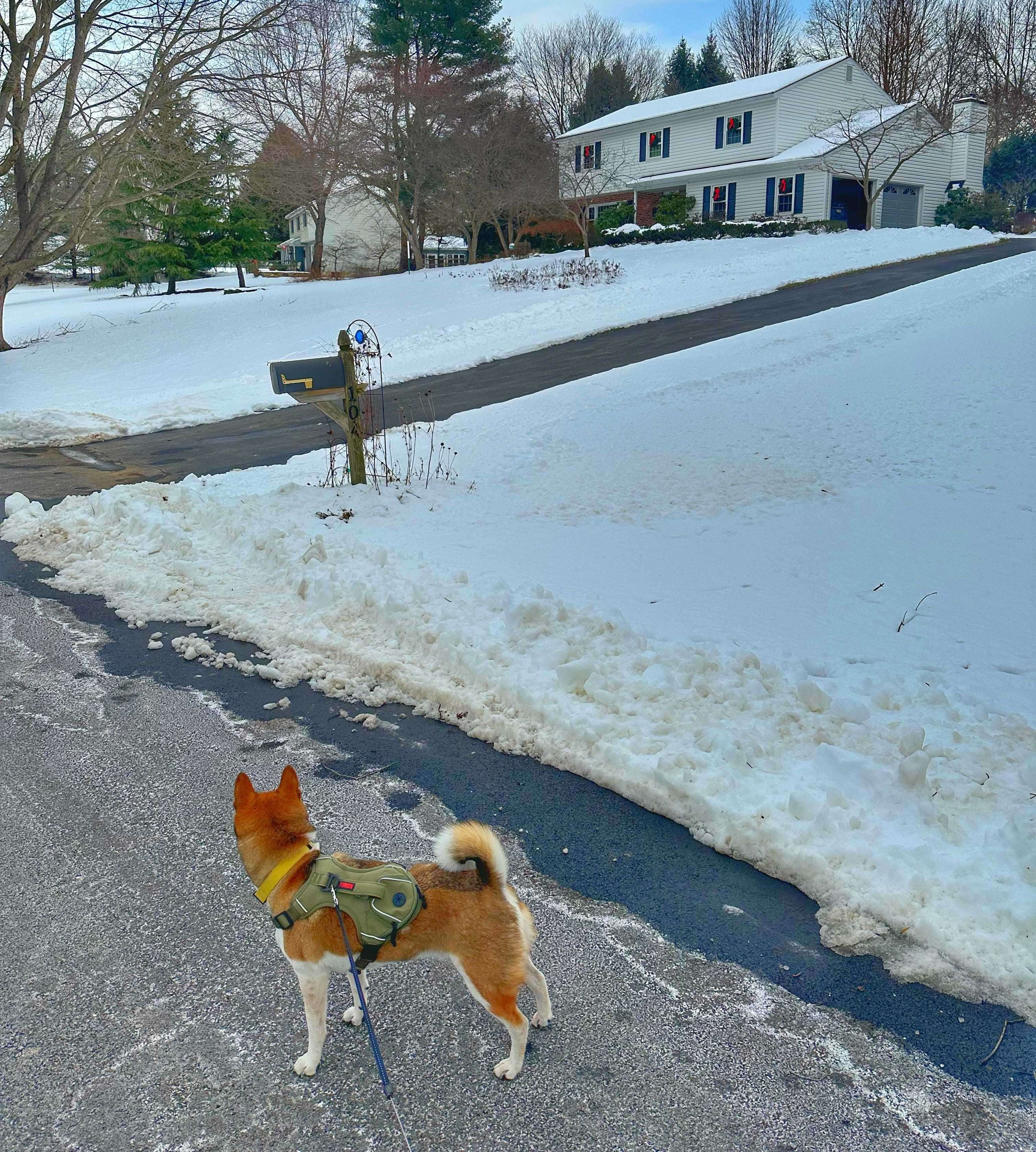
My hero image this morning is from a walk with my best pal Benji last week. A heavy, early Northeast snowfall forced us off the local park trails and into the middle of the street just to find traction.
While the rest of the country is experiencing what weather geeks refer to as a “blowtorch,” with approximately 250 million Americans sweating it out, the Northeastern US remains a winter fortress for retailers. We have the cold and the occasional, mood-setting snow, but critically, the roads have remained navigable when it matters most: the weekends.
If not for the persistent economic uncertainty of our K-shaped economy, it would be a Goldilocks holiday season in the heavily populated Northeast.
But as we know, a “just right” temperature in one region (even a big one!) doesn’t mean much for the national tape if the rest of the country is overheating and the consumer’s savings are already frozen.
Summary Points
The Savings Mirage: U.S. personal savings rates have plunged to their lowest level since 2022, leaving the bottom 50% of our “K-shaped” economy with zero margin for error.
Flat Income vs. Nominal Spend: Adjusted for inflation, disposable personal income remained flat in Q3, despite a “headline” 3.9% increase in spending—meaning consumers are depleting reserves for essentials.
The Result: Weather-leveraged retailers like Gap and Ross Stores are increasingly hostage to the thermometer, as their core customers cut back on discretionary wants in favor of binary, need-based purchases.
The Wall Street Journal greeted me this morning with a front-page above-the-fold article on the “… unrelenting American consumer.”
You can read it here (my gift for you): The U.S. Economy Keeps Powering Ahead, Defying Dire Predictions
The headline is a victory lap for the top 10% of earners, who now account for nearly half of all national spending. While that group fuels a $41 billion AI infrastructure boom and crowds airport lounges, their ‘discretionary’ splurge is masking a much more volatile story in the retail aisles.
The real signal isn’t the splurge; it’s the Bifurcation of Need.
While the top 10% spend by choice, the other 90% are waiting for a catalyst—usually the thermometer—to justify a purchase. For the top of the K, a coat or a pair of boots is a lifestyle choice purchased on a whim. But for the lower 50%—facing flat disposable income and a savings rate at its lowest level since 2022—spending has shifted from discretionary to reactive.
They aren’t browsing anymore. They are waiting for a reason to buy.
Weather: The Only Remaining Purchase Trigger
When your finances are stretched, you don’t buy a winter jacket in December because it looks good on a mannequin. You buy it because it’s finally cold outside (relative to where you live, of course) and you have to.
This is the reality hidden beneath the headlines. Mastercard reported a 3.9% increase in holiday spending, with apparel up 4.9%, but look closer at the “K.” This isn’t a broad tide lifting all boats; it is a concentration of spending into narrow windows where the weather finally forces the consumer’s hand.
This reactive shift creates what I call The Inventory Trap.
For names like Ross Stores and Gap, this isn’t a brand health story; it’s a binary need trigger. If record and near record warmth prevent that trigger from firing, the sale isn’t deferred—it’s skipped.
When more than half the consumer base is one warm week away from abandoning their seasonal spend, tracking the cold isn't just a weather exercise—it’s a survival audit of the retail tape.
This is precisely why I am focused on what I’ve been calling the Northeast Fortress. While the rest of the country sweats through a record-breaking December, the Northeast has remained a winter respite for retailers.
Last week, Benji and I were walking in the middle of the street because it was the only place with traction. That street-level reality—cold enough to trigger a purchase, but with roads cleared by a Super Saturday warm-up—is the only reason the “unrelenting” consumer narrative is still alive.
The Bottom Line: If you aren’t watching the regional weather triggers, you aren’t tracking the consumer.
Enjoy the break, and while you’re checking the thermometer, I’ll leave you with a holiday classic—sung exactly how this macro-cycle feels. We’ll see you for the Friday Flash Update.
Musical Coda
Media & Attribution: Insights may be used with clear attribution to G2 Weather Intelligence.
© 2025 G2 Weather Intelligence. All rights reserved.


