

“It’s a hard rain’s a-gonna fall” —Bob Dylan
CNBC’s retail roundup this week called Q1 “surprisingly robust” and correctly identified three tailwinds that buoyed results — tax refunds, buy now pay later, and consumer resilience.
What it missed? The weather.
February through April 2026 was one of the warmest springs in more than 130 years. The national temperature ran more than 5 degrees above normal for the entire window.
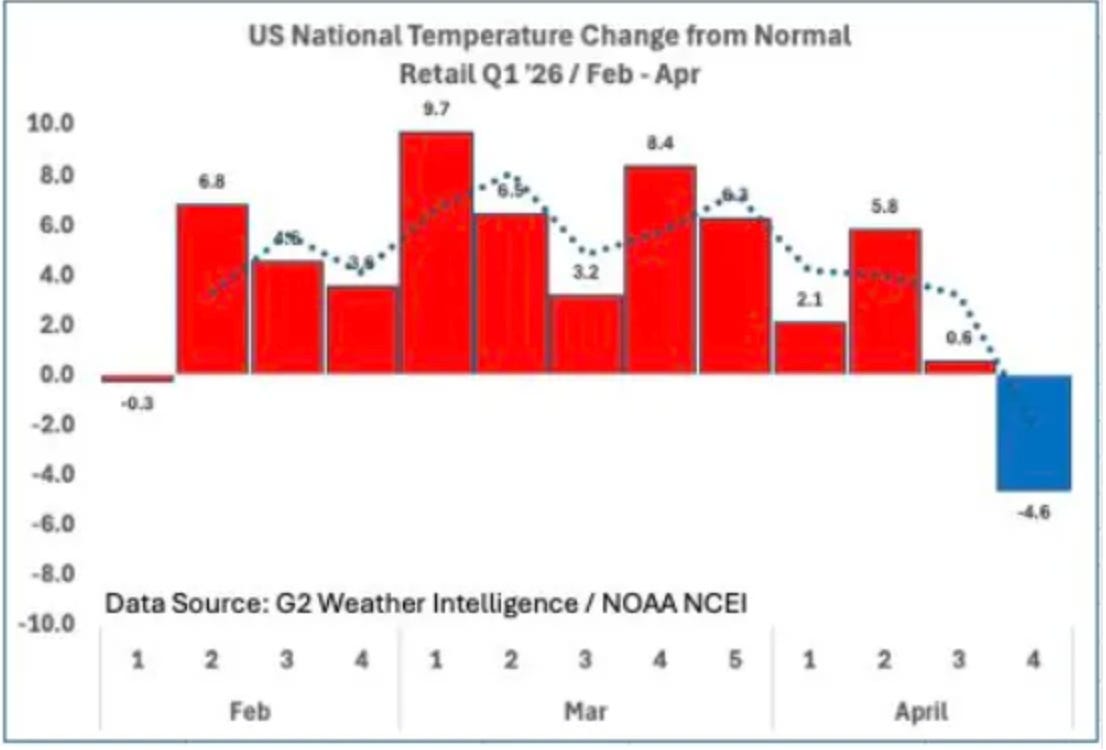
That is not background noise. That is a demand driver — and it appears nowhere in the analyst quotes, or the earnings call commentary from the companies that benefited most.
The asymmetry is always consistent. Weather gets named when it hurts. When it helps, it becomes execution, strategy, and consumer resilience.
The Three Tailwinds That Carried Q1
Tax refunds confirmed by Target, Burlington, Ross, and Walmart. Higher-than-normal refunds arrived at exactly the right moment to offset fuel cost pressure. Buy now, pay later adoption hit new highs across all income cohorts. Consumers were stretching further than the headline results suggested.
And then there was the weather — the silent partner nobody named.
The warmest spring in 130 years pulled forward demand, multiplied shopping occasions, and moved seasonal inventory at full price across every major retail footprint simultaneously.
All three are gone.
The Q2 Weather Signal — A Subtle But Important Distinction
Spring and summer move consumer demand differently. In spring, a single warm weekend moves the needle. Summer requires more persistent anomalies sustained over weeks, not days.
There is a second factor worth naming: climate change acclimation.
Summer demand is less sensitive to modest temperature anomalies from normal than spring demand. Consumers are already in summer mode — a degree or two above normal doesn’t change behavior the way a warm April weekend does. What moves the needle in summer is an outlier sustained over weeks, not days.
Last June and July were exactly that.
The heat dome pushed Boston to 102 degrees and put 160 million Americans under heat alerts. At Lowe’s, June comps edged up 0.3% before July surged 4.7% as outdoor, lawn, and cooling categories caught up simultaneously.
Management said it plainly: ‘Our performance clearly improved as the weather turned more favorable in June and July.’ They referenced the weather 15 times on the call.
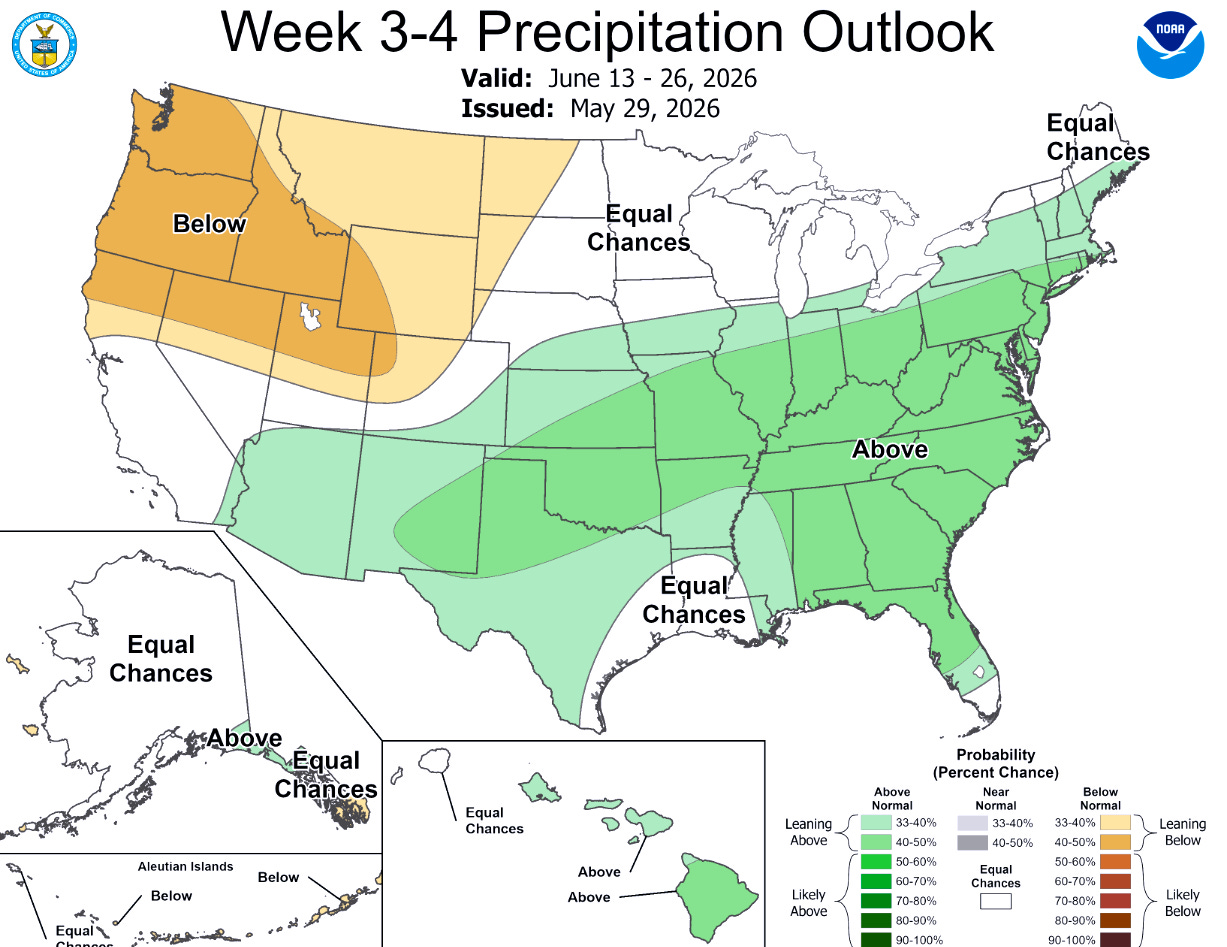
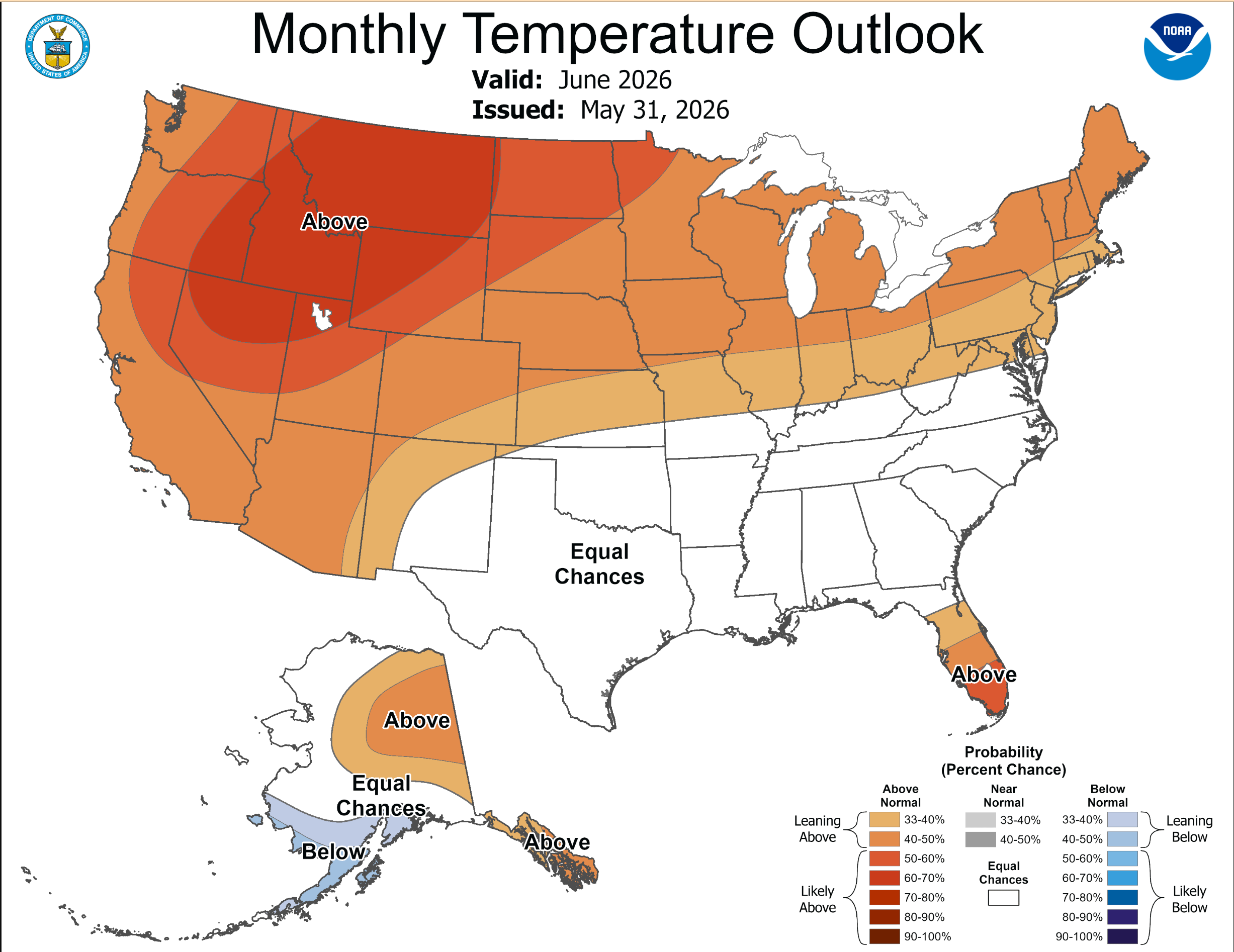
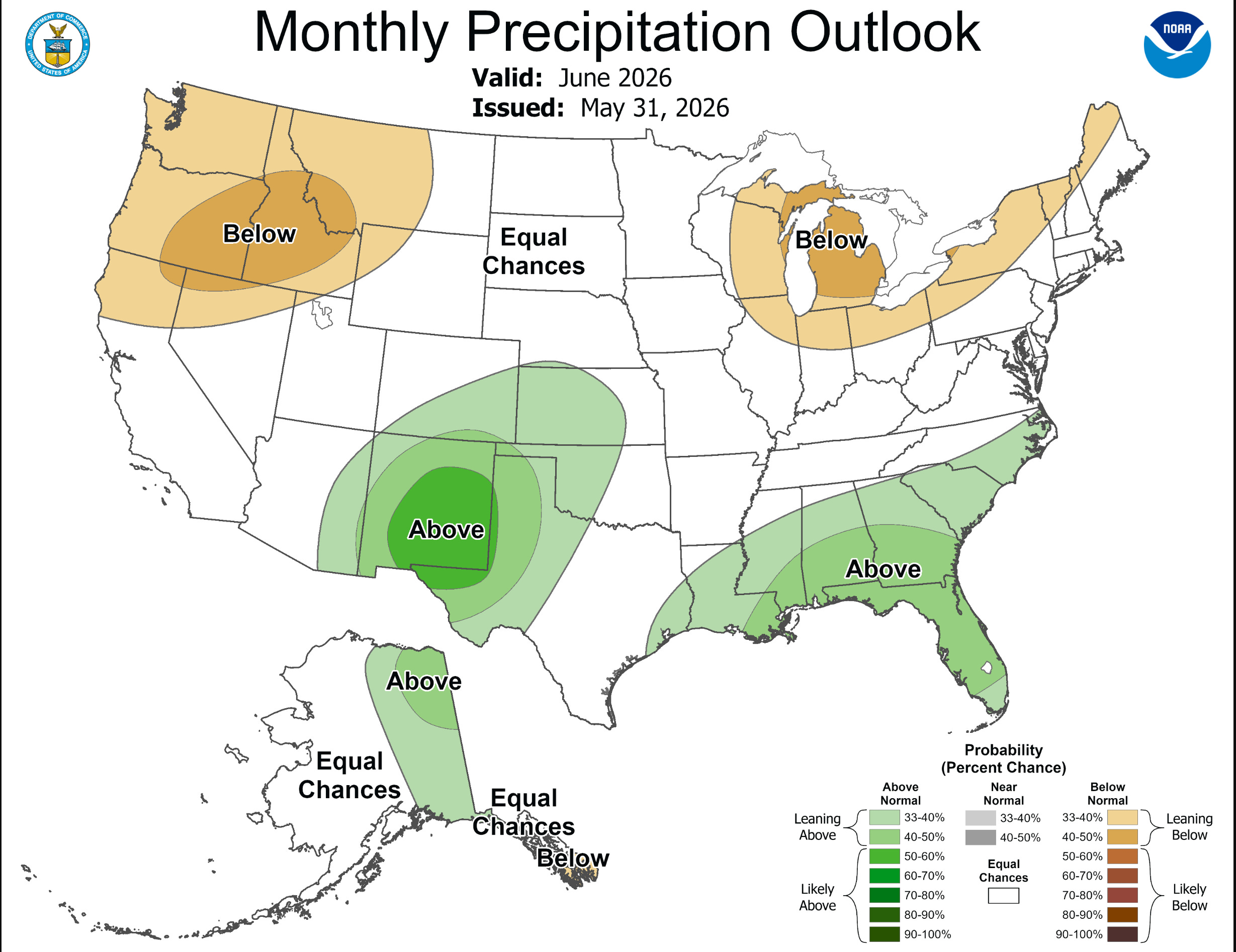
June 2026 shows a modest warm lean in the Northeast and Mid-Atlantic — but nothing approaching last June's historic heat. The Central Plains and South sit in Equal Chances. Warm but wet in the Southeast. The threshold that was cleared decisively last June and July is not in the current forecast.
What the Maps Actually Show
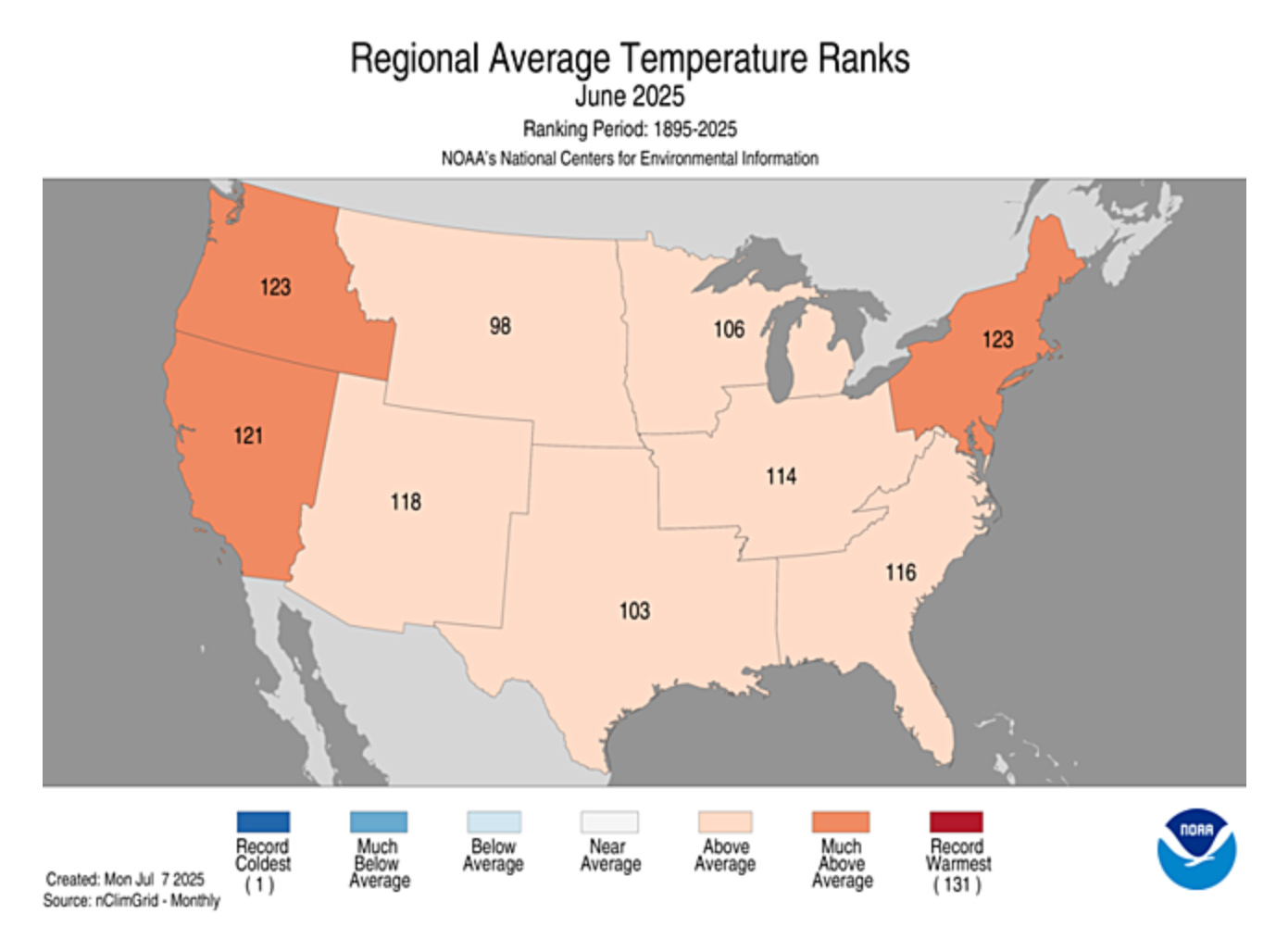
June 2025: Every region above normal. Northeast 123rd warmest out of 131 years. No cold pocket anywhere in the continental US.
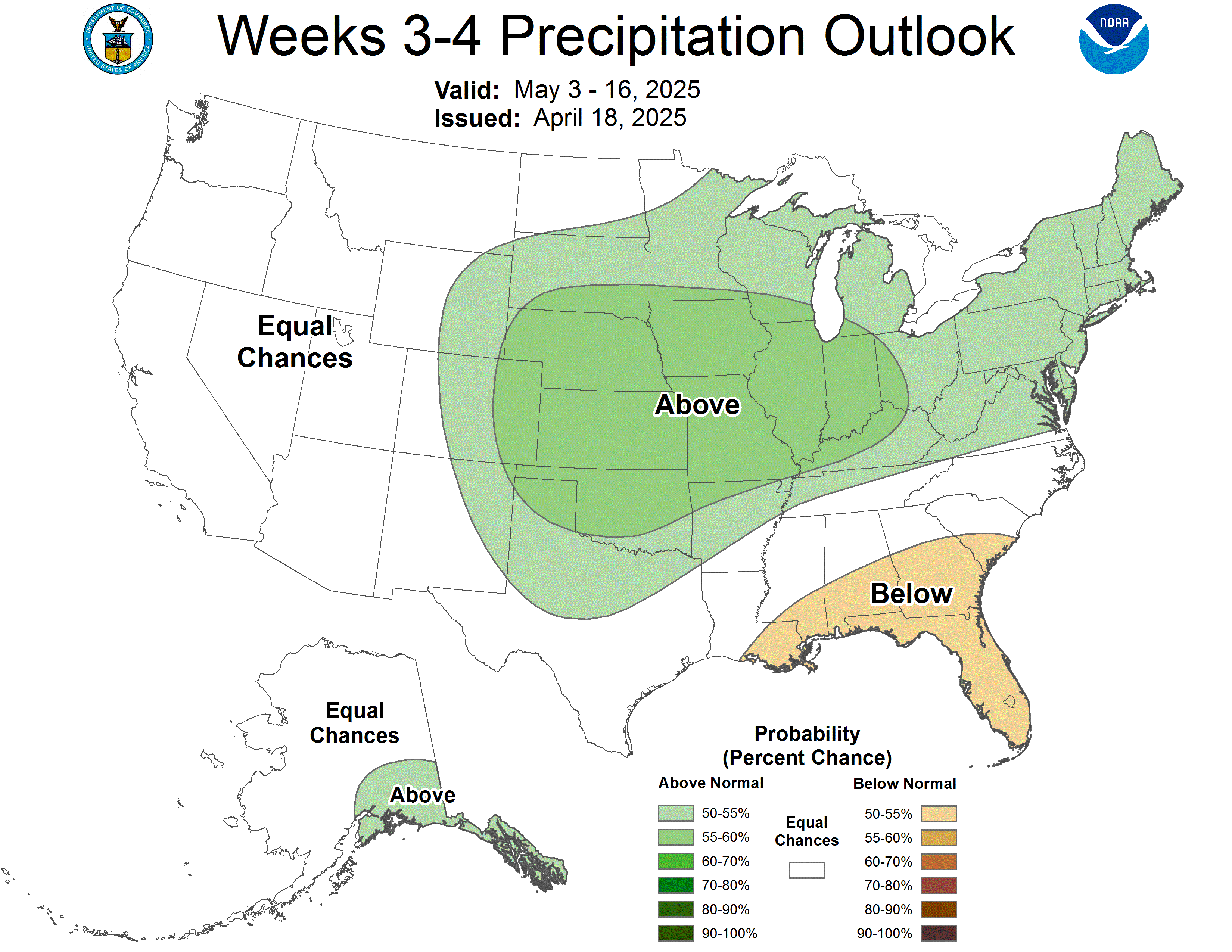
June 2026: Above normal in the West with a strong signal — consistent with last year, no year-on-year upside. The Northeast and Mid-Atlantic show a modest warm lean, but nothing approaching last June’s historic heat. Equal Chances across the Central Plains and South. Warm and wet in the Southeast. A below-normal temperature signal is emerging in the Central Plains and South in weeks 3-4.
The Northeast warm lean is real but modest. Leaning warm against a near-record baseline is not a tailwind. It is a smaller headwind than Equal Chances would be, but it’s not a signal that drives significant incremental demand.
The Category Risk
The single biggest weather-driven demand risk in Q2 is the cooling category. Not because June 2026 is forecast to be cold — it isn’t. But because air conditioners, fans, and portable cooling units rode one of the strongest heat signals in a generation last June. June 2026 sits in Equal Chances in the Northeast. A category that surged on last June’s historic heat is now measuring that performance against a normal year.
AutoZone named it directly on their earnings call last week. Comps decelerated to 1.3% in the final two weeks of their quarter. They are planning for a normal, if not hotter-than-normal, summer.
It’s a bad bet.
Outdoor living, patio, lawn and garden, and seasonal apparel face the same comparison problem — not because June will be cold, but because the second half of last June was historically hot, and this June (and July) offer no comparable signal.
The Macro Overlay
The CNBC piece confirms what earnings calls have been signaling all week. Walmart, Ross, and TJX guided conservatively on Q2 — not because their businesses are broken but because they (wisely) can see the tax refund tailwind fading and fuel cost pressure building. They’re also pretty weather-savvy, but that goes unmentioned (see above).
While retailers can at times be “more cautious in their guidance than the reality might suggest,” executives and analysts generally agree they could see a more strained consumer in the current quarter and the rest of the year, said Saunders.
″[That] tells you that retailers are kind of seeing the signs that some of this trough around the growth rate won’t persist across the balance of this year,” said Saunders. “Not that it will be terrible, but just the heat will come out of some of that momentum, and I think that is related to the fading impact of tax [refunds] and the picture of inflation that will probably pick up across the balance of this year.”
—Source: CNBC
Walmart’s CFO said it directly: higher tax refunds muted the fuel cost pressure in Q1. As those refunds fade, consumers will feel more of that pressure.
Layer the weather comparison on top, and the Q2 picture comes into focus.
The tailwinds that carried Q1 have all reversed or run out of steam. What replaced them is a consumer under historic financial pressure, a June weather setup that offers no national heat consensus, and a year-over-year comparison that is among the most challenging in recent memory for weather-sensitive categories.
No Backstop in Q2
CNBC called Q1 surprisingly robust. It was. Tax refunds, buy-now, pay-later, and a record-warm spring carried retailers further than the underlying consumer fundamentals suggested was possible.
Two of those three were named on virtually every earnings call. The third — the warmest spring in more than 130 years — was the silent partner nobody acknowledged.
Q2 has no equivalent tailwinds. The weather was the silent partner in Q1. In Q2, it becomes a headwind — not because summer will be cold, but because last summer was one of the hottest on record, and this summer offers nothing to match it.
The companies that guided conservatively — Walmart, Ross, TJX — are reading the signals correctly.
The weather was the backstop in Q1. There is no backstop in Q2.
Musical Coda
© 2026 G2 Weather Intelligence. All rights reserved.