

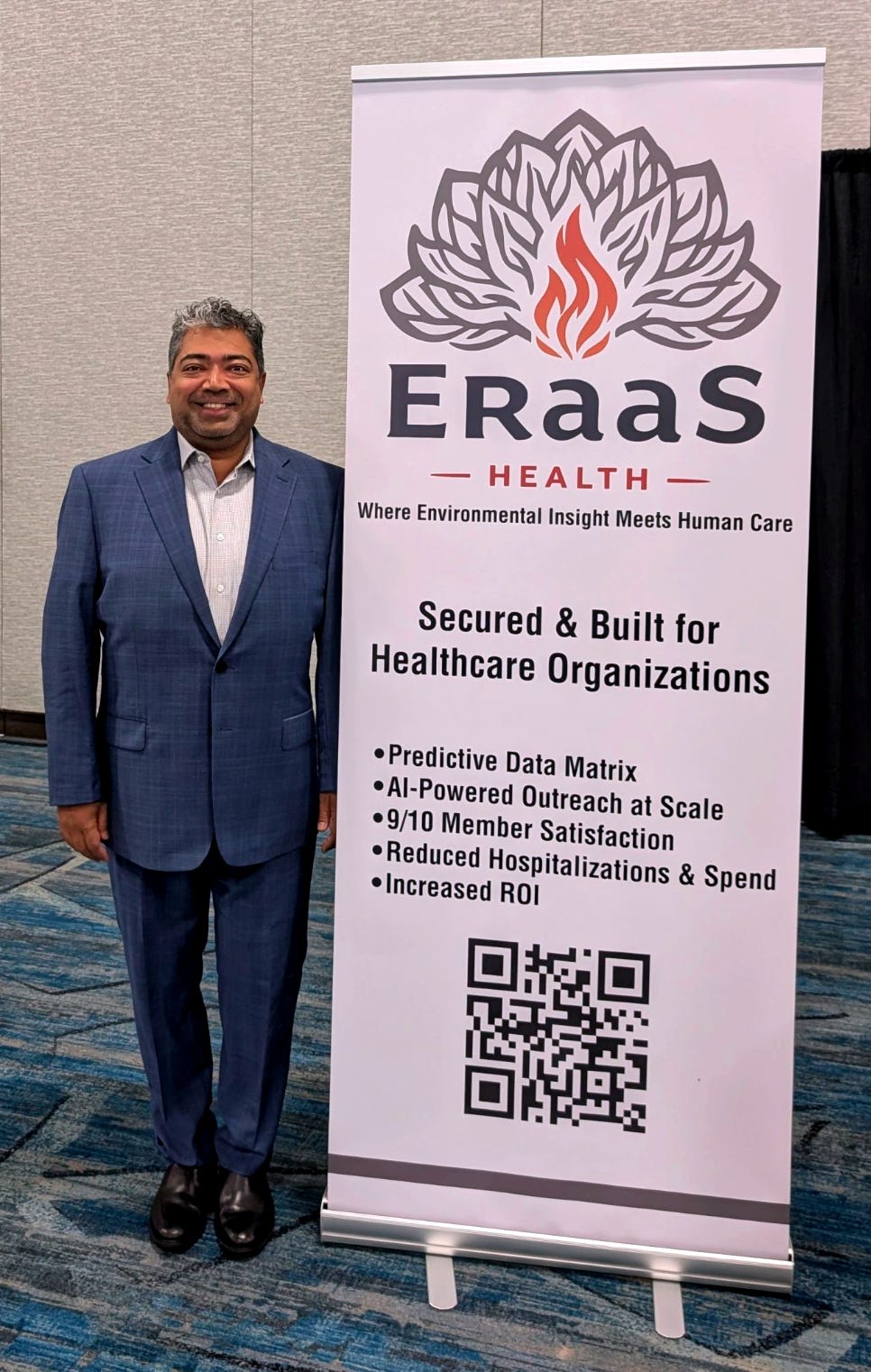
“Timely and personalized interventions related to extreme environmental events affords health plans a new and impactful opportunity to save lives and reduce avoidable spend.”— Chief Medical Officer, Leading Regional Health Plan
Extreme heat is the leading cause of weather-related death in the United States. Not hurricanes. Not tornadoes. Heat. And this week, Southern California recorded March temperatures that rivaled the hottest on record.
Inland temperatures exceeded 100 degrees Fahrenheit. Overnight lows stayed in the 60s and 70s — so warm that the body never fully recovers. The National Weather Service issued an extreme heat warning for much of Los Angeles County through Friday. Climate scientist Daniel Swain described it simply as “a full-on summer heat wave in March.”
Communities haven’t had time to acclimate. The heat is arriving months earlier than typical. Seniors, outdoor workers, and coastal residents without air conditioning are at greatest risk.
That is not a weather story. It’s a preparedness story. And most organizations are not ready.
The Hidden Signal
The New York Times ran a piece earlier this week with a headline that caught my eye: “The Weather Is Getting Wilder, and Some See a Dire Signal in the Data.”
Scientists debate whether the rate of global warming has actually doubled over the last decade. But on one point, there is convergence: the effects of climate change are arriving faster and more powerfully than models predicted. More intense storms. Warming oceans. Accelerating heat waves. All 58 major glaciers tracked by the World Glacier Monitoring Service lost mass for the second consecutive year in 2024. Antarctic sea ice hit its four lowest readings on record — all in the past four years.
“Things are getting really outside of what humans have ever seen. Almost every part of the world is experiencing these extreme events.” — Friederike Otto, Imperial College London
This week’s heat wave is a data point in that trend. A full-on summer heat event in the third week of March is not normal. It is not a one-off. It is the new shape of the weather environment in which every organization operates — whether that organization is a retailer planning spring inventory or a health plan managing a population of vulnerable members.
When the weather becomes more volatile, the gap between what organizations expected and what actually happened gets wider. The question is no longer whether extreme weather will affect your outcomes.
The question is whether you will be ready before it does.
The Problem That Isn’t Being Solved (Fast Enough)
There is no shortage of weather forecasts. Advances in AI and computing have made them increasingly accurate and widely available — forecast data is rapidly becoming a commodity.
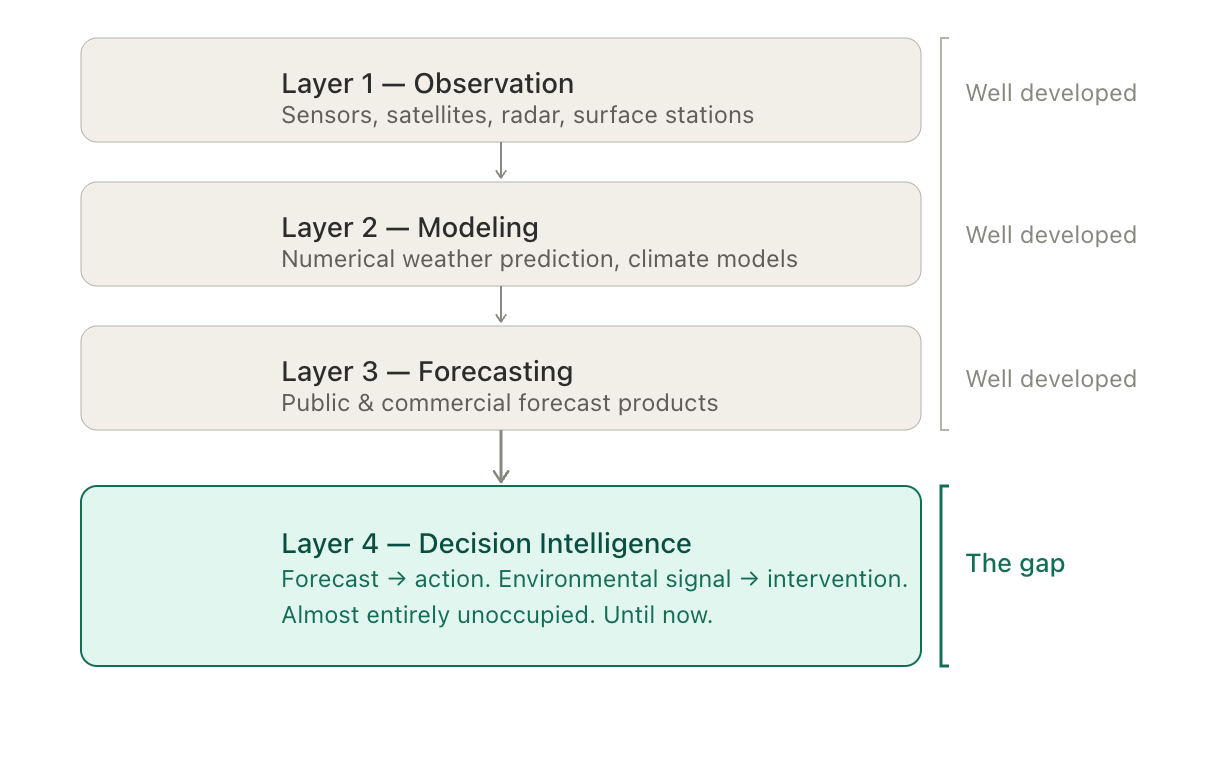
What remains almost entirely unsolved is the translation problem — turning environmental signals into decisions that protect people and organizations before the damage is done.
I call this Layer 4.
The weather industry has built extraordinary capability at Layers 1 through 3: observation, modeling, and forecasting.
Layer 4 — decision intelligence — is where the forecast becomes an action. It is where a heatwave forecast becomes a care intervention. Where a cold pattern becomes a demand signal. Where an environmental anomaly becomes a management decision.
Almost no one is building at Layer 4. The forecast gets delivered. What happens next is left to whoever receives it.
That is changing.
What ERaaS Health Built
I am advising ERaaS Health as their Chief Weather Officer — and what they have built is the clearest example I have seen of Layer 4 weather intelligence actually working at scale.
ERaaS has built a precision environmental intelligence platform for health plans and care organizations. The platform monitors environmental conditions in real time — heat, cold, air quality, pollen, flu risk — and translates those signals into targeted, proactive interventions for members at highest risk.
The workflow looks like this. Environmental data comes in. The platform cross-references it against the health plan’s member population — identifying who has chronic conditions, who is elderly, who faces social challenges that limit their ability to respond to heat. It surfaces the at-risk members before the event peaks. Then it reaches them — through multilingual AI conversational agents that don’t just push information, but build trust, guide members through safety planning, and escalate urgent needs directly to care teams.
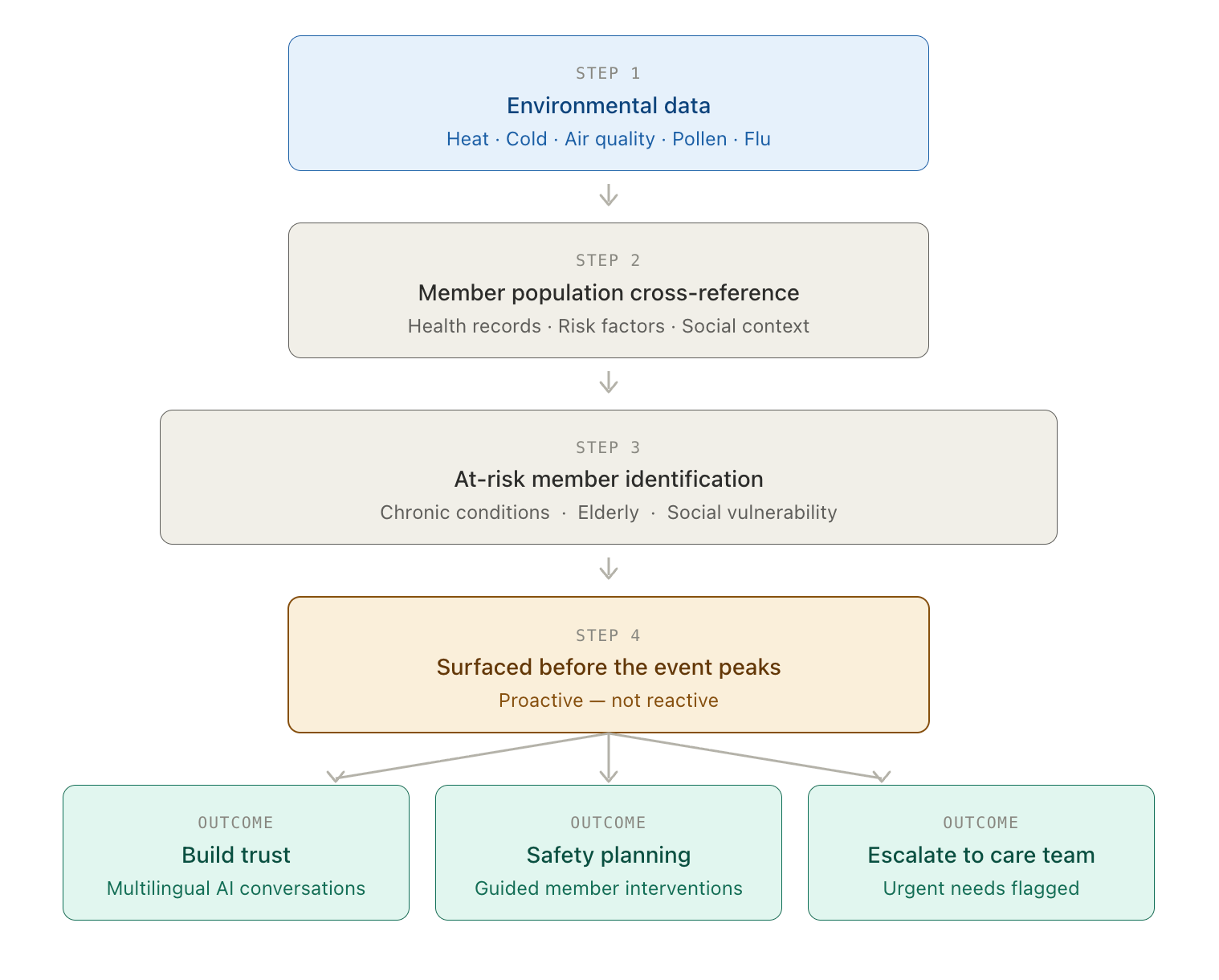
Not forecasts. Decisions. Not alerts. Actions.
The platform operates across five environmental risk categories year-round: heat, cold, air quality, pollen, and flu. Each has a distinct intervention pathway. Each is designed to get ahead of the event — not respond to it after hospitalizations start climbing.
What Happened in New York City
The case study that anchors everything ERaaS Health has built occurred in New York City, where summers have grown increasingly severe, and health plans have watched heat-related hospitalizations rise with them.
The populations most at risk — members with chronic conditions, older adults, people facing social challenges — often had no idea a dangerous heat event was coming. And even when they did, they frequently lacked the support to act on it.
A regional health plan partnered with ERaaS Health to change that. In less than three weeks, the platform identified more than 20,000 at-risk members and reached them proactively through multilingual AI conversational agents. Those agents didn’t send a generic heat advisory. They had real conversations — assessing individual risk, guiding members through specific safety plans, and automatically escalating the cases that needed clinical attention.
The Chief Medical Officer of the health plan put it plainly:
“Timely and personalized interventions related to extreme environmental events affords health plans a new and impactful opportunity to save lives and reduce avoidable spend. ERaaS Health’s innovative platform successfully targets and engages members at the right time and place.”
Twenty thousand at-risk members identified and reached. In three weeks. Before the hospitalizations happened.
That is what Layer 4 looks like when it works.
ERaaS Health has protected more than 75,000 members, reduced hospitalizations and inpatient visits by 47%, and earned a 9/10 member satisfaction score. If your organization manages populations at risk from extreme weather events, reach out to ERaaS Health.
Why This Matters Now
The California heat wave this week is not an isolated data point. It’s arriving in the context of a climate system that is producing more frequent, more intense, and less predictable extreme events.
The spring transition window — the most important demand-activation period in retail and one of the highest-risk periods for vulnerable populations — is becoming harder to navigate every year.
Organizations that treat weather as a variable they react to will keep losing ground. Organizations that build the capability to anticipate and act — the way ERaaS Health did in New York City — will have a structural advantage that compounds over time.
The forecast is no longer the hard part. The hard part is what happens next.
ERaaS Health shows what becomes possible when the decision layer gets built. The architecture travels — environmental signal, population or footprint mapping, targeted intervention. Healthcare today. Every weather-exposed industry next.
Advisory disclosure: I advise ERaaS Health as Chief Weather Officer. ERaaS Health is a precision environmental intelligence company that applies agentic AI to reduce weather-related hospitalizations and improve patient outcomes. Their platform transforms real-time environmental data into proactive clinical interventions.
G2 Weather Intelligence™ · www.g2weather.com · Built with Claude · Published on Substack