

On Monday, I wrote that the weather would give Home Depot and Lowe’s “a demand foundation the Street isn’t talking about, one that could deliver upside against expectations.”
I also noted that: “That doesn’t mean a blockbuster quarter.”
The Weather Gives Home Depot and Lowe’s a Demand Floor
A record-warm fall and the first U.S. hurricane in two years won’t fix housing. They could deliver a quarter that beats what the Street expects.
And that’s pretty much how it played out.
Home Depot’s comparable sales rose 2.2%, ahead of the 1.8% the Street expected, its highest comp growth in four years.
Lowe’s comps rose 1.8% against a 0.4% consensus, and the company raised its full-year outlook to about +0.5% from flat.
The Lowe’s beat came five days after Stifel downgraded the stock to Sell, citing housing, margin pressure, and competition. Yes, housing is still weak, and the margin questions are fair. But demand held up better than that call assumed, helped by a longer outdoor season.
Both stocks opened lower today and climbed through the session. As I published this, Lowe’s shares were up about 0.9% and Home Depot’s about 0.4%.
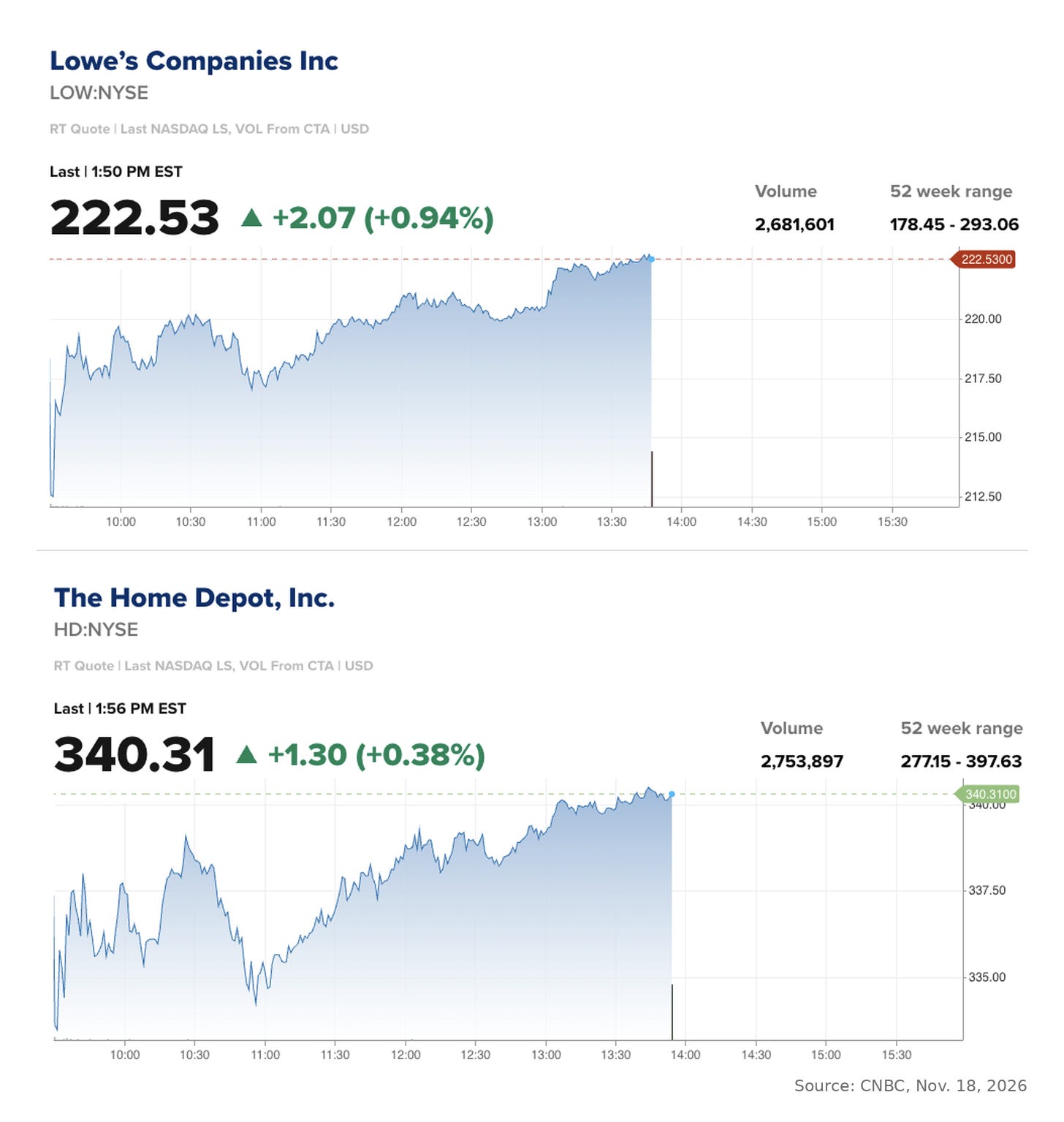
The record-warm fall did most of the weather work. Isaias helped at the edges, but one late-season storm in the Florida Panhandle wasn’t big enough to come up on either call.
It wasn’t a blockbuster, either. Pro customers, online sales, appliances, and repair and maintenance carried both quarters. The weather added a lift at the margin, and against a cautious Street, the margin was enough.
When Weather Helps, Nobody Calls It Weather
Here’s what I’ve noticed over many years of listening to these calls. When the weather hurts, it becomes the story. When it helps, the credit goes to merchandising, execution, and market share.
Last year, Home Depot said its third quarter missed “primarily due to the lack of storms.” This week, with a record-warm fall working in its favor, incoming CEO Richard McPhail acknowledged “there’s some weather in Q3,” then moved straight to share gains as the story.
Lowe’s played the weather down on its call, even as it credited a longer outdoor season for some of its strongest categories. Its Q4 guidance, meanwhile, puts a precise number on the January headwind from lapping Winter Storm Fern.
The negatives get basis points. The positives get a passing mention.
I don’t think that’s spin. Management teams talk about what they control, and nobody controls the weather. What they can control is how well they anticipate it.
The best retailers already plan around weather forecasts. The next step is weather-intelligent agents that anticipate the expected impact and act on it before it shows up in the results.
Still, investors who only listen for the word “weather” will hear it in the bad quarters and miss it in the good ones.
Lowe’s: The Extended Season, Category by Category
Lowe’s CFO Brandon Sink called the weather “pretty much a non-story,” and then described exactly what I expected:
“We did see a little bit of a bump in October for the extended selling season period with a little bit warmer October benefiting some of our outdoor categories.”
Merchandising chief Bill Boltz added detail.
Riding mowers sold well “because of the extended season.” In garden, “landscape, fertilizer, landscape mulch, those types of hardscapes were strong.”
The monthly numbers fit. Comps ran +0.3% in August, +2.9% in September and +2.0% in October. Sink noted that the Labor Day shift moved about 150 basis points from August into September, so the quarter was steadier than it looks.
October is the cleaner read: +2.0% this year against −2.6% last year. Some of that swing is an easy comparison, since last October was lapping Helene and Milton. The warmer October and the longer outdoor season did the rest.
The outdoor strength is carrying into the fourth quarter.
Boltz: “early on in Q4, we are seeing some of that with the milder weather. We are seeing some of those outdoor projects continue to get done, both on the Pro side as well as the DIY side.”
One twist I didn’t expect: snowblowers.
Customers are “preparing for that winter season” after last January’s Winter Storm Fern, and Lowe’s saw an early response in both battery and gas models. A storm people remember can drive winter prep even when the outlook is mild.
Lowe’s has also planned for that storm in its outlook.
Fern sent shoppers out for storm supplies, adding about half a percentage point to Lowe’s fourth-quarter sales. That boost won’t repeat unless another storm hits, and Lowe’s still expects fourth-quarter same-store sales to be “slightly positive,” because the rest of the business is growing at about the same pace as in the third quarter.
That’s the kind of weather accounting I wish every retailer did.
Home Depot: Same Season, Different Aisle
JPMorgan’s Chris Horvers asked Home Depot directly whether “extended warmth” had helped. Merchandising chief Billy Bastek answered:
“There’s always some seasonal aspects. I mean we had a much warmer September as one example. So we sold some more ACs and fans during that month.”
Then he moved on to underlying demand.
The warm September shows up in the monthly cadence. U.S. comps ran +1.1% in August, +4.4% in September and +1.3% in October, against +2.2%, +0.3% and −1.7% a year ago.
Bastek credited September to the heat and the Labor Day shift together. October, up three points from last year’s weak month, shows the extended season.
Home Depot didn’t use the word “season” for its outdoor business, but the categories tell the story. DIY strength included hardscapes. Pro strength included irrigation and siding. That’s the same exterior work Lowe’s tied to the longer fall.
The storm side is where Home Depot was most direct.
Incoming CEO Richard McPhail said the pressure in roofing is “almost unprecedented” after “2 years in a row with really very little storm seasons,” and Home Depot cut its outlook for SRS, its roofing distributor, to low single-digit organic growth.
The Southern division, where storms usually carry the quarter, was “essentially flat.” Isaias wasn’t enough to change that, which is about what I expected.
Two things belong outside the weather discussion. The average ticket rose 3.0% while transactions fell 0.5%, and Bastek said about half the ticket gain was price.
Why It Matters
If the weather only gets credit when it hurts, it’s easy to underestimate how much the shifting season is helping. That’s the point I made in Monday’s post: the mean is moving. Fall now arrives later than it used to, and the demand curve for seasonal products is moving with it.
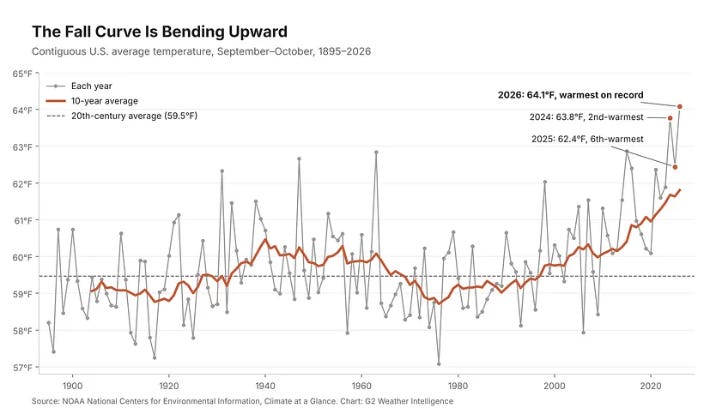
The retailers that plan for that shift, and the investors who track it, will find upside that never makes it into the press release.
Target, and What’s Next
Target had its best quarter in years: comps up 5.6% on a 5.0% traffic gain. I left it out of Monday’s note because the weather can’t move the top line that much.
But the category split is worth a look. Apparel and accessories sales fell 3.8%, according to WWD.
Target never mentioned the weather on its call. Chief Merchandising Officer Cara Sylvester put the problem on “Women’s fashion and shoes,” adding, “we weren’t consistent enough on fit, fabric, and quality. That’s on us.”
Target also said sales “did slow down a bit in October” before accelerating again in November. It didn’t say why. October is when fall apparel and seasonal goods should take over from back-to-school, and it was the fourth-warmest October in NOAA’s 132-year record.
Target’s apparel problems are self-inflicted, and management said so. But it’s telling that a retailer with 5% traffic growth couldn’t sell more fall clothes in the warmest September–October on record.
Thursday brings the next test. Gap, Walmart and Ross report, and NOAA releases its December outlook at 8:30 a.m. Back in August, I put Old Navy on my risk list for this winter. I’ll follow up Friday, with a closer look at what a mild December could mean for winter apparel and softlines.
This is my analysis of weather exposure, not investment advice.
The analysis and writing here are mine. I use Claude as an editor — for fact-checking and line edits — not as a source of ideas or content.
© 2026 G2 Weather Intelligence. All rights reserved.