

Summary View
Home Depot reports tomorrow, Nov. 17. Lowe’s follows on Wednesday. The setup going in is cautious: housing is weak, big-ticket projects are stalled, and on Friday, Stifel downgraded Lowe’s to Sell.
My read: the weather is a tailwind that offsets some of those macro challenges.
Last year’s third quarter had no storms, and Home Depot said that’s the main reason it missed. This year, the fall ran warmest on record, stretching the outdoor season, and Hurricane Isaias made landfall in October, the first U.S. hurricane since 2024.
That doesn’t mean a blockbuster quarter. It means a demand foundation the Street isn’t talking about, one that could deliver upside against expectations.
The longer view matters, too: a warming climate and a mild winter, fueled by a super El Niño, are, on balance, positives for the home sector.
Last Year: The Quarter Without Storms
The 2025 hurricane season was the first since 2015 with no U.S. hurricane landfall. The home centers felt it.
Home Depot’s third-quarter comparable sales rose just 0.2%, and U.S. comps rose 0.1%. CEO Ted Decker put it plainly: “Our results missed our expectations, primarily due to the lack of storms in the third quarter.” Roofing, generators, and plywood all came in light. Roofing shipments at SRS, its Pro distribution business, fell by double digits, and comps slid to −1.5% in October.
Lowe’s grew comps 0.4%, but only after absorbing roughly a one-point headwind from lapping Hurricanes Helene and Milton in 2024.
That makes last year’s third quarter about as easy a weather comparison as the home centers get.
This Year: A Longer Season and a Hurricane
The weather in this year’s third quarter (August through October) worked for the home centers in two ways.
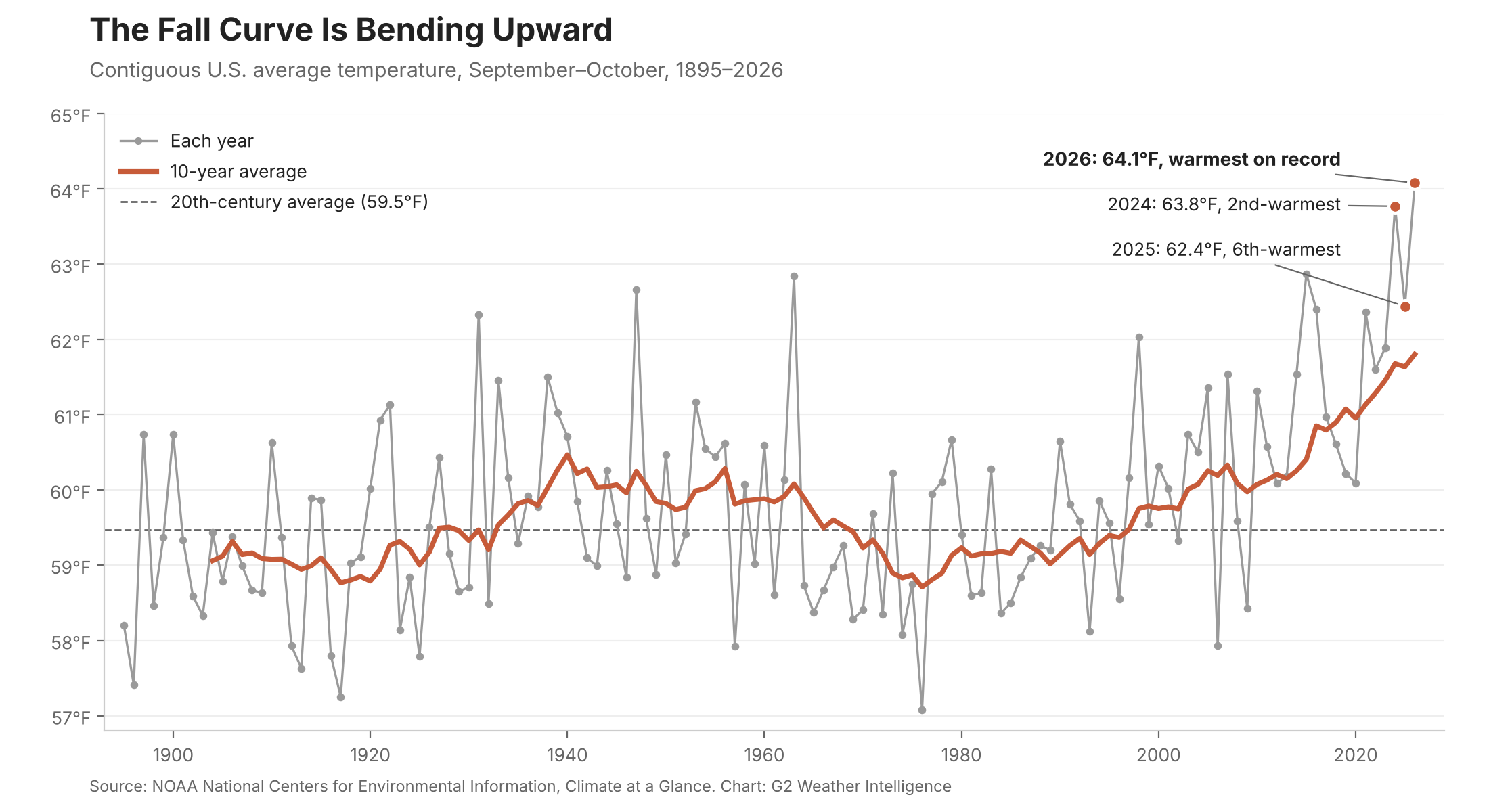
A longer outdoor season. September–October was the warmest on record for the contiguous U.S., 4.6°F above the 20th-century average and 1.6°F warmer than last year, according to NOAA. The South and the Ohio Valley had their warmest fall on record. Warm, mostly dry fall weather keeps lawn and garden, outdoor living and exterior projects moving weeks longer than usual, and it gives Pros more working days.
A hurricane. On Oct. 9, Hurricane Isaias made landfall near Destin, Florida, as a Category 2 storm with 105 mph winds. It was the first hurricane to hit the U.S. since Milton in October 2024. Isaias knocked out power to nearly 800,000 customers and dropped more than 11 inches of rain in parts of the Panhandle before moving across the Southeast.
Storm prep and cleanup show up fast at the home centers: generators, plywood, tarps, chainsaws, then roofing and repair. That’s exactly the demand that was missing last year.
Isaias was one storm, late in the quarter, in one region. It won’t move the national numbers the way Helene and Milton did in 2024. But against a quarter with no storms at all, every bit counts.
What the Street Expects
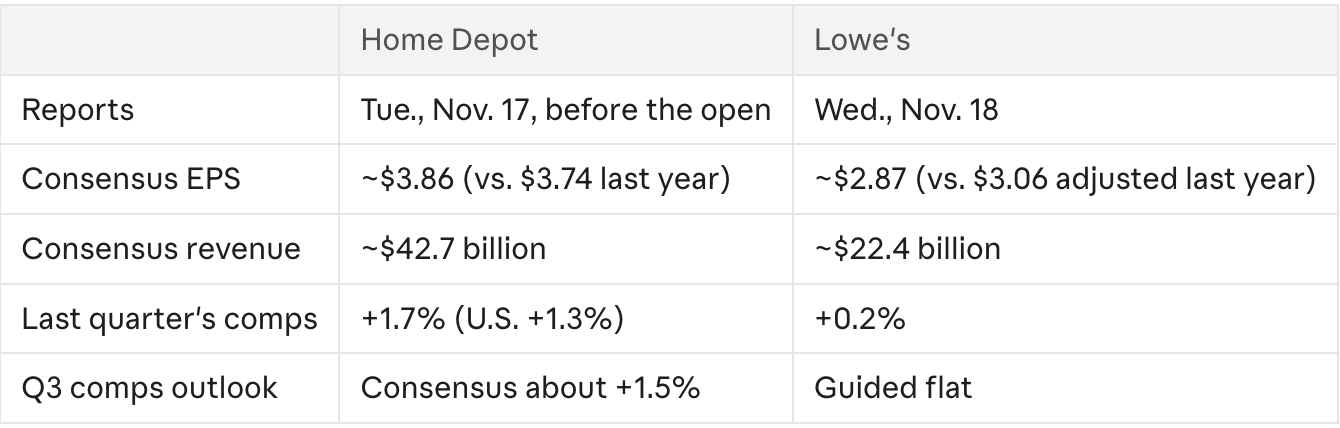
The mood is cautious. Housing turnover is frozen, mortgage rates keep big renovations on hold, and do-it-yourself demand is soft. On Friday, Stifel downgraded Lowe’s to Sell, citing housing, margin pressure and competition. Its price checks found the same products about 3% cheaper at Amazon, Costco and Walmart. Stifel also warned that both stocks, after Home Depot’s 25% run since early October, trade at valuations that “require certainty.”
There are a few optimists. One large bank’s research arm raised its Home Depot comp estimate to 2.5%, a full point above consensus. Home Depot itself said U.S. comps strengthened every month last quarter, reaching 2.2% in July.
Almost every preview I’ve read is missing the weather.
The Bigger Picture: Warming, El Niño and the Home Sector
This isn’t only about one quarter.
The climate is warming, and the seasons are moving with it. The two warmest falls in NOAA’s 132-year record are 2024 and 2026, and by my rough math, fall now arrives about a week later than it did in the 20th century.
That hurts sellers of coats and boots. The home centers mostly come out ahead: more weeks to sell lawn and garden, outdoor living and exterior projects, and more days for Pros to work outside.
The next three months point the same way. NOAA’s winter outlook favors a warmer-than-average December through February for much of the Northeast and Upper Midwest, with a wetter South, as a very strong El Niño takes hold. Mild winters keep contractors working. Wet ones bring repair work.
I’ve seen this before. In December 2015, during the last super El Niño, I told CNBC that Home Depot and Lowe’s were among the mild winter’s winners, even as apparel retailers struggled.
There are offsets. A mild winter delays snow throwers, ice melt, heaters, and weatherization. And Lowe’s has already built about a half-point drag into its fourth-quarter outlook from lapping last January’s winter storm. On balance, though, a warmer climate and a mild El Niño winter are net positives for the home sector.
My Call
The weather is a tailwind for home centers this quarter, enough to offset some macro pressure. I’m not calling a blockbuster. Housing is still the bigger driver, and the weather won’t fix it. But a longer outdoor season and storm demand from Isaias give both companies a demand foundation that last year’s quarter didn’t have. Against cautious expectations, that could mean upside.
Home Depot is better positioned to capture it. Its Pro business is larger, and SRS, the roofing distributor that saw double-digit shipment declines without storms last year, is the most direct beneficiary of storm repair. Lowe’s gets the same weather, but carries more do-it-yourself exposure and the margin questions Stifel raised.
What to listen for
Weather on the calls. Does management credit the warm fall or Isaias, the way it blamed the lack of storms last year?
October comps. Last year’s October was the weak month. A rebound there is the weather showing up.
Category detail. Lawn and garden, outdoor living, generators, roofing and storm repair.
Q4 commentary. How each company frames a mild El Niño winter, and whether Lowe’s still expects a drag from lapping last January’s storm.
I’ll score the call after Wednesday, as I did last year.
This is my analysis of weather exposure, not investment advice.
The analysis and writing here are mine. I use Claude as an editor — for fact-checking and line edits — not as a source of ideas or content.
© 2026 G2 Weather Intelligence. All rights reserved.