When a “Forecast Miss” Prevents Tens of Millions in Losses
A reminder that weather intelligence creates value when it changes decisions—not when it looks perfect

Earlier this week, Alan Gerard of the Balanced Weather Substack (a publication I highly recommend!) did something rare—and important.
He corrected his own initial assessment of the recent historic flooding along Washington State’s Skagit River after new reporting clarified what actually happened.
At first glance, it looked like a major forecast miss. The National Weather Service (NWS) had projected record-shattering river crests—levels that ultimately did not materialize.
The truth turned out to be far more consequential.
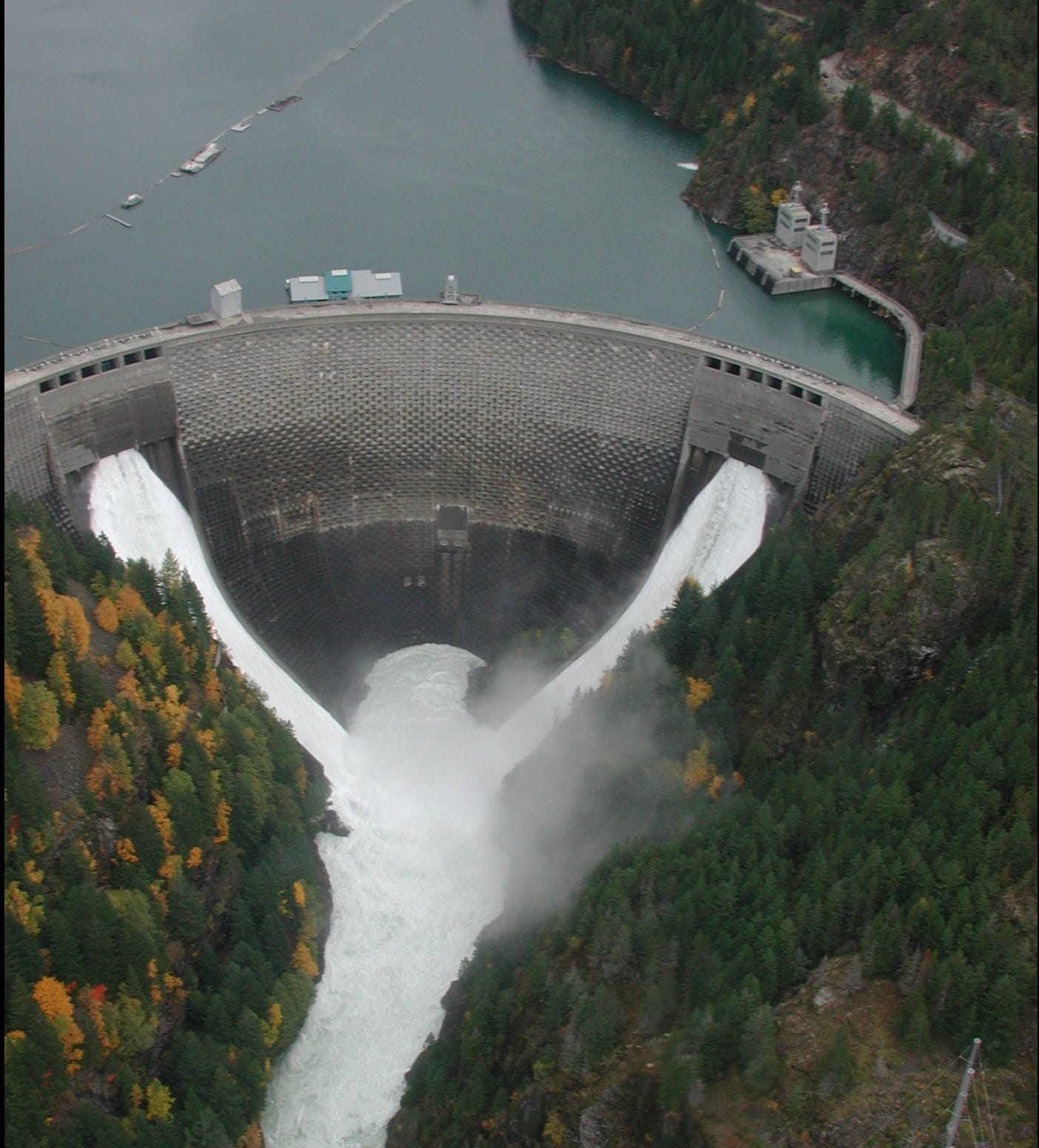
Based on those extreme flood forecasts, the U.S. Army Corps of Engineers (USACE) proactively took control of upstream dam operations, impounding roughly 50,000 cubic feet per second of flow into Ross Lake.
That single operational decision reduced downstream river crests by an estimated 4–6 feet—dramatically limiting the extent and severity of flooding in populated areas.
The forecast wasn’t wrong. It changed behavior.
The Economics of a “Miss”
Allan did the hard work of unpacking what actually happened. What I want to add is the economic lens — because this is a textbook example of how forecasts create value only when they trigger decisions.
Flood events of this scale in the Pacific Northwest have historically generated hundreds of millions of dollars in property, infrastructure, agricultural, and business losses. In the Skagit case, shaving several feet off the river crest likely determined which communities flooded and which didn’t, how deep floodwaters rose, and how long damage persisted. Flood damage is highly nonlinear: once rivers cross key thresholds, incremental increases in water level translate into disproportionate increases in economic loss.
Against that backdrop, a conservative, back-of-the-envelope analysis suggests avoided losses on the order of $100 million or more.
That loss avoidance was enabled by:
Early identification of a tail-risk event
Credible forecast communication
Operational authority to act
Pre-existing coordination between NWS, USACE, utilities, and emergency managers
For context, that single avoided-loss estimate rivals a meaningful share of the National Weather Service's annual operating budget.
This is the return on weather intelligence. Not perfection—mitigation.
Why This Matters Beyond Floodplains
This is not just a public-sector success story … it’s a blueprint.
Weather intelligence creates value only when it drives action. The signal has to reach the right people, early enough, in a form they trust—and those people must have the authority and discipline to respond.
Which brings us to markets.
The “Weather Excuse” Fallacy
Every earnings season, investors hear variations of the same refrain: “Results were impacted by unpredictable weather.”
But prolonged weather deviations—persistent warmth, extended cold, drought, flooding—are rarely unpredictable. They are often signaled days or weeks in advance.
What’s unpredictable is whether management teams:
Translate forecasts into operational adjustments
Rebalance inventory and mix early
Protect margin before markdowns become inevitable
The Skagit River outcome demonstrates what happens when organizations act on the signal. Many retailers’ earnings calls demonstrate what happens when they don’t.
The Investor Signal
For analysts and CFOs, the lesson is straightforward: the economic value came not from the weather forecast being right, but from management being ready to act.
When weather is cited as the reason for downside surprises—after a prolonged, well-forecasted regime—it’s not describing volatility. It’s revealing a failure of execution.
Investor implication: Focus less on traffic headlines and forecast narratives, and more on gross-margin sensitivity, inventory timing, and management’s ability to act early under uncertainty.
The Takeaway
The Skagit River forecast didn’t prevent flooding — it prevented the worst version of it.
That’s the difference between weather as information and weather as intelligence. This outcome wasn’t luck or heroics; it was forecast → decision → action → avoided loss.
Forecasts don’t create value on their own — they create value when they change decisions early enough to matter.
That is the economic case for weather intelligence.
Source acknowledgment: This analysis builds on reporting and corrections published by Alan Gerard at the Balanced Weather Substack. Weather and hydrologic forecasts referenced were produced by the National Weather Service in coordination with federal and state partners.
Appendix: Back-of-the-Envelope ROI of the Skagit River Mitigation
This is a conservative estimate designed to illustrate order of magnitude, not precision.
Step 1: What Changed
Based on reporting and hydrologic data:
Forecast river crests were ~5–6 feet higher than what ultimately occurred
USACE intervention reduced peak flows by roughly 50–60 Kcfs
Result: downstream river stages were 4–6 feet lower than they would have been absent intervention
In flood economics, feet matter. Damage curves are nonlinear.
Step 2: What a 4–6 Foot Reduction Typically Prevents
A reduction of this magnitude across a populated river basin like the lower Skagit likely prevented:
Residential inundation
Thousands of homes in floodplain zones
Typical FEMA damage estimates: $50k–$150k per impacted home
Agricultural losses
Farmland flooding, crop destruction, soil remediation
Commercial and industrial losses
Warehouses, small businesses, inventory damage
Infrastructure damage
Roads, bridges, utilities, wastewater systems
Secondary economic disruption
Business interruption, cleanup costs, displacement
Step 3: Conservative Dollar Framing (Illustrative)
Using deliberately conservative, order-of-magnitude assumptions to bound potential avoided losses:
Residential and agricultural impacts: ~$50–125 million
Commercial and infrastructure damage: ~$40–90 million
Secondary economic disruption (business interruption, logistics, cleanup): ~$20–50 million
Illustrative range of gross avoided damage:
On the order of ~$100–250 million
These figures are not a loss accounting exercise. They are intended to establish economic scale, not precision.
Notably excluded from this framing:
Long-term economic displacement
Insurance premium and reinsurance effects
Federal and state disaster response costs
Psychological, health, and social impacts
Step 4: Context vs. Forecasting Cost
For perspective:
NOAA / National Weather Service annual operating budget: ~$1.2 billion
Against that benchmark, a single forecast-enabled operational decision—in one river basin, during one event—appears to have generated avoided losses plausibly equivalent to a meaningful single-digit to low-double-digit percentage of the NWS’s annual budget.
The takeaway is not budget arithmetic.
It is that forecast-driven decisions can produce outsized economic returns when signals are trusted, acted upon, and operationalized early.
© G2 Weather Intelligence™. Proprietary analysis. Attribution requested.

