

I saw it coming — just not all of it.
As the holiday week came into range, the short-range forecasts told a clear story here in the mid-Atlantic: Memorial Day week was a tale of two seasons.
We eat our own cooking at G2 Weather Intelligence, so we acted on the signal. Packed up and headed to our cottage at the Delaware shore for the heat wave window, then returned to headquarters in the western Philadelphia suburbs ahead of the deterioration.
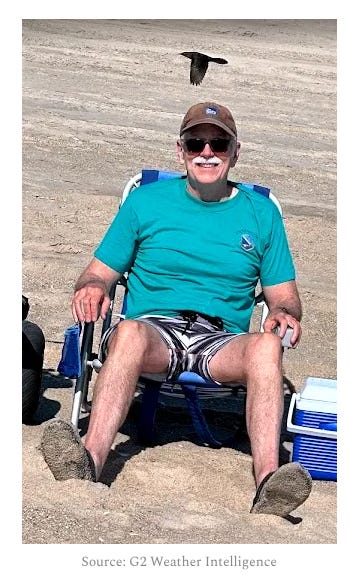
At the beach, my wife took my photo. Neither of us noticed the black bird flying overhead until we looked at the image later. I took it as an omen.
It was …
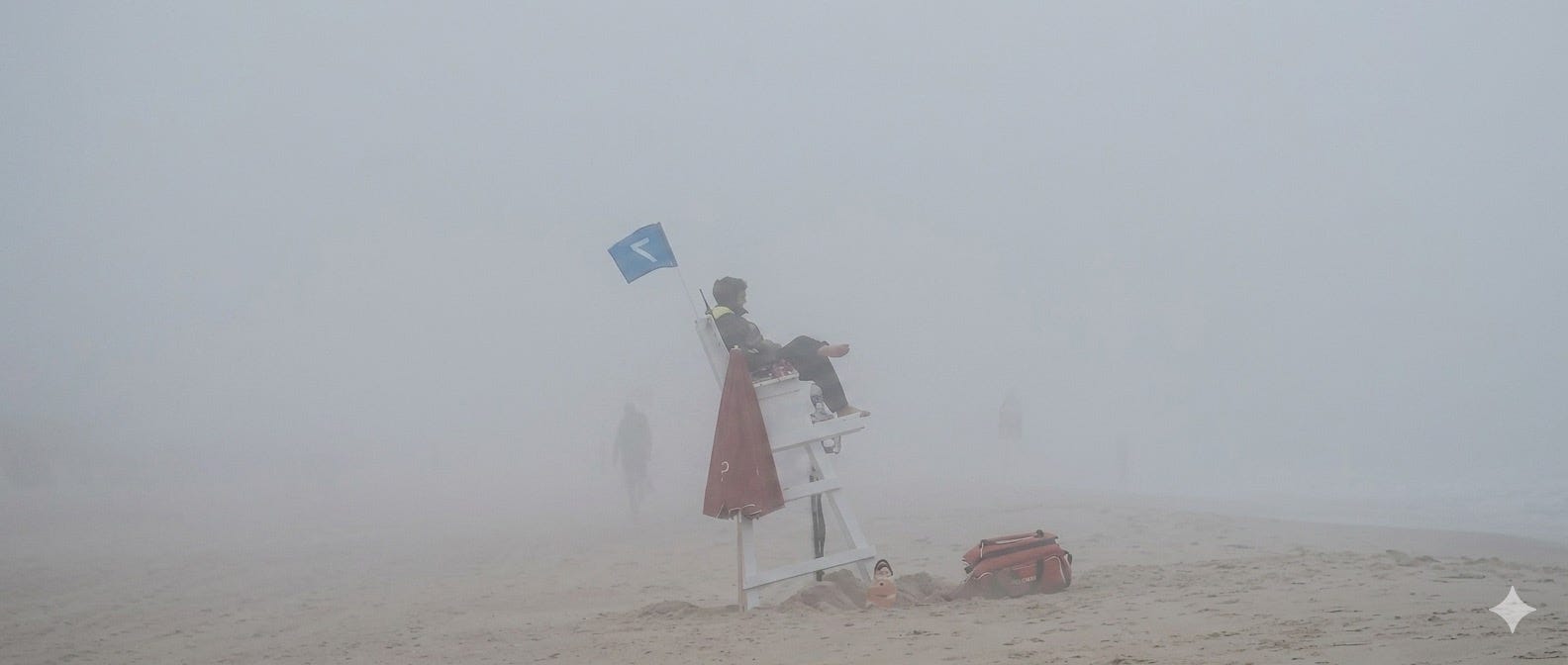
Memorial Day weekend delivered (yet again) cold, wet, and windy conditions across the Northeast and Mid-Atlantic — uncomfortably close to last year’s nor’easter across the same geographies. Not as severe. But enough to empty beaches, cancel cookouts, and suppress the outdoor activity that defines the holiday weekend for retailers and consumers alike.
Wrong for the Right Reason
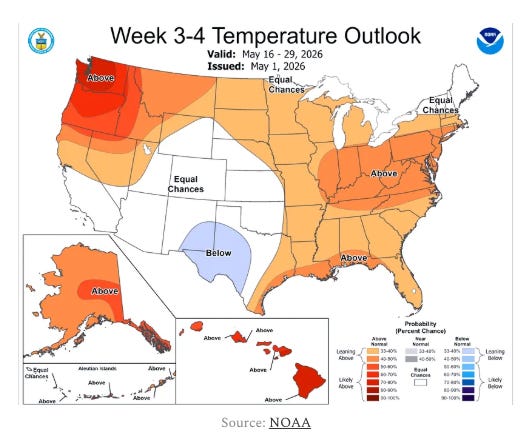
Three weeks ago, I published a bullish outlook for Memorial Day week across the Northeast. The models were right about the odds, but the atmosphere delivered a low-probability outcome. It took the under.
This is exactly the moment my methodology is built for.
A plan optimized for a greater-than-70 % probability of normal or above temperatures is the correct plan. It will face a low-probability outcome 30% of the time. That is not a planning failure — it is the nature of working with incomplete information in a probabilistic environment.
The merchant who positioned for warmer, drier weather during the week leading up to Memorial Day made the right decision based on the information available. They were wrong for the right reason — the outcome does not change the quality of the decision.
What separates weather-intelligent planning from weather-agnostic planning is not a perfect forecast. It is a systematic framework for making better decisions more often — and the discipline to stay with the high-probability position even when the atmosphere occasionally has other ideas.
The Consumer Is Already Under Pressure
The Memorial Day weather did not hit a resilient consumer. It landed on the most financially stressed American consumer in more than 70 years.
The stock market and the American consumer are living in different realities. The S&P 500 just notched its eighth consecutive week higher, with valuations not seen since the dot-com peak in 2000.
At the same time, the University of Michigan consumer sentiment index fell to its lowest level ever recorded — ten percent below the prior low set in June 2022. In 2000, Americans were euphoric. Today, they are despairing.
The primary culprit is fuel. The “special military operation” in Iran sent gas prices sharply higher. Walmart’s CFO confirmed it in real time: the average gallons per fill-up at Walmart fuel stations fell below 10 for the first time since 2022. That is not a data point. That is a behavior change.
Tax refunds and warm spring weather masked the pressure in Q1. Both are gone.
June 2025: As Good As It Gets
Before looking at what June 2026 is likely to bring, it is worth understanding how favorable last June actually was.
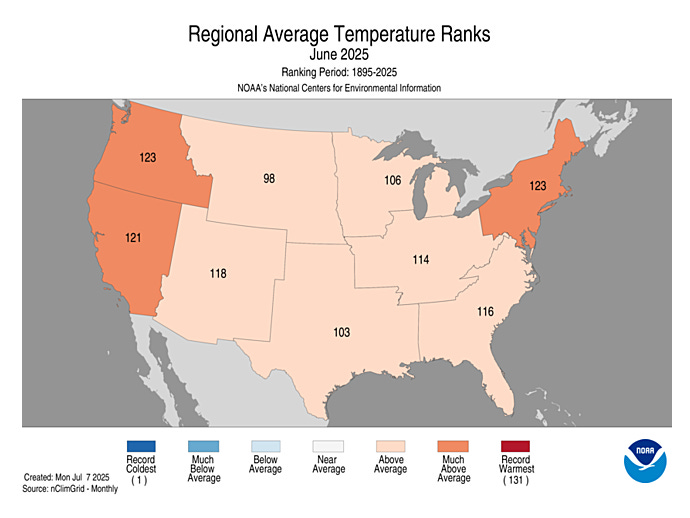
Last June ranked 125th warmest out of 131 years on record — the 7th hottest June nationally since 1895. The entire continental US ran above normal simultaneously. The Northeast hit 123rd warmest — top 8% on record. The West Coast approached record territory. The South and Southeast ran well above normal. The weakest regional signal in the country was still above normal.
In late June, a historic heat dome pushed temperatures 15 to 20 degrees above normal across the eastern US, putting nearly 160 million people under heat alerts simultaneously. Boston hit 102 degrees. Philadelphia reached 101. Newark hit 103. New York City came within a degree of its first triple-digit June temperature since 1966.
The outdoor demand environment last June was about as favorable as it gets across the entire retail footprint simultaneously.
June 2026: A Different Picture
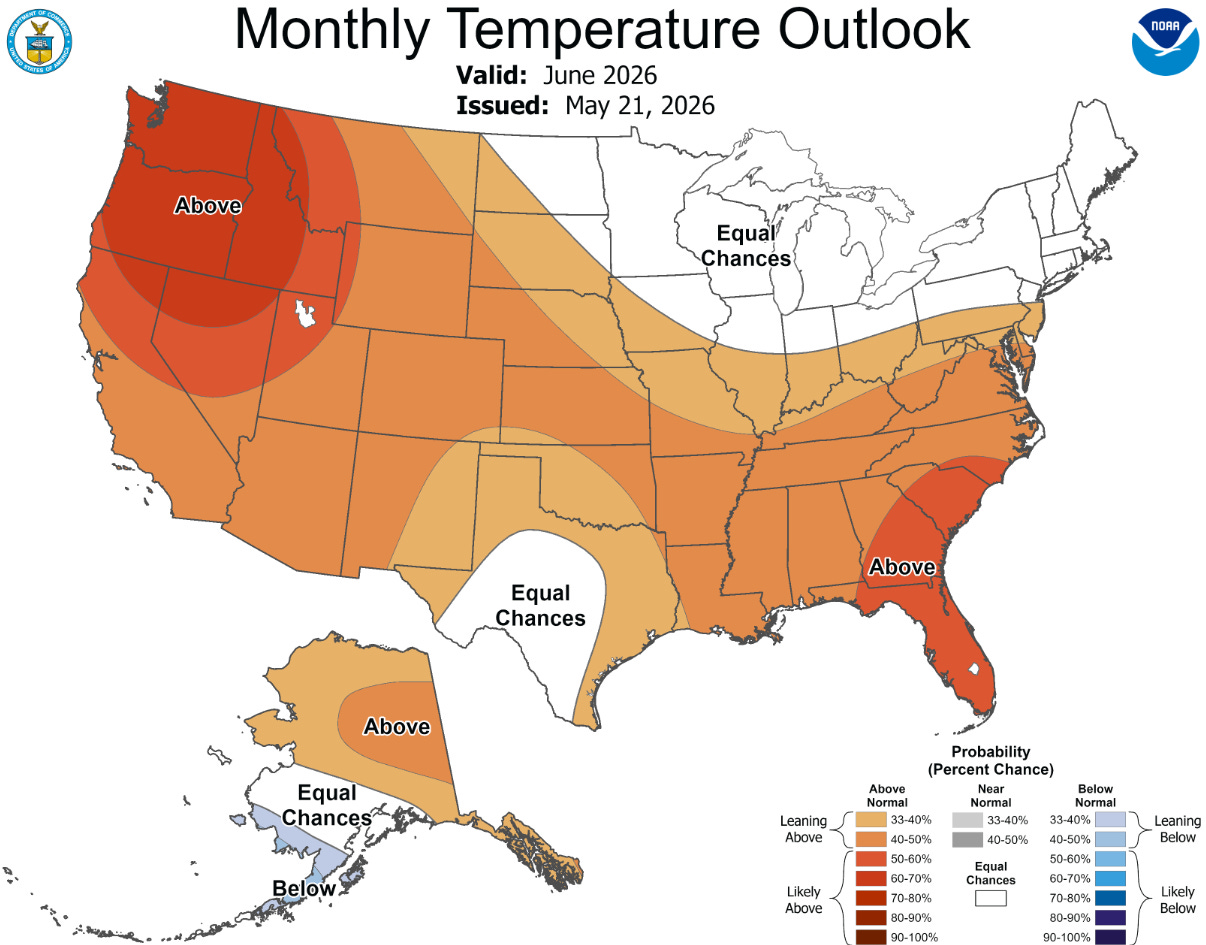
NOAA’s Climate Prediction Center is forecasting above-normal temperatures across the West, Central Plains, South, and Southeast. That signal is supported and persistent.
The Northeast is a different story. The most densely populated and highest-value retail geography in the country sits in Equal Chances territory — no strong signal either way. When there is no strong signal, the forecast defaults to normal. After last June’s historic heat, normal means meaningfully cooler.
This is not a forecast of a cold June. It is a forecast of a cooler one — and in the context of what retailers are measuring against, cooler is enough to matter.
The South and Southeast stay warm but face above-normal precipitation. Warm and wet is not an outdoor demand environment. The June setup across both regions is materially softer than last year.
Last Year’s Weather Impact on the Home Sector
Home Depot and Lowe’s are the proverbial canaries in the coal mine for the impact of weather on consumer demand. Last August, when both reported Q2 FY2025 results, the weather story was hiding in plain sight.
Lowe’s Q2: Weather Shifts Spark a Late-Quarter Comeback — After a slow, weather-challenged spring, Lowe’s finished Q2 with momentum, outpacing Home Depot’s softer rebound. The driver wasn’t execution. It was July’s heat wave arriving at exactly the right moment for a company that had positioned for it.
Home Depot Q2: The Weather Was the Story — July’s heat and rain were the difference between sluggish sales and growth momentum. The monthly comps made it undeniable.
That was last year’s setup. This year, the comparison is the problem.
The Cloud Over Summer Retail
Summer moves consumer demand differently from spring. In spring, a single warm weekend pulls shoppers into lawn and garden, outdoor living, and seasonal apparel. The pent-up demand is real and the response is immediate.
Summer requires more. Temperatures need to run persistently above or below normal — sustained over weeks, not days. Precipitation becomes a dominant risk variable. Too many consecutive wet days suppress outdoor traffic in ways a single rainy weekend does not. Too little water throughout the growing season stresses lawns and gardens, leading consumers to stop investing in them.
This spring had three tailwinds — relatively warm, dry conditions, an early Easter, and tax refunds cushioning the pressure from fuel costs. All three are gone.
What replaced them is a June setup in which the most valuable retail geography in the country gets a reduced heat tailwind, consumer sentiment is at a 70-year low, and the year-over-year weather comparison is among the most challenging in recent memory.
The weather was the backstop in Q1. There is no backstop in Q2.
Musical Coda
© 2026 G2 Weather Intelligence. All rights reserved.