

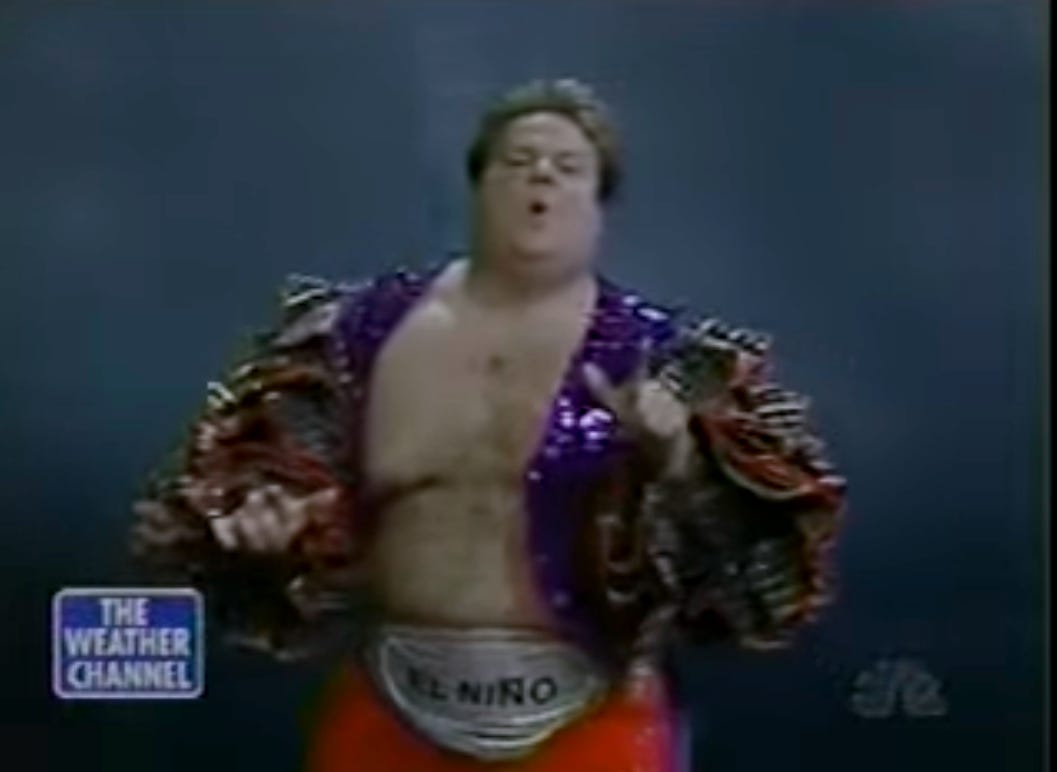
El Niño was officially declared on June 11 — and a Super El Niño may be on the way.
NOAA’s Climate Prediction Center upgraded its alert status from El Niño Watch to El Niño Advisory, signifying that El Niño conditions are now present in the equatorial Pacific and expected to strengthen.
My pal and G2 Weather Intelligence subscriber Andrew Freedman covered it for CNN — if you follow weather and climate, he’s a great read.
NOAA now puts the odds of a strong El Niño at nearly 90% and the odds of a very strong — Super — El Niño at over 60% by autumn. Some models project that Pacific sea surface temperatures will exceed the record-breaking levels of 1982-83 and 1997-98.
If verified, this would be the most powerful El Niño in recorded history.
One important caveat. The oceanic signal and the atmospheric response are not the same thing. NOAA’s own forecasters noted this week that El Niño’s teleconnections to North American weather are weak during summer — meaning the near-term forecast is being driven by model guidance, not El Niño composites.
The full force of El Niño arrives in winter. I’ll be covering the balance of summer implications in a separate post. This one is about what history tells us about the holiday season — and what retailers should be doing about it right now.
What History Says — The 2015-16 Playbook
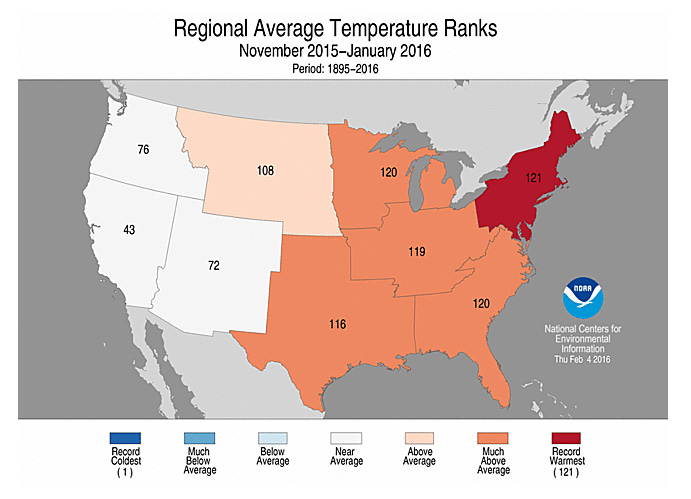
The most recent comparable El Niño was 2015-16 — strong, though not at the scale now being forecast for this event. The retail record from that winter is instructive.
Outerwear sales in the US fell 10% during the 2015 holiday season. Shoppers walked mall parking lots in shorts and short sleeves with no reason to browse winter apparel. Retail consultancy Planalytics estimated apparel retailers lost approximately $838 million in sales from mild November and December weather alone — and that figure didn’t include department stores or discount retailers.
Macy’s CEO Terry Lundgren put a precise number on it in the company’s official holiday sales release: “About 80 percent of our company’s year-over-year declines in comparable sales can be attributed to shortfalls in cold-weather goods such as coats, sweaters, boots, hats, gloves and scarves.”
Comparable sales on an owned basis fell 5.2% for the November-December period. The culprit was historically warm weather in the northern climate zones where Macy’s and Bloomingdale’s are most concentrated.
By late December, with markdowns above 50% on winter apparel, industry researchers noted it would be very difficult to make up margins in the coming months. A last-minute cold snap in the final two weeks of December generated an estimated $200 million in apparel sales — described by one analyst as “better than a sharp stick in the eye” but nowhere near enough to save what he called “an otherwise sorry season.”
The 2015-16 El Niño was strong but not historically strong. The event now building is forecast to potentially exceed it. The retail implications scale accordingly.
The 1997-98 Comparison
Go back to the last truly historic El Niño — 1997-98 — and the picture is more nuanced but equally instructive.
A peer-reviewed study published in the Bulletin of the American Meteorological Society found that the 1997-98 El Niño produced an estimated $4 billion in direct losses nationally but approximately $19 billion in economic benefits — a net positive for the US economy overall.
The northern half of the country experienced warmer winters, record retail sales of seasonal products and homes, record construction activity, and significant savings on heating costs.
The net number was positive, but the distribution was anything but uniform. Heating fuel costs dropped significantly. Home improvement and construction benefited from the mild winter. Outerwear, winter recreation, and snow-removal equipment incurred losses.
The Category Winners and Losers
The pattern across both events is consistent. During the 2015-16 El Niño winter, residential heating oil prices fell approximately 29% compared to the prior year, and households paid 15% less for propane — freeing up consumer wallet share that might otherwise have gone to heating costs.
That savings offset is real and worth noting for retailers in non-weather-sensitive categories.
But for anyone selling outerwear, heating equipment, ski gear, or cold-weather seasonal products, the El Niño winter is a direct headwind against demand that no amount of promotional activity can fully overcome.
What a Potentially Historic El Niño Means for Holiday 2026
If the current forecast verifies — strong to very strong (super?) El Niño by autumn, with the full atmospheric coupling arriving for the November through January selling window — the historical pattern points to several clear implications:
Warmer-than-normal temperatures across the northern US and Great Lakes reduce demand for outerwear, heating equipment, cold-weather accessories, and winter recreation products. These are not marginal effects. In 2015-16, a merely strong El Niño cost specialty apparel retailers nearly $1 billion in lost sales.
The South and Southeast face wetter than normal conditions — suppressing outdoor activity and driving some demand toward indoor entertainment and home categories.
Home improvement and construction benefit from the mild winter — a tailwind for Home Depot and Lowe’s comparable to what the warm spring delivered in Q1 2026.
Heating fuel cost savings free up consumer wallet share — a modest positive for general merchandise and discretionary categories, particularly among lower-income consumers for whom energy costs represent a larger share of household spending.
The overall picture: a warmer El Niño winter is not a retail disaster. It is a category rotation.
The retailers who plan for it in advance — shifting inventory away from cold-weather categories and toward the categories that benefit — will outperform. The ones who carry their historical cold-weather buys into a warm El Niño winter will be the ones citing weather on their Q4 earnings calls. After the fact. Without a plan.
This Is Exactly What an Integrated Weather Strategy Is Built For
The 2015-16 El Niño was forecast with high confidence months in advance. NOAA called it in the summer of 2015. The retailers who acted on that forecast — adjusting their holiday buys, managing outerwear inventory more conservatively, and leaning into home improvement and indoor categories — had a materially better holiday season than those who didn’t.
The retailers who ignored it were the ones blaming the weather on their January earnings calls.
The G2 Weather Intelligence Brainstorm series is built around exactly this kind of end-to-end weather strategy — from the seasonal buy to the markdown decision to the marketing activation. Three posts are live. Five more are coming. The capstone shows what it looks like when every piece is running simultaneously.
The forecast is calling for a potentially historic (Super?) El Niño winter. The retailers who start building their weather strategy now will be better positioned than the ones who read about it in a Q4 earnings call transcript next February.
Video Coda
© 2026 G2 Weather Intelligence. All rights reserved.