

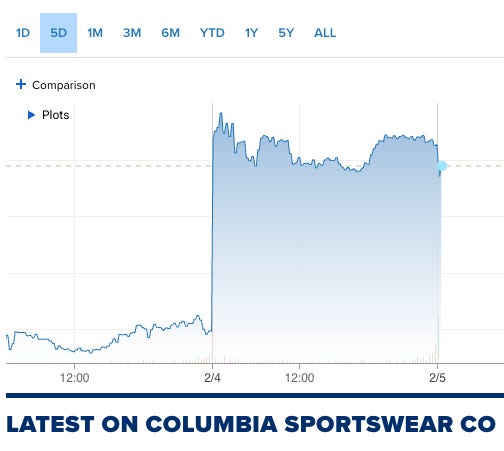
“In my experience, the weather impact on our company is much larger than almost any other category of impact.” —Timothy Boyle, CEO, Columbia Sportswear
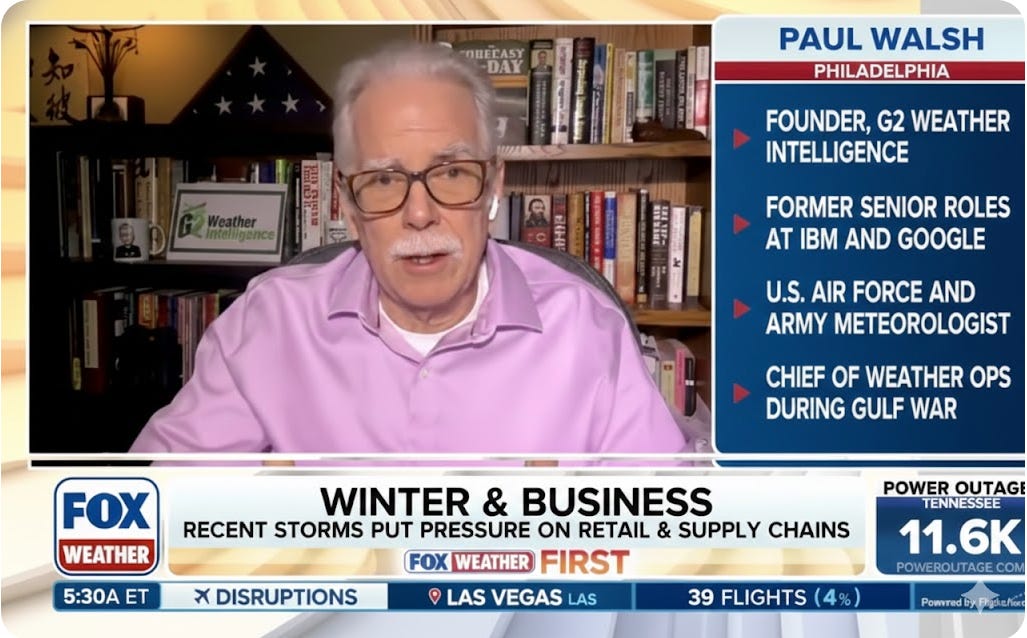
It’s been a busy couple of weeks at G2 Weather, which tends to happen whenever the weather starts behaving badly. I’ve made a couple of CNBC appearances, recorded a podcast (stay tuned), and appeared on FOX Weather this morning, simulcast on FOX Business.
This morning’s hit forced me to do something I haven’t done in donkey’s years: set an alarm.
(Oh, the humanity!)
I’m generally an early riser, but a 5:30 AM appearance still qualifies as o-dark-thirty, which—if I’m being honest—hurt a little bit. My little dog Benji wasn’t thrilled either. Two minutes before airtime, he was scratching at my office door, trying to figure out what on earth I was doing up at that hour. Fortunately, I was able to calmly convince him to KNOCK IT OFF, and the appearance went off without a hitch.
From the Weather Desk to the Earnings Tape
The FOX Weather segment wasn’t about forecasts—it was about outcomes.
Specifically, how weather conditions translate into real-world behavior, category-level demand, and ultimately the numbers companies report when they step up to the mic.
That connection moved quickly from the studio to the earnings tape this month, as two major outdoor and apparel companies reported results that bore the clear imprint of U.S. weather conditions—yet were interpreted very differently by the market.
The Weather Was the Same. The Market Response Wasn’t.
This week, Columbia Sportswear Company (NASDAQ: COLM) and VF Corporation (NYSE: VFC) both reported earnings that beat expectations.
In both cases, the setup looked familiar. U.S. winter weather aligned with peak demand, supporting outerwear and performance categories and helping offset softer conditions elsewhere.
On the surface, the quarter looked similar. The market reaction was not.
Columbia Sportswear’s stock jumped after its report. VF Corporation moved the other way—despite also beating expectations and pointing to improving profitability and cash flow.
Winter weather broke in both companies’ favor, but investors delivered two very different verdicts.
Columbia Sportswear delivered a substantial quarterly surprise. For the fourth quarter, the company posted adjusted earnings per share of $1.73, crushing the consensus estimate by more than 42%
VF Corporation (NYSE: VFC) saw its shares fall more than 8% intraday despite reporting stronger-than-expected third-quarter results and highlighting improving profitability and cash flow trends for fiscal 2026.
The Question Investors Are Asking
If weather helped both companies clear the bar, why did the market reward one and punish the other?
Both businesses are meaningfully weather-exposed. These are not weather-agnostic balance sheets. Cold-season demand, seasonal timing, and how weather aligns with the retail calendar still matter—especially in peak quarters.
At VF Corporation, that exposure is most visible through The North Face, which delivered approximately 15% growth in the Americas this quarter—one of its strongest U.S. performances in more than three years during the peak winter season.
Columbia Sportswear has a similarly direct relationship with weather-driven demand. When winter shows up on time, results tend to follow.
The market wasn’t debating whether weather mattered. It clearly did.
What investors were really weighing was something else: how much of this quarter’s strength is repeatable—and how much depends on weather cooperating again.
That’s where the reactions diverged.
🔒 Premium Subscriber Analysis
Below, I break down why weather helped both companies—but guidance, portfolio context, and management credibility ultimately determined which stock the market rewarded.
