

“The weather is never important until it’s important. And then it’s too late.” —Anonymous, U.S. Air Force weather community
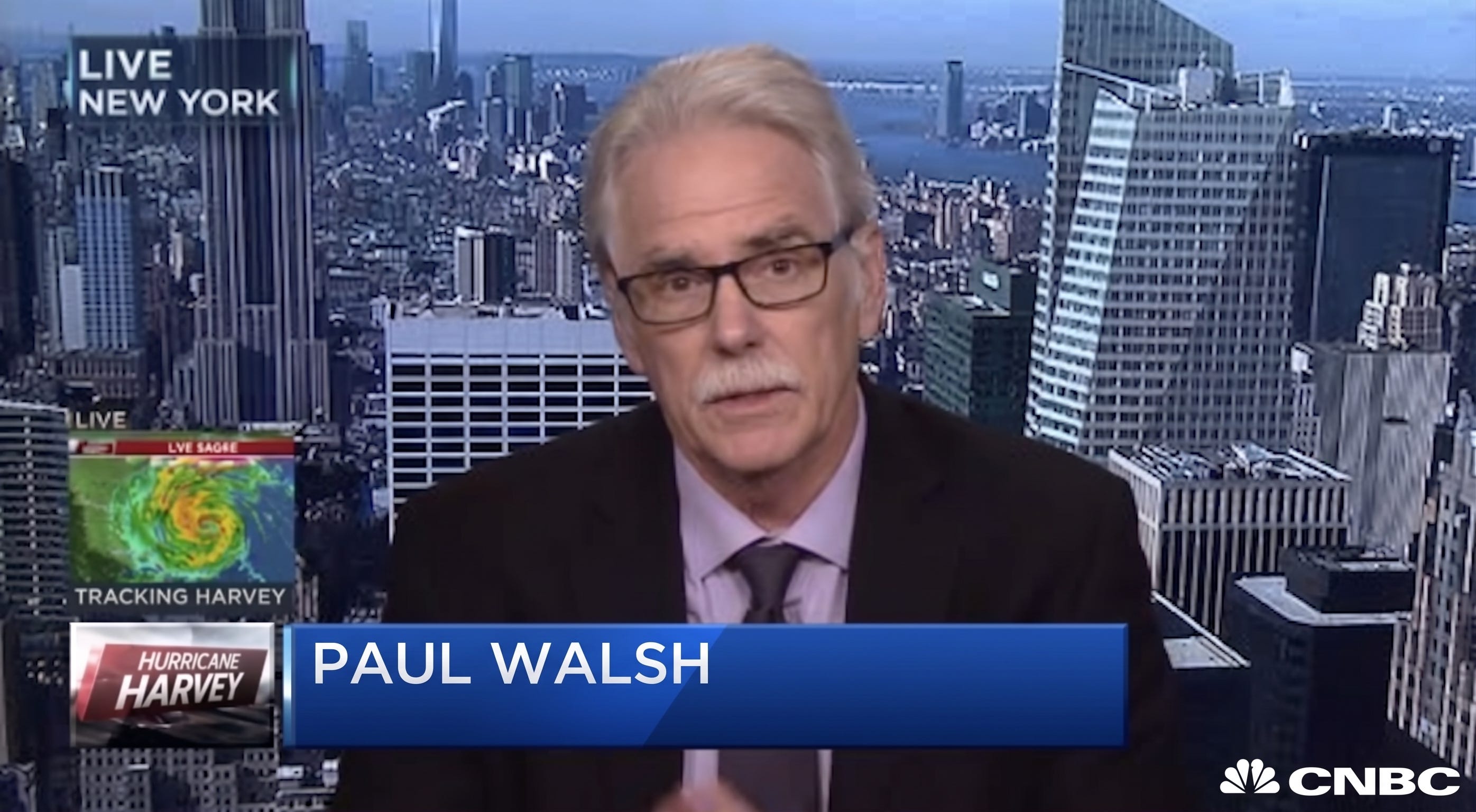
I've spent years reporting live as hurricanes bore down on the coast, breaking down what the storm meant for consumers and the broader economy. This season looks nothing like that. Which is exactly what makes it dangerous.
NOAA’s below-normal call for the 2026 Atlantic hurricane season has, so far, been verifying. That’s not a surprise; it’s exactly what a super El Niño would be expected to do to the Atlantic: more wind shear, less storm development, fewer named systems.
As CNN meteorologist Chris Dolce reported this week, 2026 is now the least active Atlantic season since 1950. If it finishes with no U.S. landfall, 2025 and 2026 would be the first back-to-back no-landfall years since 2009-2010.
Below-normal odds are not zero odds, though. Roughly four out of five seasons since 1950 have produced at least one landfalling hurricane, and the ones that do arrive tend to catch people off guard precisely because attention has drifted elsewhere.
The forecast being right so far doesn't lower the risk. It just lowers people's guard.
Twenty Years of Costly Reminders
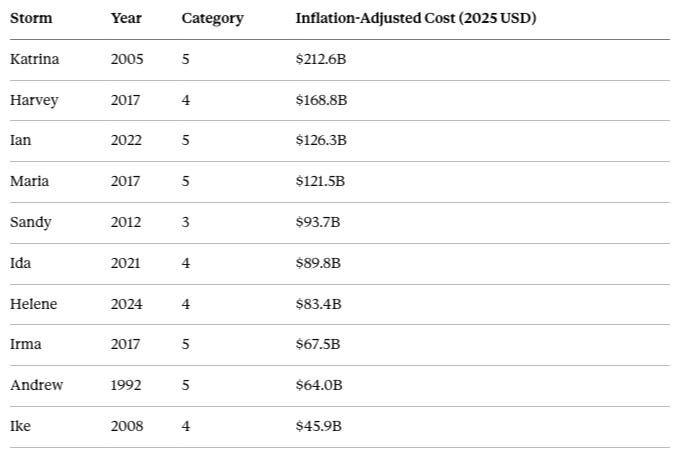
Here's what the highest-impact U.S. hurricanes actually cost, in today's dollars, according to Climate Central's live database.
Quiet seasons don't guarantee quiet outcomes.
Andrew is the clearest proof: CSU forecast the 1992 season as below-average as early as December 1991, and by mid-August, forecasters were publicly remarking on the "lack of a hurricane season." Weeks later, Andrew made landfall as a Category 5.
The lesson isn't that quiet years produce zero risk. It's that quiet years reduce public attention and political urgency, and that's exactly the kind of complacency that shows up in staffing decisions, budget cuts, and discontinued data.
Figures pulled directly from Climate Central’s live U.S. Billion-Dollar Weather and Climate Disasters database, the continuation of NOAA’s original methodology. Costs are CPI-adjusted on an ongoing basis, so these numbers will drift slightly over time. More on why that matters below.
Less Prepared Than We've Ever Been
This is the part of the story that doesn't get enough attention.
None of what follows is a knock on the people doing this work. The problem isn't the workforce. It's the political decisions that have left fewer of them, with fewer tools, standing between the public and the next storm.
Three separate threads, each real on its own, combine into one uncomfortable picture.
Thread one: cuts to our National Weather Service
NOAA has lost roughly 20% of its workforce, more than 2,200 people, to layoffs and early retirements since February 2025, including 560-600 National Weather Service staff out of about 4,800.
That same round of cuts reduced or suspended twice-daily weather balloon launches at forecast offices across the country, the data that feeds directly into the models used for severe weather and hurricane forecasts.
Last year, the government also came within a month of cutting off satellite data that hurricane forecasters use to detect rapid intensification, reversing course only after an uproar from meteorologists and NOAA’s own staff.
Thread two: FEMA itself
A GAO report published in August 2026 found that FEMA cut more than 4,300 employees, about 17% of its workforce, in fiscal year 2025, without assessing what that would do to its ability to respond to a disaster.
The agency has been operating without a confirmed Administrator. GAO’s language is blunt: continuing to wait for direction “leaves FEMA at risk.”
Contracts for CORE staff, the on-call responders who deploy immediately after a disaster and often stay for years, began lapsing on New Year’s Eve 2025, and draft planning documents floated cuts to surge staffing as steep as 85%.
Worth reading in full: Alan Gerard, a meteorologist who tracks FEMA and disaster-response policy closely at Balanced Weather, covered the underlying WSJ reporting on this directly: WSJ: “FEMA Is Paralyzed”
Thread three: the data on what disasters cost.
In May 2025, NOAA retired its Billion-Dollar Weather and Climate Disasters database, the government’s own decades-long system for tracking what disasters actually cost.
Citing “evolving priorities, statutory mandates, and staffing changes,” NOAA stopped updating the archive after 2024. The agency’s own former lead scientist on the project, Adam Smith, left and was hired by Climate Central to keep the methodology going independently.
The table above is only possible because of that private continuation. If Climate Central hadn’t rebuilt it, we’d have no current, credible answer to “what would this storm cost today.”
Put those three threads together, and you get a genuinely uncomfortable picture: a degraded set of tools used to forecast the storm in the first place, fewer people positioned to respond to it once it hits, and a weaker public accounting of what it will have cost once it happens.
None of that required a storm to make landfall. It already happened, during the quietest hurricane season in a decade.
Sandy, Thirteen Years Later
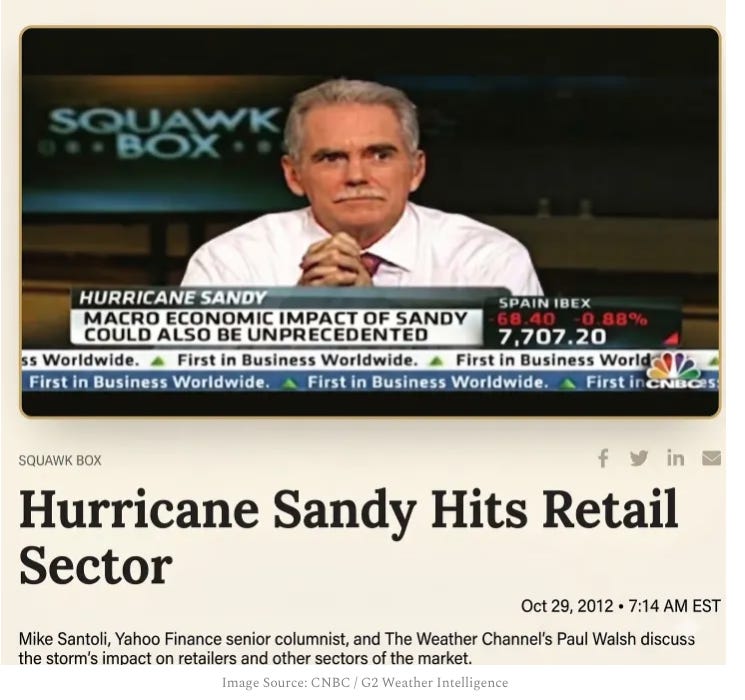
When Sandy hit, I reported for CNBC on the storm's impact on consumers and business as The Weather Channel's (TWC) Business and Weather expert. TWC and CNBC were jointly owned by NBC at the time, so I was on air in the CNBC studio in Englewood Cliffs throughout the storm.
Sandy caused $68.7 billion in damage at the time. Adjusted to today’s dollars, Climate Central’s live database now puts the cost at $93.7 billion.
What a pure inflation adjustment misses is that a Sandy-scale storm hitting the Northeast today would likely cost more than that number implies, not less.
Coastal populations in the tri-state area have grown. Property values, especially in the flood-exposed parts of New York and New Jersey that took the worst of the surge, are dramatically higher than they were in 2012.
Rebuild costs, especially for materials and labor, have outpaced general inflation in the markets most exposed to storm risk. Sandy was the second-costliest storm in U.S. history when it hit. Several others have since surpassed it.
Also see my post from this past April: Forecasters Predict a (Relatively) Quiet Hurricane Season. Don't believe it. I was on CNBC the morning Sandy hit. Here's what I learned.
This Year’s Specific Complication
Sandy shows how much damage a storm can do without needing hurricane-force winds at landfall. This year, there’s a specific version of that risk worth naming directly, and it’s geopolitical, not meteorological.
The U.S. is currently in an active conflict with Iran that has already disrupted global oil markets. The IEA has called the Strait of Hormuz closure earlier this year the largest supply disruption in the history of the global oil market.
As of early September, fresh hostilities pushed oil to a five-week high.
Houston is home to the country's largest refining and petrochemical corridor. A Katrina-track storm hitting that corridor, or the Louisiana Gulf Coast more broadly, wouldn’t just be a repeat of 2005’s regional devastation. It would hit U.S. domestic refining capacity at the exact moment global oil supply is already thin from an unrelated geopolitical conflict.
The two risks aren’t independent this year. They compound.
That’s a genuinely different setup than any storm on the table above faced. None of them landed during an active war that had already strained the global energy system before the first drop of rain fell.
October Surprise?
I recently wrote that a 90% probability isn’t a guarantee; it’s the right way to size a bet. The reverse holds too: a below-normal season doesn’t mean zero landfalling hurricanes … it just means lower odds.
Most years, at least one storm still makes landfall somewhere that matters. This year, a Gulf Coast landfall wouldn’t just be a storm. It would hit a NOAA running short-staffed and short on data, a FEMA cut without an impact assessment and with no confirmed administrator, and a country with no functioning tool left to measure the damage costs.
A quiet season that produces one bad landfall costs more this year than it would have in most other years, because nearly everything that would normally cushion that blow has been pulled back or strained at once.
That's not a prediction that this will happen. It's a case for why being right about the forecast so far doesn't mean the risk is gone.
If anything, the quiet has made it worse.
The analysis and writing here are mine. I use Claude as an editor for fact-checking and line edits, not as a source of ideas or content.
© 2026 G2 Weather Intelligence. All rights reserved.