

This fall was the warmest September–October in NOAA’s 132-year record, and October ranked fourth-warmest. Over the past two weeks, retailers reported what that meant.
For apparel, it meant what I expected: softness across nearly every company and category.
The pattern repeated from one earnings call to the next. August and September were solid. October stalled as sweaters, fleece, and outerwear sat on the shelves. November picked up as temperatures finally dropped.
Most retailers still topped Wall Street’s expectations. The difference was how well they planned for the weather.
Company by Company
Burlington put a number on it. The company has “a lot of internal data showing the correlation between daily temperatures and comp sales growth,” and estimates the warm weather cost it 300 basis points of comparable sales.
By my rough math, that’s about $80 million in lost sales in a single quarter. Comps rose just 1%, short of the 2.3% Wall Street expected, and Burlington lowered its full-year earnings outlook. CEO Michael O’Sullivan said the shortfall was “driven entirely by traffic.”
Ross saw it coming. Comps rose 8%, above its own guidance, even as warm weather “dampened fall selling late in the quarter.” CEO Jim Conroy: “We anticipated some of the weather problems.” Every apparel category grew.
Gap Inc. said Old Navy was on track through September, until a warm October forced extra promotions. Banana Republic was “overweighted towards cold weather categories,” and its sales fell 3%. Gap cut its full-year sales outlook to roughly flat.
Kohl’s was the outlier. October was its best month of the quarter. It leaned into value events and lighter layers, with fleece and long-sleeve tees up in the low teens, and flowed seasonal inventory closer to need. Comps rose 1.2%, its first sales growth in more than four years. Heavier outerwear and sweaters in the North still slowed.
Abercrombie & Fitch never named the weather, though analysts asked about it three times. It called this its “best sweater quarter we’ve ever had.” Comps rose 6%, and management credited tight inventory and a model built to “read and react.”
Dick’s topped expectations on back-to-school, footwear and trading cards, but October was a different story. “It’s all about fleece and outerwear,” CEO Lauren Hobart said, “and that business just did not happen at that moment because of the extremely warm weather.”
Target (covered last week): apparel and accessories sales fell 3.8%, the only category that shrank in a quarter when total sales grew 7%.
Home Depot and Lowe’s were the flip side. The same warmth stretched the outdoor season, and both topped expectations.
The Weather Floor Held: Home Depot and Lowe’s Beat Sales Expectations
A record-warm fall gave both a longer season to sell into.
Who Managed It
Same weather, different playbooks. Ross anticipated it in its assortment. Kohl’s shifted toward lighter goods and better-timed inventory. Abercrombie keeps inventory tight and chases what sells.
Burlington measured the impact precisely, but as O’Sullivan acknowledged, it planned for more than the weather allowed: “In 2026 we were more aggressive with our sales plans, but I don’t think that approach helped us.”
The customer matters, too.
O’Sullivan described his core shopper as someone who “will not shop unless they have a clear and immediate need.” A value shopper buys a coat when it gets cold. A younger fashion shopper buys the sweater everyone’s wearing, whatever the forecast.
Retail sales look healthy in dollars, but a lot of that is price. At Home Depot and Dick’s, shoppers made fewer trips and paid more per trip. For value shoppers already stretched by inflation, a warm fall gave them one more reason to wait.
The Mean Is Moving
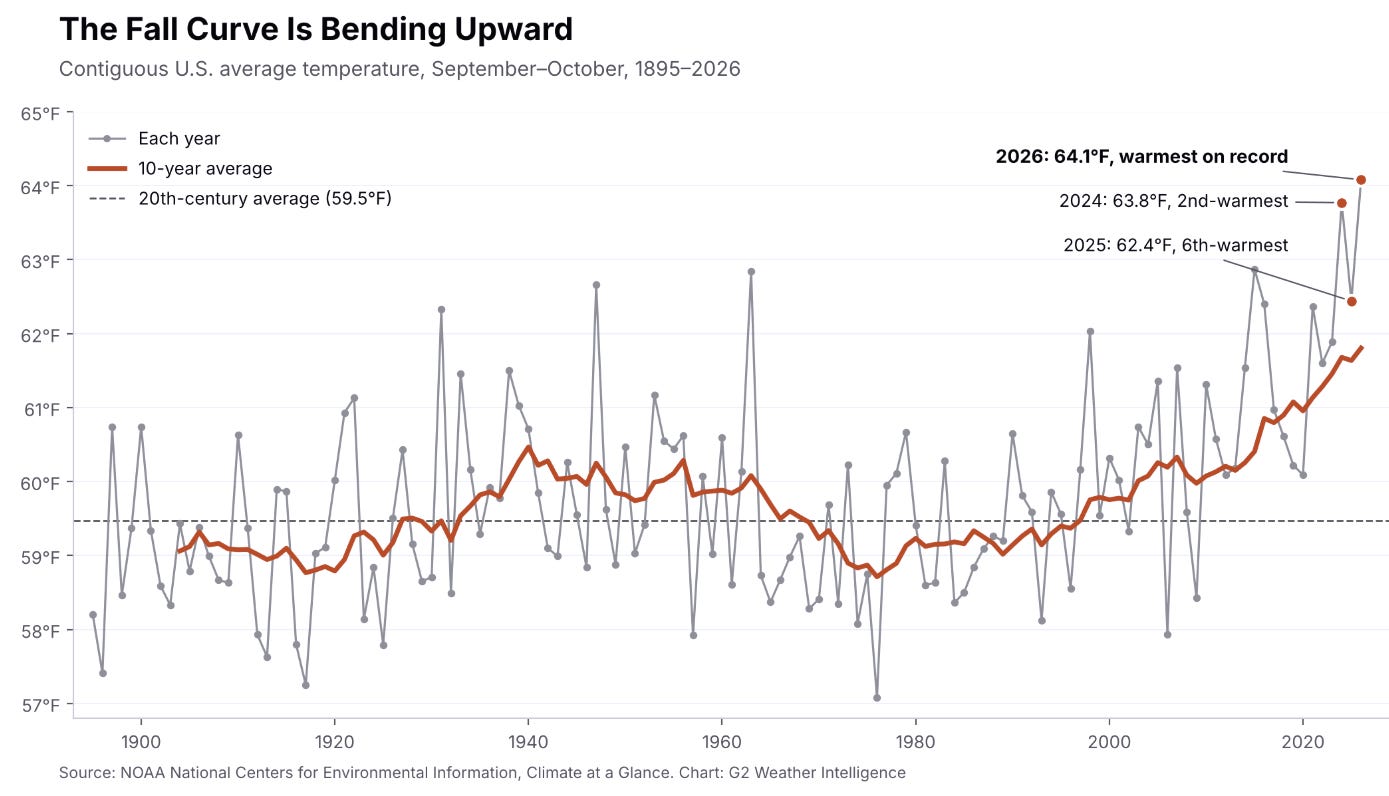
O’Sullivan called warm weather a “short-term issue.” But this is the third straight fall Burlington has blamed for a soft third quarter, and he described a familiar pattern: a weak Q3, then a recovery in Q4 “once the customer showed up as the weather finally turns cold.”
That’s fall demand arriving later, year after year. At some point, it stops being a surprise and becomes a planning assumption.
December and the Super El Niño
In September, I made my super El Niño retail call: good for home, a real headwind for cold-weather apparel, with the risk concentrated in the Northeast, Ohio Valley and Upper Midwest, the densest retail markets in the country.
What a record-strength El Niño means for winter demand — and who’s exposed
Three months later, the call holds. The El Niño has strengthened as forecast, the home centers are still seeing outdoor projects get done, and the drag on apparel demand showed up, bigly, in October. The heart of the holiday window is still ahead, and the forecast points the same way.
In that September post, I noted that Burlington was one of only two retailers to raise the super El Niño on their second-quarter calls.
On this morning’s earnings call, a Wall Street analyst asked Burlington CEO Michael O’Sullivan about it directly. He pointed to the last super El Niño: the warm winter of 2015 cut four percentage points from the company’s holiday-quarter same-store sales growth.
This year, retailers are leaning on gifting, which grows from about a sixth of Burlington’s business in Q3 to more than a third in December.
Kohl’s is adding inventory to deepen its fall seasonal assortment, betting and hoping the cold arrives. Burlington is carrying more inventory too, though mostly for gifting.
Here’s where the forecasts stand. NOAA’s December outlook, issued Nov. 19, favors a mild month across the northern tier, including the I-95 corridor, and a wet one across the South and up the East Coast.
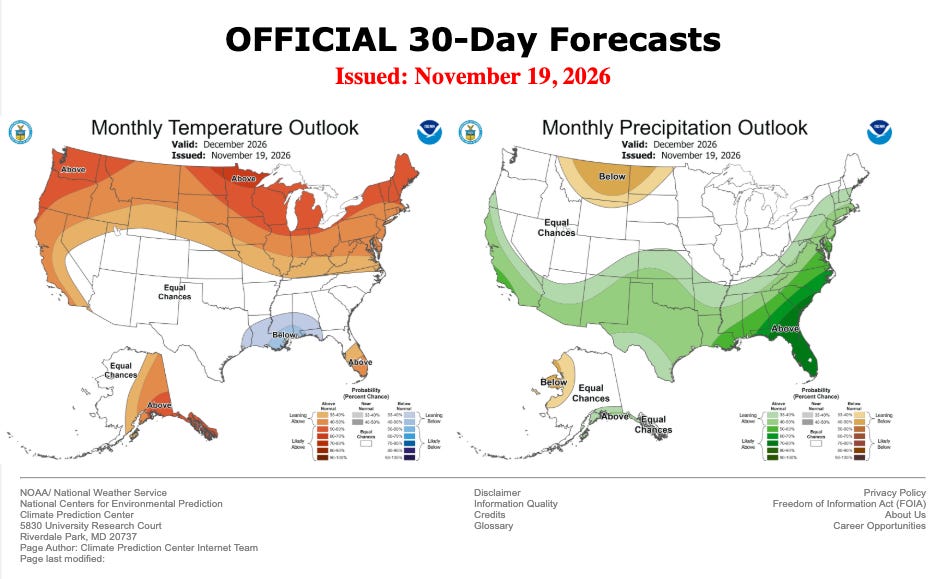
Its shorter-range outlooks, issued yesterday, sharpen the picture: above-normal temperatures across nearly the entire country from Nov. 29 through Dec. 7, with the highest odds (70% to 90%) over the Midwest, Great Lakes and much of the East.
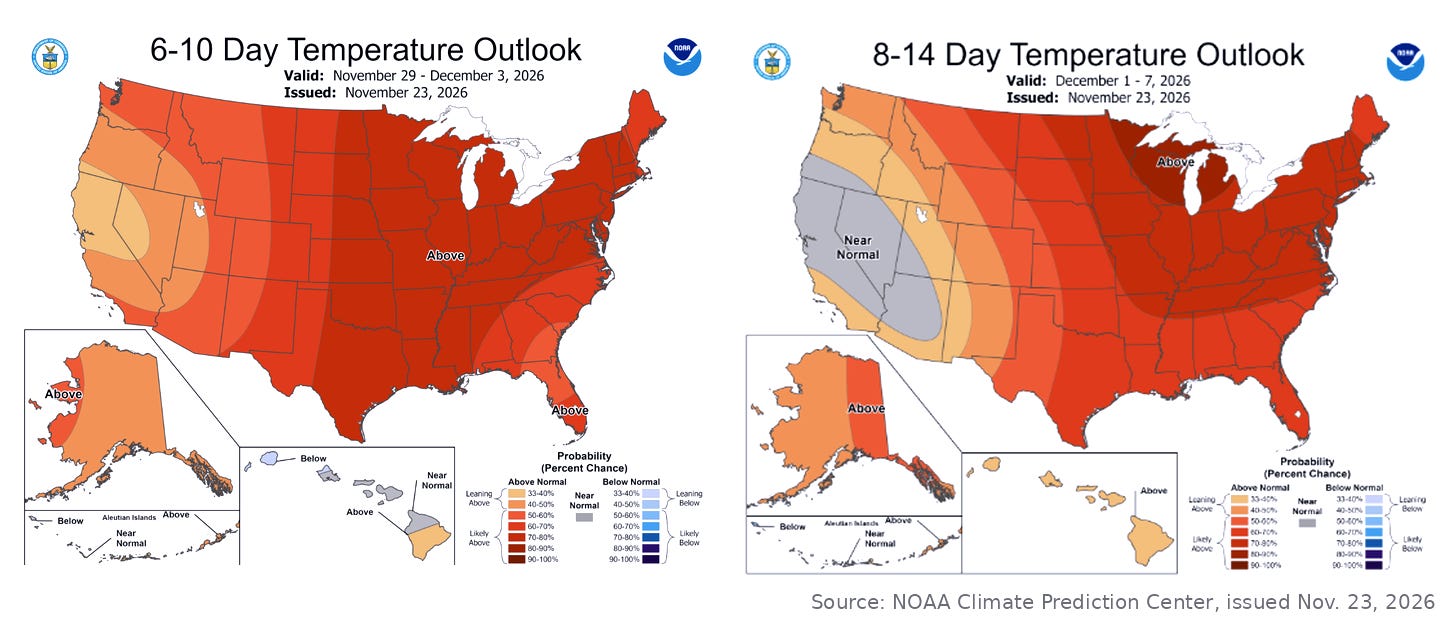
That’s Cyber Monday and the first full week of holiday shopping, in the regions where Burlington and Kohl’s sell the most outerwear. The first week of the month won’t help.
One more risk to watch.
In the Northeast, a mild but wet pattern can still deliver a big snowstorm, or worse, an ice storm. For the home centers, that’s good news: the forecast alone sends shoppers out for shovels, ice melt, and generators before the first flake falls.
For apparel retailers, it’s the opposite. A storm on a December weekend closes stores and wipes out traffic in the most important weeks of the year.
The worst case for apparel retailers would be a very mild December interrupted by one well-timed storm: little cold-weather demand to begin with, then a lost weekend at the peak of the season. That would be (as we used to say back when I was an Air Force weather forecaster) Mother Nature playing hardball … and below the belt.
On the bright side for shoppers, a mild December means lower heating bills, a little more money in our pockets, and likely plenty of sales on winter apparel.
Happy Thanksgiving.
This is my analysis of weather exposure, not investment advice.
The analysis and writing here are mine. I use Claude as an editor — for fact-checking and line edits — not as a source of ideas or content.
© 2026 G2 Weather Intelligence. All rights reserved.